
4 Things Delawareans Notice When Thousands of Snow Geese Land at Bombay Hook

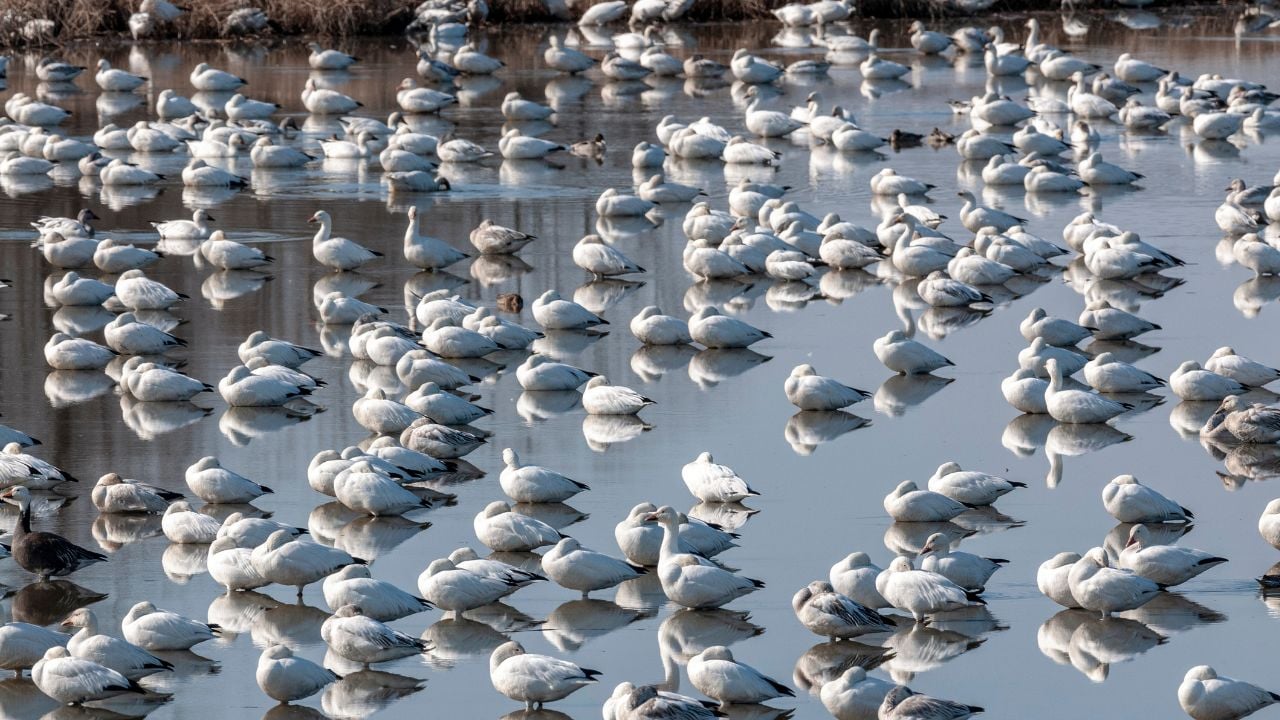
Stop at Bombay Hook in winter, and the salt marshes and fields around you are blanketed in white.
About 100,000 snow geese spend the winter there.
Here’s what Delawareans notice when thousands of snow geese land at Bombay Hook.
1. Shearness Pool at Sunset
The refuge’s driving tour guide, revised in January 2018, says the greatest wildlife spectacle at Bombay Hook happens just before sunset in November and December.
That’s when tens of thousands of snow geese return from fields to the west to settle on the pools.
You reach Shearness Pool, stop 5 on the guide, on the 12-mile Wildlife Drive, which is open to cars, bicycles and walkers.
If you want height, the Shearness Tower Trail is a quarter-mile walk to a 30-foot observation tower.
The refuge stays open until a half hour after sunset, which gives you time to stay once the sun is down.
2. Waves of Geese Overhead
The refuge’s tour guide says the geese come in waves that cover the sky.
It also says the sound of their calling is incredible.
If you stop at the pool at the right time, you may hear that for yourself.
3. Marshes Covered in White
In winter, snow geese blanket the salt marshes and fields of Bombay Hook.
The refuge says approximately 100,000 of these birds overwinter here.
A refuge photo caption describes hundreds of thousands of ducks and geese arriving in the fall to rest and feed before heading further south or to winter over.
If you visit in late fall, some of the birds you see may be only passing through.
4. Blue Geese in the Flock
Think every snow goose is white?
The refuge’s November species list names snow geese in both blue and white phases.
The blue phase is a dark form with a white head, a color variant known as the Blue Goose, according to the Cornell Lab.
If you scan a flock at Bombay Hook, you may be able to pick out those dark birds among the white ones.
Before You Drive Out to Bombay Hook
The refuge says all roads and trails close on its hunting closure dates, and the visitor center stays accessible.
It lists December 16 as its last 2026 hunting closure date.
Call the refuge at (302) 653-9345 to confirm before you go.
The refuge also says Dutch Neck Road and the area around the Allee House are closed to all entry from September 1 to February 1, except for permitted hunters.
You need an entrance pass for the Wildlife Drive.
The refuge isn’t open to hunting on Sundays.
Drones are off limits.
Snow Geese by the Calendar
The refuge’s species list describes snow geese and other waterfowl by season, which can help you pick a month.
In October, it says, large numbers of Canada and snow geese arrive.
November is the peak of fall waterfowl migration, and the list names Canada geese, snow geese, gadwall, mallard, black duck and pintail among the common species.
If you go in December, the list describes high populations of wintering birds, especially waterfowl, throughout the month, unless a hard freeze pushes them further south.
Bombay Hook on the Flyway
When you watch snow geese land at Bombay Hook, you’re at a refuge that was set aside for migrating birds.
Bombay Hook was established in 1937 as a link in the chain of refuges extending from Canada to the Gulf of Mexico.
Bombay Hook protects one of the largest remaining expanses of tidal salt marsh in the mid-Atlantic region, the refuge says.
Its importance has grown partly because of the loss of high quality habitat along the Atlantic Flyway.
Bare Patches in the Marsh
A 2003 study at Prime Hook National Wildlife Refuge, a separate Delaware refuge, found that snow geese leave bare patches called eat-outs where they feed on wetland plants.
Researchers found more invertebrates in nearby sites the geese were kept out of than in the eat-outs, especially in January, February and early April.
Invertebrates are the small creatures many waterbirds eat.
Large numbers of snow geese may reduce the food available to other waterbirds, the study concluded.
The Delaware Department of Natural Resources and Environmental Control (DNREC) made a similar point in 2017.
It said snow geese damage wetlands and agricultural areas where the birds overwinter in the Mid-Atlantic region.
If you spot a large bare area where plants have been stripped, you may be looking at an eat-out.
Psst! How much do you know about Delaware Bay’s shorebirds? Take our quiz and see how many you can get right.
Quiz
Delaware Bay Shorebird Trivia
Think you know the shorebirds that stop on Delaware Bay? We bet you can’t get them all right. Prove us wrong?
Delaware Bay is home to the largest of what in the world?
Daytime Feeding in Farm Fields
In 2016, Delaware Public Media reported that an American Birding Association official said the geese weren't gathering at Bombay Hook the way they had in past years.
The official said the geese were using farm fields, rivers and the ocean instead, partly because some marsh habitat had been damaged.
In the same report, birders surveyed a farm field near the refuge entrance on the last weekend of February 2016.
They estimated three or four thousand geese in a single flock, though not all were snow geese.
If the marsh looks empty when you arrive, you may find the flock in a field nearby.
5 Fees That Turn One Missed Delaware Toll Into an $88.50 Bill
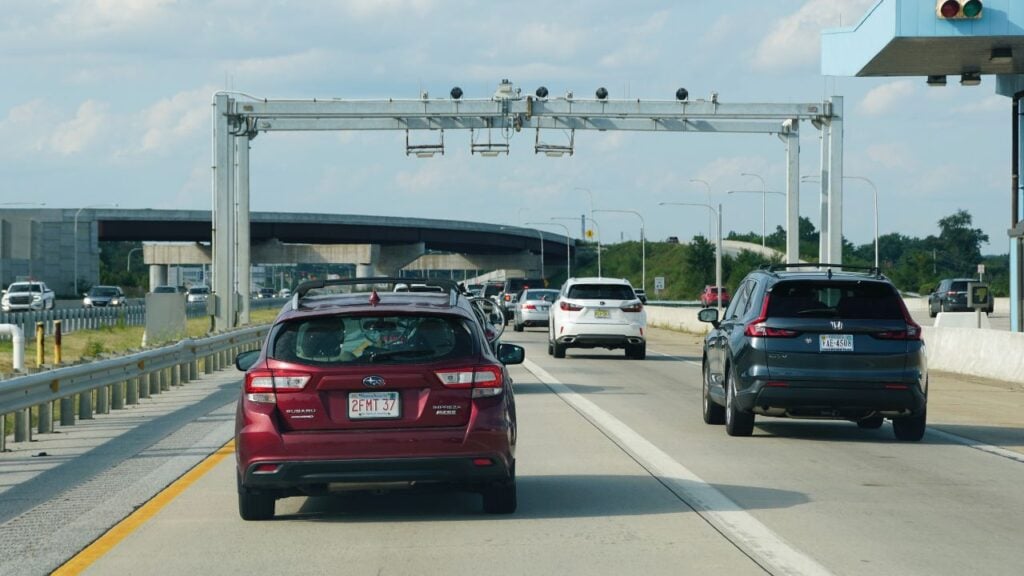
A letter shows up in your mailbox about a toll you missed.
Ignore it, and the bill grows.
5 Fees That Turn One Missed Delaware Toll Into an $88.50 Bill
7 ShopRite Policies Delawareans Only Find Out About at the Register
A grocery trip shouldn't end with a surprise at the register.
A few ShopRite quirks change your total, and they're easy to miss.
7 ShopRite Policies Delawareans Only Find Out About at the Register
