
Mainers and Granite Staters Share a Border and Little Else. 7 Arguments That Prove It

You cross the Piscataqua River from Maine into New Hampshire, and you’ve crossed a line that once went before the U.S. Supreme Court.
It took a lawsuit to settle where one state ends and the other begins.
Here are the arguments that prove Mainers and Granite Staters share a border and little else.
Note: This is general information, not tax or legal advice. Tax rates and seat belt rules are subject to change, so confirm the current figures with Maine Revenue Services and the New Hampshire Department of Revenue Administration.
1. Sales Tax
Sales tax is the first stop on this list.
Maine’s general sales tax rate is 5.5%, so a $100 purchase costs you $5.50 in tax at the register.
Maine charges 8% on prepared food and 9% on lodging rentals.
That gap shows up fastest on big purchases like furniture or a TV.
On a $1,000 TV, Maine’s 5.5% rate adds $55 at the register.
The New Hampshire Department of Revenue Administration says there’s no general sales tax on goods purchased in the state.
New Hampshire does tax meals and rooms, at 8.5%, so the gap is on everyday purchases at the register, not on dinner or a hotel stay.
Psst! How much do you know about New England? Take our quiz and see if you can ace it.
Quiz
New England IQ
Answer these questions on New England’s history, firsts and geography. We bet you can’t get them all right. Prove us wrong?
Which state was the last of the original 13 to ratify the U.S. Constitution, on May 29, 1790?
2. Income Tax
Maine's individual income tax rates range from 5.8% to 7.15%, which makes your paycheck the second place the border shows up.
The economic development office lists no broad-based income tax for the state.
New Hampshire also repealed its 3% tax on certain interest and dividend income for tax periods beginning on or after January 1, 2025.
If you're weighing job offers across the state line, run the numbers on both sides.
3. State Mottos
The state mottos of Maine and New Hampshire point in different directions.
Maine's motto is "Dirigo", which a state statute translates as "I direct or I guide."
New Hampshire's statute makes "Live Free or Die" the official motto.
The statute says General John Stark wrote the words on July 31, 1809.
One motto is about steering, and the other is about freedom.
4. Seat Belt Laws
Seat belt laws split the two states, too.
The Insurance Institute for Highway Safety's October 2026 table lists no adult seat belt law for New Hampshire.
Maine's entry reads yes for primary enforcement, effective September 20, 2007.
In Maine, officers can pull you over for not buckling up alone.
If you drive from New Hampshire into Maine, you cross from no adult seat belt law to a primary-enforcement one.
In New Hampshire, the table lists no adult seat belt law for an officer to enforce.
Maine's first seat belt law took effect on December 26, 1995, according to the same table.
5. Highest Peaks
Highest peaks give you an easy score to settle between the two states.
New Hampshire's Mount Washington reaches 6,288 feet, in the Presidential Range of the White Mountains.
Mount Washington sits in Coos County, New Hampshire.
Maine's Mount Katahdin reaches 5,269 feet, and its Baxter Peak is the northern terminus of the Appalachian Trail.
If you're keeping score, New Hampshire has the higher peak.
Washington takes this round.
How Far Apart Mount Washington and Katahdin Stand
Mount Washington in New Hampshire stands 1,019 feet taller than Maine's Mount Katahdin, going by the two listed heights.
The National Park Service gives Katahdin's height as 1,606 meters as well as 5,269 feet.
6. Shoreline Miles
Shoreline miles measure how much coast each state has.
In its unofficial 2021 tabulation, the National Oceanic and Atmospheric Administration (NOAA) lists 5,000 statute miles of shoreline for Maine and 247 for New Hampshire.
That works out to about 20 times as much shoreline for Maine.
That leaves Maine with 4,753 more miles of shoreline than New Hampshire.
The count includes breakwaters, jetties, groins and rocks along the shore, not just beaches.
If you want a coast to explore, you'll find far more of it in Maine.
Maine has the edge.
7. River Boundary
The Piscataqua River boundary on the Maine and New Hampshire border ended up before the U.S. Supreme Court.
New Hampshire sued Maine in 2000, claiming the line ran along the Maine shore.
New Hampshire filed the case directly with the Supreme Court on March 6, 2000.
The Supreme Court dismissed the case on May 29, 2001, ruling that New Hampshire had earlier accepted a line down the middle of the river.
A line down the middle is what you'd expect on a river.
Maine argued that a 1740 decree from King George II and a 1977 consent judgment had already settled the line.
Maine won that round.
If you cross the Piscataqua River by bridge, you're passing over a boundary that reached the Supreme Court.
Statehood Dates
If you're comparing how the two states began, statehood dates are the place to look.
New Hampshire was the ninth state to ratify the U.S. Constitution, on June 21, 1788.
That puts New Hampshire in ninth place in the order of statehood.
Maine entered the Union as the 23rd state on March 15, 1820.
Maine sits 14 places later in that order, since 23 minus 9 is 14.
New Hampshire joined the Union in 1788, about 32 years before Maine did.
Maine voters approved separating from Massachusetts in a referendum on July 28, 1819.
9 Things You'll Only Understand About Maine After a Winter There
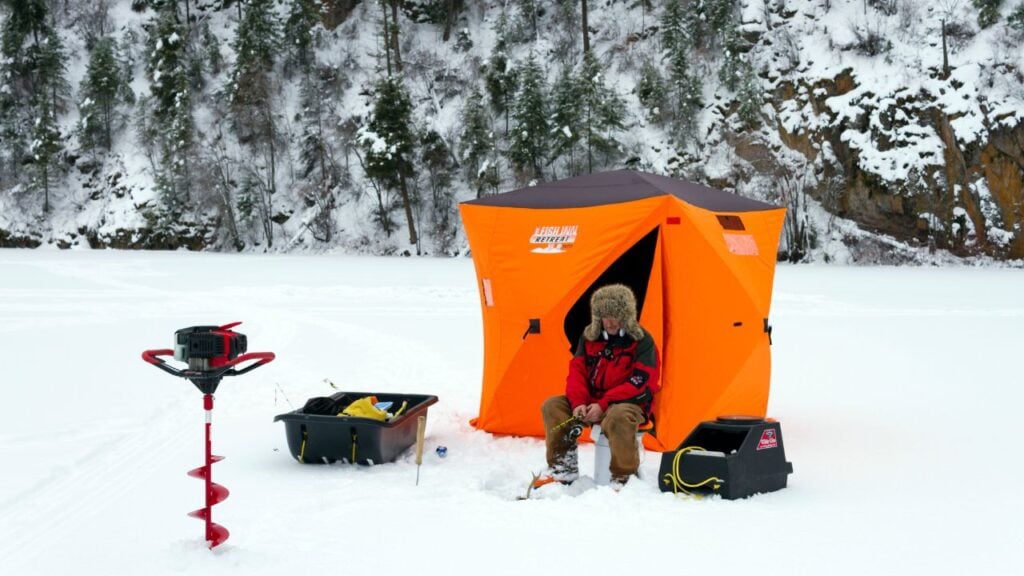
Summer visitors see Maine at its best.
Winter shows what living there takes, from the early dark to the chores that come with the cold.
9 Things You'll Only Understand About Maine After a Winter There
7 Dishes You'll Find at Every Maine Church Supper

Many Maine church suppers put the same plates on the table.
These are the dishes you'll find on the plate.
