

New Jersey Is the Last State Where You Can’t Pump Your Own Gas. The Reason, and 4 Things New Jerseyans Get Wrong About It

Picture the drive to Thanksgiving dinner and stopping for gas: you pull up to the pump, roll down the window, and wait.
Not every pump in the country works that way.
Below is the reason New Jersey is the last state where you can’t pump your own gas, and what New Jerseyans get wrong about it.
Note: This is general information, not legal advice. Penalties and rules are subject to change, so confirm the current requirements with the New Jersey Department of Labor and Workforce Development.
The 1949 Reason
The self-service gas ban dates to 1949, when a state law barred gas station operators from letting customers pump gas.
The court accepted fire safety as the reason.
You can read that reason in a 1951 court case, brought by the owners of a Hackensack self-service gas station.
They took the law to the state Supreme Court and lost.
The court’s opinion says the station sold gas about four cents a gallon under the going price in the area.
The court weighed lower prices against the risk of explosions and fires.
Safety won.
1. Oregon’s 2023 Change
New Jersey’s ban on pumping gas has been the only one in the country since Oregon changed its law in 2023.
You may still hear Oregon counted as the other no-self-serve state.
That’s out of date.
If you drive through Oregon’s 20 rural counties, you can pump gas at any station at any time.
In the other 16 counties, stations may offer self-serve at up to half their pumps, and only during hours an attendant is available.
2. Insurance and Fumes
If you think New Jersey’s ban on pumping gas is only about fire, the 1989 findings say more.
The current version of the law dates to 1989.
Fire wasn’t alone.
They say self-service gas stations pay higher liability insurance premiums.
The law links that cost to crime and to falls by customers who leave their cars.
The findings also call gasoline fumes a health hazard, especially for pregnant women.
So if someone tells you the ban is all about fire, you can point to the findings.
3. Written for Gas Station Staff
The self-service gas ban is written as a rule for gas station staff.
The act makes it unlawful for an attendant to let anyone but an attendant dispense fuel.
It defines attendants as a station’s operator and its employees.
The state’s Commissioner of Labor enforces the act.
Self-Service Gas Act Penalties
New Jersey’s self-service gas act sets a penalty of $50 to $250 for a first violation.
Each later violation can cost up to $500.
Those penalties are collected through summary proceedings in the county or municipality where the offense happened.
The penalty section applies to any violator of the act, and it never mentions customers.
A separate rule covers two other duties.
A station must keep each attendant’s certificate on site, and it must install a pump shutoff switch.
Each day a station breaks either rule counts as a separate violation by its operator.
Psst! How much do you know about gas pumps and Garden State roads? Take our quiz and see if you can ace it.
Quiz
Garden State Road IQ
Answer these questions on gas pumps and New Jersey roads. We bet you can’t get them all right. Prove us wrong?
In Oregon, which drivers may fuel up themselves in every county?
4. The Ban's Supporters
The ban on pumping gas draws majority support in each age group FDU reported.
The poll gives you the split: 64% in favor and 24% opposed among 1,211 registered voters surveyed June 23 to 30, 2026.
If you picture the ban's fans as older people, the numbers say otherwise.
Voters 30 and under back the ban at 68%, ahead of the 61% among voters 65 and older.
If you assume it's a women's view, you'll miss that 56% of men back it too, against 74% of women.
In 2012, 63% of voters were in favor, FDU found.
A 2022 Rutgers-Eagleton poll found 73% of adults preferred having their gas pumped for them, including 87% of women.
Diesel and Other Exceptions
If you think the self-service gas ban covers every fuel and every gas station, the Labor Department's regulations say otherwise.
The state's gas station rules don't apply to marine service stations or to stations that fuel aircraft.
They also exclude the dispensing of diesel fuel.
Employer-run gas stations that serve only a company's workers, and aren't open to the public, are excluded too.
The Price Check
If you've blamed the ban on pumping gas for what you pay at the pump, the number is worth a look.
The auto club AAA put New Jersey's regular average at $4.22 a gallon on Oct. 21, 2026, against $4.26 nationally.
That's under a nickel.
Oregon's State Fire Marshal says the price is the same for self-serve and attended service.
The repeal bills in the Legislature would let stations discount self-service gas instead.
The 1989 findings say there's no conclusive evidence that self-service gas gives a sustained price cut.
They also say full-service gas usually costs significantly more in states that allow self-service.
The Bills That Stalled
Lawmakers have tried to repeal the ban on pumping gas since at least 1981, according to the New Jersey Monitor.
Assembly Bill 3105, introduced in March 2022, would have let you pump gas at stations that offered self-service.
It still hadn't gotten a hearing or a vote by August 2023, Gothamist reported.
Senate Bill 4303, from Senator Jon Bramnick, was introduced in 2025.
Senate Bill 1047 was introduced in January 2026 under the same short title, the Motorist Fueling Choice and Convenience Act.
None of them has become law.
Each version would require full-service fuel from 8 a.m. to 8 p.m. at stations with more than four dispensers.
They'd also require attendant help for drivers with disabilities who ask.
5 Jersey Diner Orders That Only Make Sense If You Grew Up There

Order a sloppy joe at a North Jersey diner, and you might be in for a surprise.
New Jerseyans who've been eating at diners their whole lives don't think twice about it, but visitors often do.
5 Jersey Diner Orders That Only Make Sense If You Grew Up There
7 New Jersey Rules That Change the Day a Homeowner Installs a Generator
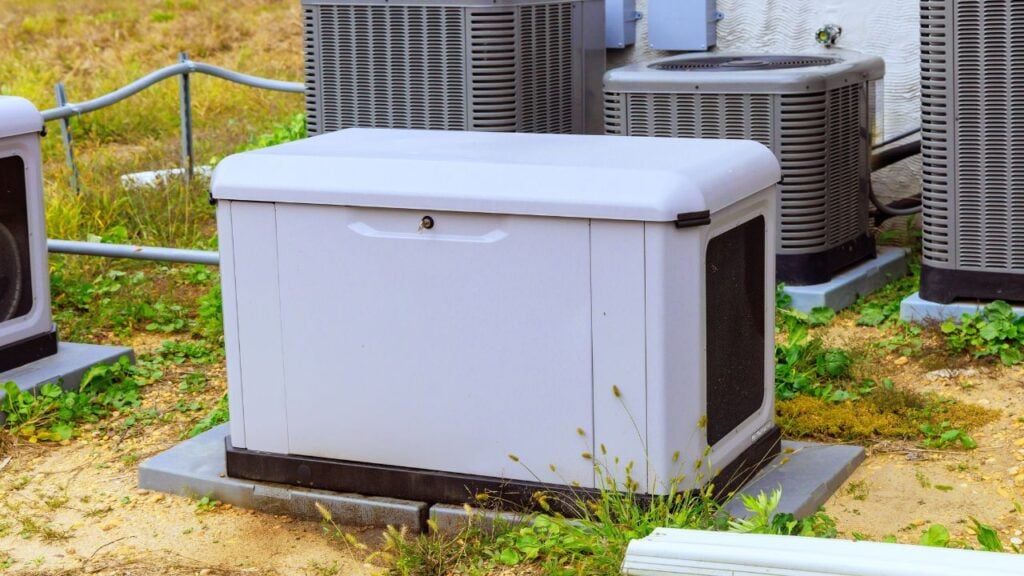
After a long power outage, a generator starts to sound like a smart purchase.
New Jersey homeowners may find that the steps start well before the machine shows up, and they can change from town to town.
7 New Jersey Rules That Change the Day a Homeowner Installs a Generator
