
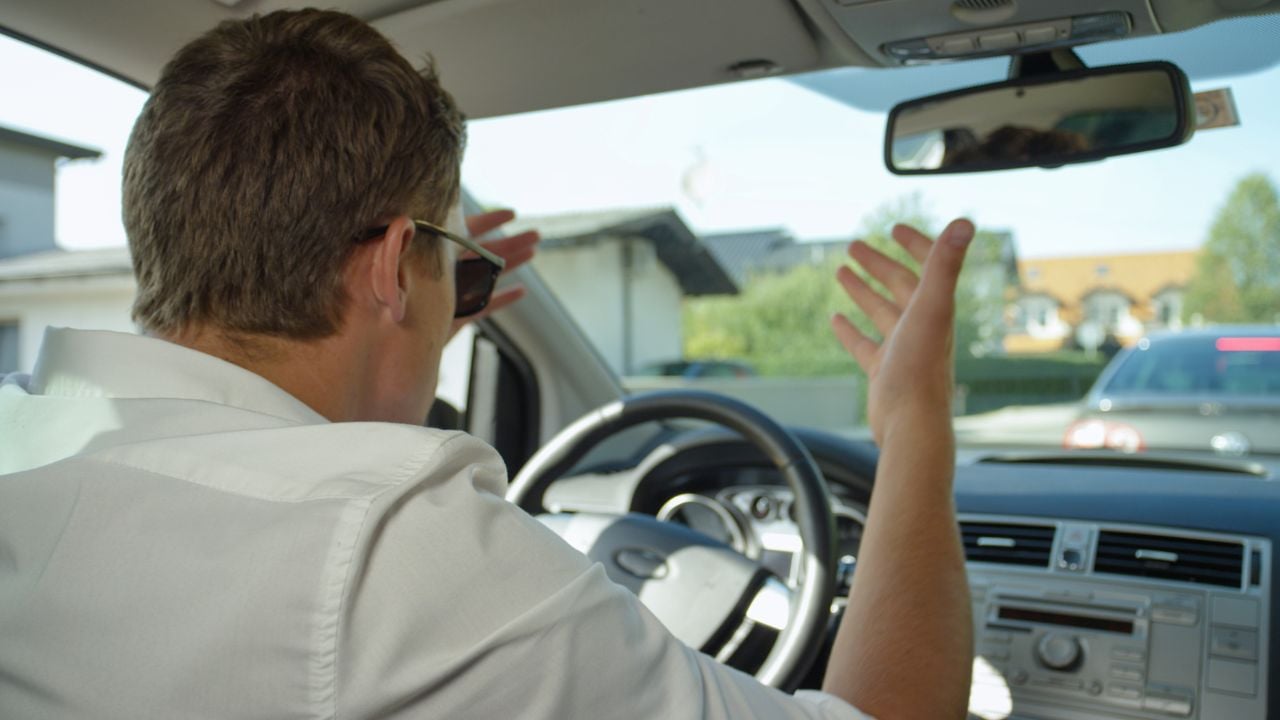
6 Interstate Rules Alabamians Often Break Without Knowing It

“There’s room on the shoulder,” someone in the passenger seat says as Thanksgiving traffic crawls along an Alabama interstate.
Taking that advice could cost you more than time.
These are the interstate rules in Alabama that some people break without knowing it.
Note: This is general information, not legal advice. Traffic laws and fines are subject to change, so confirm the current requirements with the Alabama Law Enforcement Agency (ALEA).
1. Left-Lane Rule Basics
Alabama’s interstate left-lane rule says a vehicle can’t stay in the leftmost lane for more than 1.5 miles without completely passing another vehicle.
At 70 mph, you cover 1.5 miles in about 77 seconds.
That gives you a little over a minute in the left lane to pass someone or move right.
The Anti-Road Rage Act put the rule in effect on Sept. 1, 2019.
Officers started with warnings only, and tickets followed.
Penalty and Signs
The left-lane section doesn’t set a penalty, so the traffic code’s general penalty section applies.
A violation is a misdemeanor, and if you’re convicted the first time, the fine is up to $100 or up to 10 days in jail.
The Alabama Department of Transportation has to put up signs giving notice of the rule near the start of any interstate in the state and at interstate intersections.
After that, it has to place them about every 50 miles where practical.
When the Interstate Left Lane Is Allowed
The statute lists seven exceptions to the left-lane limit.
Two cover conditions. Traffic or congestion that makes the left lane necessary is one, and bad weather, obstructions or hazards that make it necessary is the other.
Two more cover movement. Exiting to the left is one, and paying a toll or user fee at a toll facility is the other.
A fifth is following a law, rule, ordinance or traffic control device that makes the lane necessary.
The last two are authorized emergency vehicles on duty, and vehicles used in highway maintenance or construction or traveling through a construction zone.
2. Move Over Law
The Move Over Act applies on interstates and other multilane highways.
That covers parked police cars, wreckers, utility trucks and road crew vehicles with their lights going.
When you pass any of them, you have to move out of the closest lane as soon as it’s safe.
If you can’t change lanes, you have to slow to at least 15 mph below the posted speed limit.
A first violation is a misdemeanor with a $200 fine.
A second violation costs $250, and a third costs $300.
After a third violation, the court reports it to the state, which must suspend your driving privileges for at least 90 days.
3. Work Zone Moving Violations
A moving violation in an Alabama work zone costs the greater of $250 or double what the same violation costs outside it.
So a violation that costs $100 outside a work zone would cost you $250 inside it.
The law covers designated construction zones.
The higher fine applies in a designated zone when workers are present and warning devices are up, and the regular fine applies otherwise.
A Birmingham TV news report on the law said the higher fines cover following the vehicle ahead too closely and changing lanes without signaling, among other violations.
4. Following Distance
The following-distance rule applies on interstates, as it does on every other road in Alabama.
You have to leave at least 20 feet for every 10 mph of speed between your car and the vehicle ahead.
That’s 140 feet at the 70 mph interstate limit, just under half a football field.
The statute also bars following more closely than is reasonable and prudent, given your speed, the traffic and the road.
The distance rule doesn’t apply when you’re overtaking and passing another vehicle.
Psst! How much do you know about Alabama’s highways? Take our quiz and see if you can ace it.
Quiz
Alabama Highway IQ
Answer nine questions on Alabama’s highway rules. We bet you can’t get them all right. Prove us wrong?
Which of these roadside vehicles does Alabama’s Move Over Act cover while it’s working the shoulder?
5. Passing on the Shoulder
Pulling onto the shoulder to get around slow traffic isn't a legal pass in Alabama, whether you're on I-65, I-20 or any other interstate.
The passing statute says a pass on the right can't be made by driving off the roadway.
The traffic code's definition of the roadway leaves out the berm or shoulder, so a pass that runs onto the shoulder doesn't count.
Passing in another lane on the right is different.
It's allowed on a roadway with unobstructed pavement wide enough for two or more lines of vehicles moving lawfully in your direction, such as a multilane interstate.
The passing section sets no penalty, so the traffic code's general penalty section applies.
A first conviction is a misdemeanor with a fine of up to $100 or up to 10 days in jail.
6. Entrances and Exits Only
Under Alabama law, you can drive onto or off a controlled access roadway only at the entrances and exits public authority has established.
The Federal Highway Administration's interstate policy calls full control of access along the mainline and ramps critical to providing the highest level of service for safety and mobility.
Cutting across the grass between the two sides of an interstate breaks a related rule.
On a divided highway, no vehicle may be driven over, across or within the dividing space or barrier.
The only exceptions are an opening in the barrier and an established crossover or intersection.
Hands-Free Law
Holding a phone while you drive is against Alabama's hands-free law, on the interstate and off it.
For the first 12 months after June 14, 2023, officers could only write warnings, so citations began in mid-June 2024.
The law covers holding a phone, texting, watching videos and reaching for a device far enough to leave your seated, belted position.
An officer also has to see you weaving across lanes without a signal, swerving or otherwise driving impaired while you use the device.
A first conviction costs up to $50, a second up to $100, and a third up to $150.
If you're 18 or older, you can use a mounted phone with a single tap or swipe.
The phone can't block your view, and the feature can't be a camera, video or game.
If it's your first offense, you can show the court a device that lets you comply, or proof you bought one.
The court then finds you not guilty, as long as you say you haven't used that option before.
Seat Belts in Every Seat
Alabama's 2019 seat belt law applies to all occupants of a motor vehicle, so you buckle up in the back, too.
A back-seat violation is a secondary violation.
An officer can write that ticket only after a lawful stop for another violation.
7 Alabama Towing Rules Drivers Only Learn After Their Car Is Gone
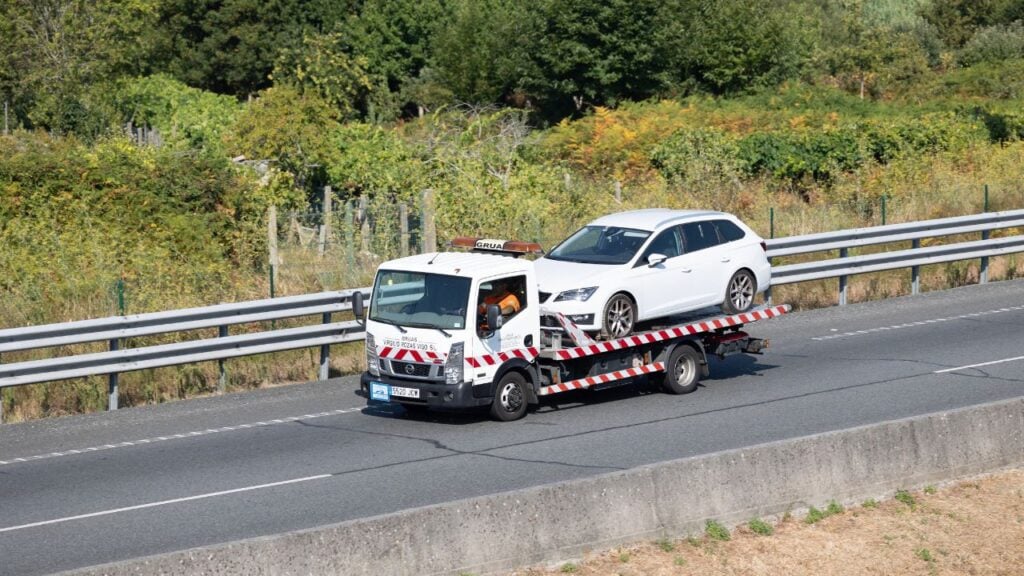
Finding your car gone is bad enough, and the bills that follow can make it worse.
Here's what Alabama's towing and storage rules could mean for your bill.
7 Alabama Towing Rules Drivers Only Learn After Their Car Is Gone
9 Things That Instantly Give Away Someone Who Grew Up in Alabama

Some habits give away someone who grew up in Alabama before they say much.
Here are the signs that give away someone who grew up in the Yellowhammer State.
9 Things That Instantly Give Away Someone Who Grew Up in Alabama
