
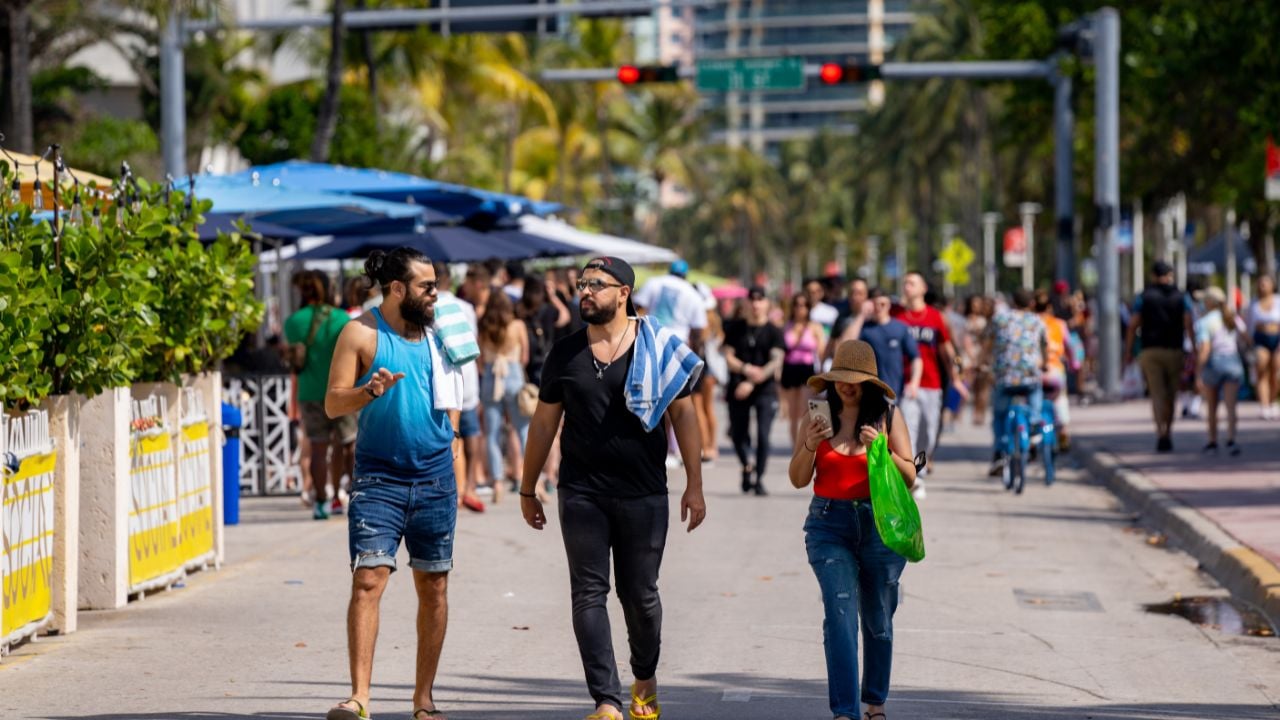
12 Things Floridians Stop Noticing After a Year That Out-of-Staters Can’t Get Over

Your relatives from up north might stop mid-sentence on the porch this weekend and point at something you didn’t even notice.
To you, it’s just another Florida evening.
These are the things Floridians stop noticing after a year that out-of-staters can’t get over.
Note: This is general information, not insurance advice. Coverage and terms are subject to change, so check the specifics with your insurer or agent.
1. Falling Iguanas
Falling iguanas sound like a joke until the first hard cold snap.
Sustained temperatures of 30 to 40 degrees Fahrenheit make green iguanas lethargic and stiff, and they may fall out of trees.
You read that right.
The University of Florida (UF) says the National Weather Service in Miami declared an unofficial alert for falling iguanas in January 2020.
The alert warned people to keep away from iguanas on the ground, in case they warmed up and acted defensively.
Many people who’ve lived in iguana country for a year or so shrug at the whole thing.
Green iguanas appear to be established across much of central and southern Florida, including the Keys.
On the mainland, you’ll mostly find them along the coast.
If you catch one, state rules say you can’t release it elsewhere in Florida or move it live without a permit.
2. Thunderstorm Days
No other part of the country has more thunderstorm activity than Florida, according to the Florida Climate Center at Florida State University.
In the western half of Florida’s peninsula, you get over 80 days with thunder and lightning in a typical year, or more than one day in five.
Central Florida’s summer thunderstorms are as frequent as those in the most thunderstorm-active areas on earth.
In summer, virtually every rainstorm you see comes with thunder and lightning.
Thunderstorms drop off sharply in the fall and don’t pick back up until spring.
Many locals skip the radar.
3. Lizards in Your Garage
The lizards in your garage are probably brown anoles, which are native to Cuba and the Bahamas.
A brown anole was the first documented reptile introduction in Florida, in Key West in the late 1800s.
Today a brown anole is the most commonly encountered lizard in much of Florida.
Brown anoles are never green.
You’ll find them mostly in human-modified areas, especially suburban neighborhood yards, school yards, and golf courses.
They shelter in the gaps behind storm shutters and rain gutters, and they can slip into your home, shed, or garage.
Males also have a bright, reddish-orange throat fan, called a dewlap, bordered by yellow.
4. Spanish Moss
Spanish moss grows throughout Florida, mainly on live oaks and cypress trees.
It also hangs from the fences and telephone lines you drive past.
Despite the name, it’s a flowering plant, not a moss.
It isn’t a parasite either, so the strands in your oak aren’t feeding on the tree.
Spanish moss has no roots.
Specialized scales collect moisture and nutrients from air, rain, and debris.
Two bat species use it as daytime resting sites, and zebra longwing butterflies roost in it at night.
In dry spells it stays gray and dormant, then turns greenish when rain arrives.
5. Lovebug Season
Lovebugs appear in large numbers for only a few weeks every April and May, and again every August and September.
UF researchers say the splatter causes no permanent damage to your car’s finish if you clean it off within a day or two.
A coat of car wax on the front of your car helps protect it, as long as you remove the bugs within a day.
Lovebugs were first described from Galveston, Texas, and they were first collected in 1949 in Florida’s Escambia County.
Many people blame UF entomologists for bringing lovebugs to the state.
That story’s a myth.
Lovebug research began only after the flies were well established in Florida.
6. Sea Turtle Lighting
Along the Florida coast, sea turtles make between 40,000 and 84,000 nests a year.
The Florida Fish and Wildlife Conservation Commission (FWC) says lights from buildings along the beach distract and confuse female sea turtles as well as hatchlings.
Beachfront lights should stay off throughout the night from May to October.
Safety lights can stay on if you shield them, point them down and away from the beach, and use the lowest-wattage amber, orange, or red LED bulb possible.
Interior lights count too.
Your blinds and curtains should shield them from the beach.
7. Alligators in Ponds and Canals
FWC says alligators live in all 67 counties.
Florida has an estimated 1.3 million alligators.
FWC’s nuisance alligator program lists “Be Alert!” and “Don’t Feed Alligators!” signs for ponds and canals.
An alligator is generally a nuisance when it’s at least 4 feet long and a threat to people, pets, or property.
A smaller alligator in your swimming pool or garage can be removed too.
Never handle an alligator.
Never feed one either, and keep your distance when you spot one.
Walk your dog on a leash, away from the water’s edge.
Swim only in designated swimming areas, and only during daylight hours.
To report a nuisance alligator, call 866-FWC-GATOR (866-392-4286).
8. Humidity
The Florida Climate Center calls Florida the most humid state in the U.S.
At 90 degrees and 65% relative humidity, the National Weather Service heat index says it feels like 103 degrees.
That’s a 13-degree difference.
Humid air slows how fast your sweat evaporates, which cuts how well it cools your skin.
Reading the Dew Point
Dew point is a better measure of moisture in the air than relative humidity is.
Dew point measures the absolute amount of moisture in the air, while relative humidity depends on the air temperature.
Summer dew points generally run in the high 60s or low 70s across Florida.
Relative humidity swings more, from above 90% at night to 60% or lower in the afternoon.
A 95-degree day with an 80-degree dew point works out to only about 62% relative humidity.
Dew points above 80 are rare.
9. Palmetto Bugs
Palmetto bug is a nickname for large cockroaches that hang around homes, including the American cockroach and the smokybrown cockroach.
American cockroaches are among the species most commonly found in and around Florida homes.
Adults measure about 1.5 inches.
You’ll find cockroaches outdoors in leaf litter, mulch, tree holes, and palm trees.
Cockroaches other than the German cockroach usually develop in garages, sewers, attics, and similar spots.
The Florida woods cockroach is often called a palmetto bug too, and it typically arrives indoors on firewood or another item you carry in.
10. Mosquito Spray Trucks
Mosquito spray trucks run before sunrise and after sunset, when adult mosquitoes are active.
The timing also limits exposure for bees and butterflies.
Helicopters and airplanes spray too.
If a truck does spray your neighborhood, the dose is typically less than one ounce of product per acre.
Some mosquito control programs will give you free mosquitofish if you ask.
Unmaintained swimming pools and hot tubs may be stocked with the fish to keep mosquitoes from breeding.
UF also says emptying anything around your home that holds water should happen at least once a week.
11. Sinkholes
Sinkholes form in Florida where slightly acidic groundwater slowly dissolves cavities in limestone.
Some collapse suddenly.
The initial hole may keep growing for minutes to hours to days.
Other sinkholes show up as a bowl-shaped depression that forms slowly at the surface.
If a sinkhole opens in your yard, mark and secure the hole, keep kids and pets away, and call your property insurance adjuster.
Don’t pour water into it, since that may cause further enlargement.
You can report a sinkhole to the Florida Geological Survey, which keeps a database of incidents covering 1954 to present.
Sinkholes also show up in Florida’s insurance law, which requires every property insurer to cover a catastrophic ground cover collapse.
Insurers must also make coverage for sinkhole losses available for an additional premium.
Psst! How much do you know about Florida’s wild side? Take our quiz and see if you can ace it.
Quiz
Florida Nature IQ
Answer nine questions on Florida’s parks, springs, lakes, and wildlife. We bet you can’t get them all right. Prove us wrong?
Fort Jefferson, inside Dry Tortugas National Park, is made of roughly how many bricks?
12. Hurricane Season
The Atlantic hurricane season officially runs from June 1 to Nov. 30, so it covers six months of every year.
Many locals tune it out.
Peak activity falls between mid-August and late October.
Since 1850, hurricanes have affected all of Florida's coastline, so wherever you live on it, the season applies to you.
Hurricane Nicole made landfall near Vero Beach in November 2022 as a Category 1 storm.
12 Things Floridians Keep in Their Car That Confuse Visitors
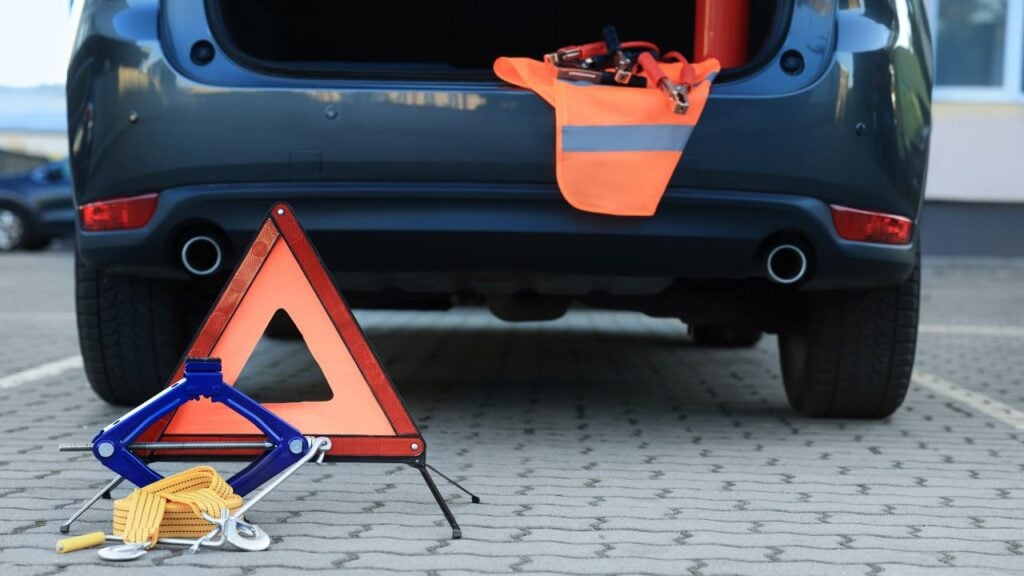
Some Florida drivers carry surprising gear around.
Between the heat, the bugs, and storm season, visitors may wonder why the trunk looks so full.
12 Things Floridians Keep in Their Car That Confuse Visitors
9 Florida Foods Northerners Have to Be Talked Into Trying
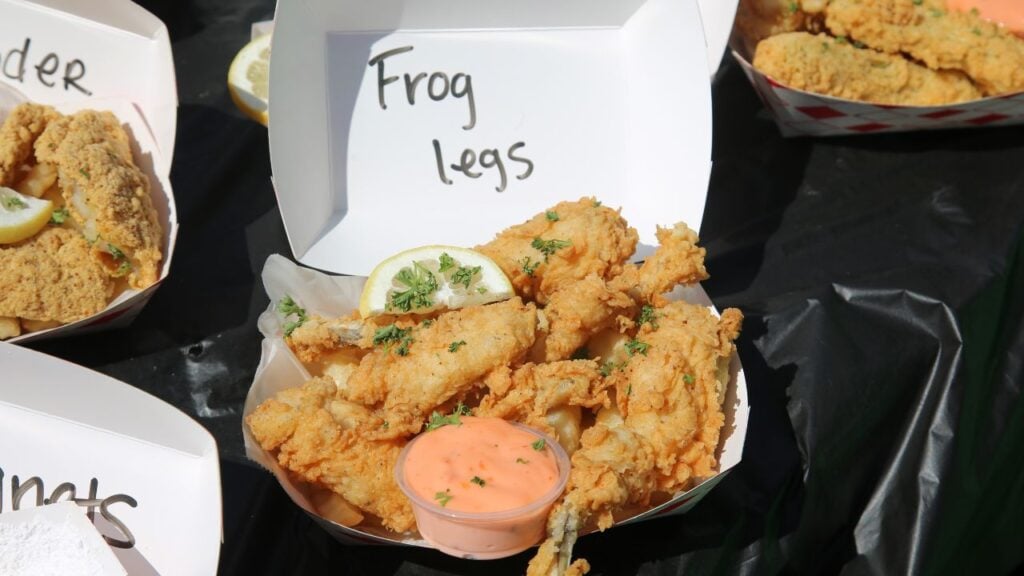
Tell a newcomer that the peanuts are boiled, and you might get a funny look.
Many Floridians will tell you some local favorites sound stranger than they taste.
