
7 South Carolina Dog Laws Owners Break in Their Own Backyard

If your dog never leaves your yard, you might think the law has nothing to say about it.
A fence doesn’t put you out of reach, though.
Here are the South Carolina dog laws some owners break in their own backyard.
Note: This is general information, not legal advice. Dog laws and penalties are subject to change, and county and city rules differ, so confirm the current requirements with your county animal control office.
1. Dangerous Dog Confinement
Your dog can become a dangerous animal under state law if you know, or should know, it tends to attack without provocation.
An unprovoked attack that injures someone away from the dog’s confinement area fits the definition too.
From then on, your dog can’t go unconfined on your property.
Letting a dangerous dog roam your yard is a misdemeanor, with a first-offense fine of up to $200 or up to 30 days in jail.
The law treats a dog as confined only when it’s securely indoors, inside a securely enclosed fence, or in a securely enclosed and locked pen or run.
If you use a pen or run, it has to be locked, clearly marked as holding a dangerous animal, and built to keep out the public, children included.
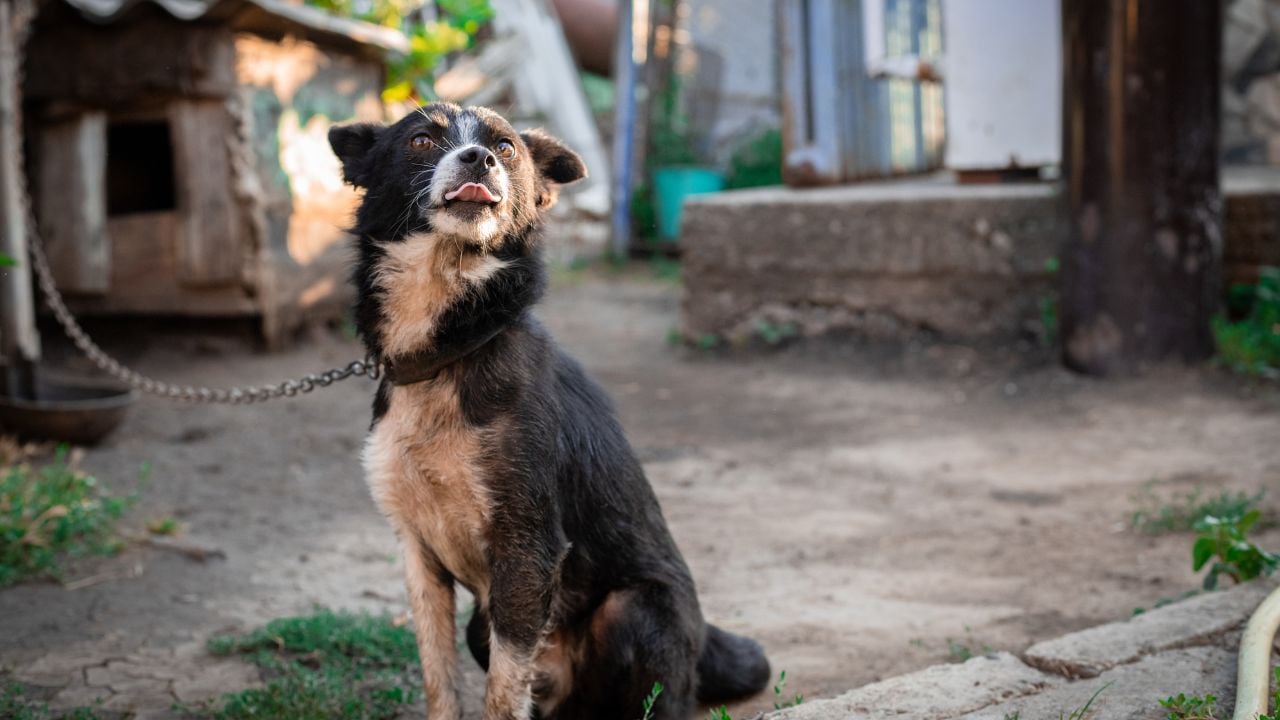
2. Tethering Past Two Hours
Tying your dog up in the yard for an afternoon can break Richland County’s tethering ordinance, which the county adopted in 2024.
Tethering outdoors for two or more continuous hours requires a dog older than six months and a tether at least 12 feet long.
The tether needs a swivel on each end, and it can’t weigh more than 10% of your dog’s body weight.
Long tethering is allowed only when it’s above 40 degrees and below 90.
If it stays colder or hotter than that for a sustained four hours, you can tether your dog for just 30 minutes of any four-hour stretch.
That comes with bedding and shelter in the cold, or shade in the heat.
Logging and towing chains aren’t acceptable tethers.
3. Doghouse Standards
The doghouse in your yard has specs to meet in Richland County.
The county’s Pet Laws page says a dog’s shelter should be weatherproof, with a roof, enclosed sides and a doorway.
The floor should be solid, level and raised at least two inches off the ground.
Your dog has to be able to stand, turn around and lie down inside.
At 40 degrees or lower, wind chill included, dry bedding such as cedar shavings or straw is required.
Failing to provide proper shelter is illegal in the county, so a doghouse that falls short can put you on the wrong side of the rules.
What Richland County’s Dog Laws Won’t Count as Shelter
Richland County’s dog laws list several places that don’t qualify as shelter for your dog.
Storage buildings, sheds, crates, pet carriers and barrels are out.
Screened porches, patios and balconies don’t count either.
The same goes for the space under a lean-to, covered porch, deck, vehicle or house.
4. Withholding Food and Water
Knowingly or intentionally depriving a dog of necessary food or water is a misdemeanor under state law.
If you’re convicted of a first offense, it carries up to 90 days in jail or a fine of $100 to $1,000, or both.
A repeat offense can bring up to two years in jail or a fine of up to $2,000.
The state’s definitions call for adequate food at suitable intervals and constant access to clean, fresh water.
So a dog that spends its days in your yard needs water within reach all day.
5. A Barking Rule Greenville County Took Up
More than 15 minutes of continuous barking would count as a nuisance under the ordinance text Greenville County Council took up in May 2025, if the barking is persistent and excessive.
That text would let anyone whose property is within 200 feet of your yard file a complaint.
The first complaint would bring a written notice posted on your property, and the second a final notice.
A third complaint would become a violation once an animal control officer verifies it.
The complainant would have to supply timestamped video and a written statement from a second complainant.
Then you would get a summons for a misdemeanor, and each day would count as a separate offense.
Barking that answers teasing, trespassers, emergencies, sirens or wildlife wouldn’t count.
The county’s earlier barking rule used a different standard, so ask Greenville County Animal Care which wording applies to you today.
Psst! How much do you know about South Carolina’s animal laws? Take our quiz and see if you can ace it.
Quiz
Carolina Animal Law IQ
Answer these questions on South Carolina dog and animal law. We bet you can’t get them all right. Prove us wrong?
What’s the fine range for stealing a dog that can be identified in South Carolina?
6. Leash and Fencing Rules
Your dog loose in an unfenced yard can break Richland County's rule that pets be kept under control.
Your dog has to be on a leash, in a fenced area or confined in some other secure way.
Roaming freely is called running at large.
The county prohibits it everywhere except a dog park or a recognized event such as a dog show, hunting event or herding trial.
A female dog in heat has to be kept confined inside or in a secure enclosure.
7. Nuisance Rules
In Richland County, a yard that smells bad or isn't safe for the animals living in it can count as a nuisance.
The same rules cover a pet that damages other people's property or chases people, bikes and cars.
Keeping so many animals that your property becomes a hazard falls under them too.
The county sets no limit on how many animals you can own, as long as none of them is a nuisance.
Bite Liability on Your Property
A dog bite on your property can cost you money even when you've broken no dog law.
State law makes you liable for the damages when your dog bites or attacks someone who is lawfully in a public or private place.
Your backyard counts as a private place, as long as the person is there lawfully.
The exception is provocation, which applies if the person provoked or harassed your dog and that provocation caused the bite.
That makes it a civil claim rather than a violation.
The bill falls on the owner or whoever has the dog in their care or keeping.
9 Words South Carolinians Use That Stop Northerners Mid-Sentence

Order chicken bog in South Carolina, and you're not getting a swamp.
Some everyday words in South Carolina mean something different than they do up north.
9 Words South Carolinians Use That Stop Northerners Mid-Sentence
4 Things South Carolina Shrimpers Do When the Season Starts Winding Down

The next time you order South Carolina shrimp, consider what the captain does when the nets come up light.
A slow stretch can force some hard choices on the water.
4 Things South Carolina Shrimpers Do When the Season Starts Winding Down
