
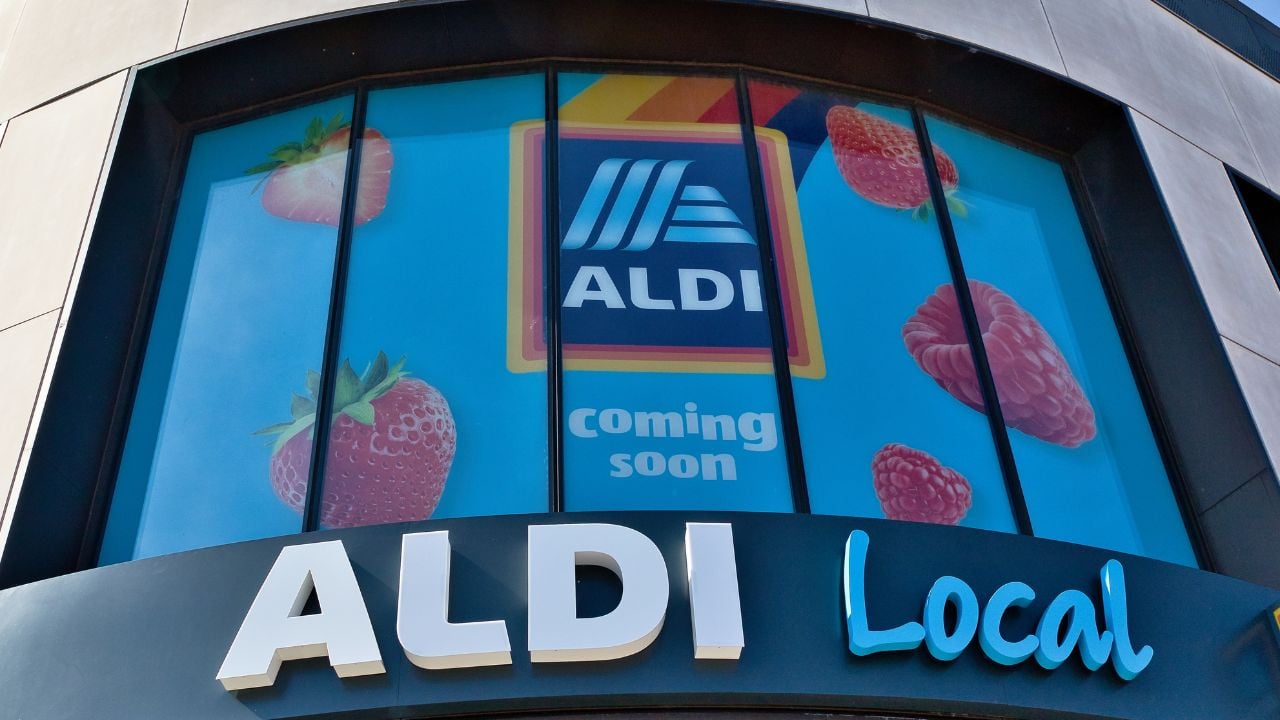
Aldi Is Opening Dozens of New Stores in 2026: What’s Coming to Georgia

Aldi just handed Georgia four new grocery stores it never had before.
Brunswick, Gray, Valdosta, and Douglas are the towns getting their first look at the discount chain Aldi’s front door.
Georgia isn’t getting the flashy debut treatment Aldi’s newest states are getting this year, but it’s still catching a share of the chain’s growth.
These are the new Aldi stores landing in Georgia, and what’s different once the doors open.
Aldi’s Big 2026 Growth Plan
Aldi turns 50 in the United States this year, and the company picked its anniversary to go big.
On January 12, 2026, Aldi confirmed plans to open more than 180 new stores by the end of the year, spread across 31 states.
It’s the biggest push yet.
The expansion carries Aldi’s total U.S. store count to nearly 2,800 by the close of 2026, on the way to a goal of 3,200 stores by the end of 2028.
Behind it sits a $9 billion investment in new stores, distribution centers, and a redesigned website, spread out through 2028.
Colorado and Maine get the headline treatment this year, since both are brand-new markets for the chain.
Georgia isn’t a new market for Aldi.
The chain has been building a footprint there for years, and 2026 adds another layer to it.
Where New Stores Are Landing in Georgia
Four Georgia cities have confirmed new Aldi stores opening in 2026: Brunswick, Gray, Valdosta, and Douglas.
Brunswick sits just outside Jekyll Island on the coast, and Gray sits just north of Macon.
Valdosta anchors deep south Georgia, and Douglas sits between Valdosta and Vidalia.
That’s four new doors.
The Brunswick and Gray stores were slated to open this spring, and Valdosta and Douglas were set to follow by the end of summer, according to reporting from the USA Today Network.
Aldi never released exact opening dates for any of the four, so check before driving out for a first look.
Aldi hasn’t confirmed whether the four are new construction or converted buildings.
That detail matters less than the map does.
Coastal Georgia, Middle Georgia, and South Georgia all get a new Aldi within months of each other, filling gaps between the metro Atlanta stores many Georgians already know.
How Many Aldi Stores Georgia Already Has
Georgia already carries more than 80 Aldi stores, per that same USA Today Network reporting.
That’s a real footprint, not a first foray.
The four new locations build on a base that already stretches from metro Atlanta down through Middle Georgia and toward the coast.
Nationally, Aldi is leaning hard on the Southeast for growth right now.
The chain has been converting shuttered grocery-store buildings across the region into new Aldi locations since a 2024 acquisition briefly put close to 400 former storefronts under its control.
Then, Aldi sold roughly 170 of those stores back to new owners in early 2025, keeping around 220 lined up for conversion.
Close to 90 of those conversions were open by early 2026, with roughly 80 more slated to open across the Southeast before the year ends and more than 200 total planned by the close of 2027.
It adds up fast.
Georgia’s four confirmed cities sit inside that broader Southeast wave, though Aldi hasn’t said how many of the remaining conversions will land inside Georgia’s borders.
From Grocery Building to Aldi
Aldi hasn’t confirmed whether Brunswick, Gray, Valdosta, and Douglas are new construction or converted buildings, but the company’s own numbers suggest conversions are the faster path.
A brand-new Aldi build calls for a lot of ground.
The company’s real estate requirements list a site of roughly 22,000 square feet with at least 95 parking spaces, sitting on a 2.5-acre pad along a road that carries more than 20,000 vehicles a day.
That’s a demanding checklist.
Converting an empty storefront skips most of that search, which is part of why the Southeast keeps leading Aldi’s growth numbers.
Either way, a Georgia town gets a new grocery option, and Aldi gets another foothold outside metro Atlanta.
Psst! How much do you know about Aldi? Take our quiz and see if you can ace it.
Quiz
Aldi History IQ
Answer these questions on Aldi’s origin and its global reach. We bet you can’t get them all right. Prove us wrong?
One half of the original Aldi company, Aldi Nord, bought which now-famous American grocery chain outright in 1979?
A New Look on Every Shelf
Every new Aldi opening in Georgia this year carries more than a fresh coat of paint inside.
Aldi is in the middle of its largest packaging refresh yet, putting the Aldi name on nearly every product on the shelf instead of the dozens of house-brand names shoppers used to sort through.
More than 90% of what Aldi sells is private label, well above what a traditional supermarket stocks under its own name.
The formula holds up.
Cut out national brand names and their marketing costs, and the savings show up at the register instead.
Aldi's own research puts the payoff at nearly $4,000 a year for a family of four who shops there instead of a big-name grocery store.
New Georgia stores roll out with this updated look already on the shelves, so shoppers walking into Brunswick or Valdosta for the first time see the finished version, not the mid-refresh version older stores are still catching up to.
What the Growth Means for Your Wallet
More Aldi stores in Georgia means more shoppers within easy driving distance of the discount format, and that matters most in the small towns getting a location for the first time.
Douglas and Gray never had an Aldi close by before.
Now they do.
Aldi's low pricing centers on private-label goods and a leaner store, not a coupon or a loyalty card.
A quarter buys you a shopping cart at the door, and you get it back the moment you return the cart to the corral.
It's the same deal at every Aldi Georgia already has.
Aldi is also rolling out a redesigned website in early 2026, built around curbside pickup and delivery through partners like Instacart, DoorDash, and Uber Eats.
For shoppers in a town that just got its first Aldi, the online tools arrive already built out, not tacked on later.
How Aldi's Small Format Compares
A typical American supermarket runs more than 42,000 square feet, stocked with tens of thousands of items across dozens of aisles.
Aldi builds smaller on purpose.
The company's own site requirements aim for a store a little more than half that size, and the shelves inside carry a fraction of what a full-size grocery store stocks.
Fewer choices sounds like a downside, and for a shopper hunting one exact brand, it can be.
For Georgia's biggest traditional grocery chain, Publix, the appeal points the opposite way: Deep aisles, a full deli, and name-brand shelves stacked three deep.
Aldi skips most of that on purpose and passes the savings down to the price tag instead.
Many shoppers split the difference, stopping at Aldi for pantry staples and produce, then heading to Publix for whatever Aldi doesn't carry.
9 Publix Quirks Georgia Shoppers Miss the Moment They Move Away
A Roswell couple takes a new job three states north and drives to the closest grocery store for a normal Tuesday run.
Nobody says a word to them the whole trip, and that's when they realize what they left behind.
9 Publix Quirks Georgia Shoppers Miss the Moment They Move Away
8 Georgia Lake Towns Locals Love (and 3 Tourists Overrun)
Georgia has more than a dozen big lakes, and the crowds pile onto about three of them.
Locals sorted that out years ago, and they aren't telling everyone where they went instead.
