
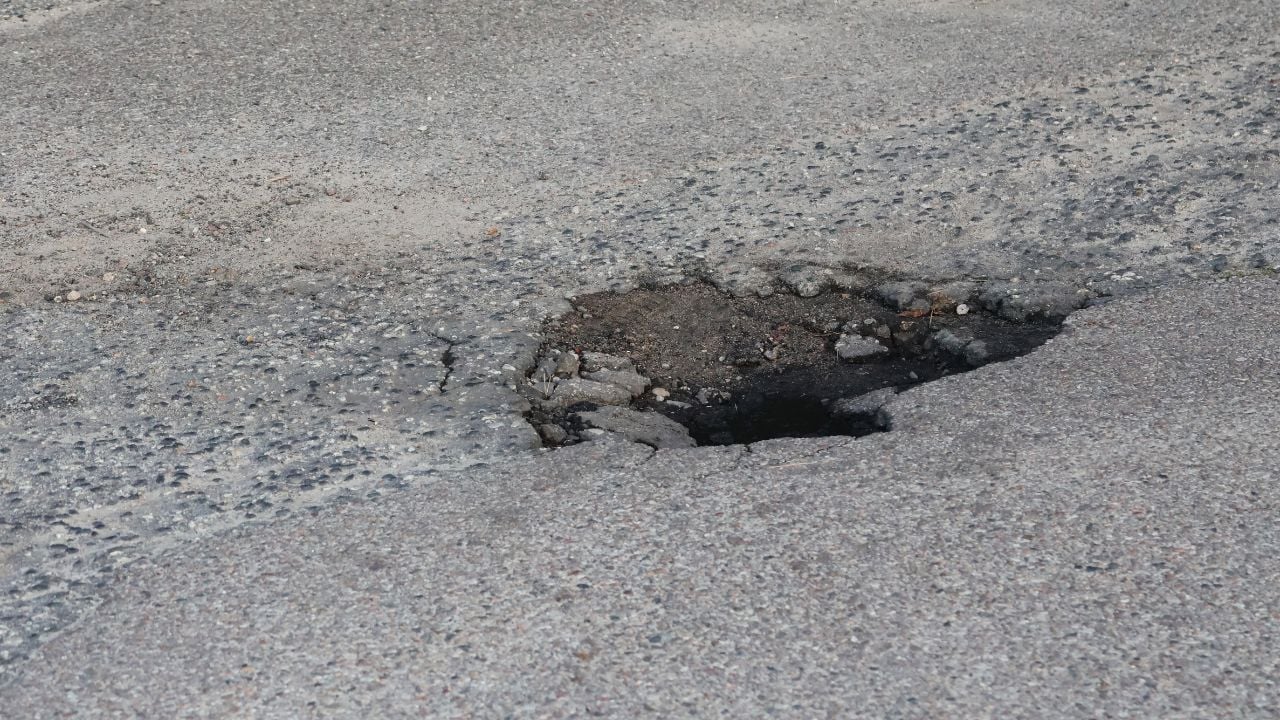
Bad Roads Cost Detroit-Area Drivers Nearly $3,000 a Year, a Report Found

Ever hit a pothole and wonder what it just cost you?
In one Michigan metro, the answer is nearly $3,000 for the average driver.
Here’s what bad roads cost Michigan drivers, and how your area compares.
Where These Figures Come From
The numbers come from TRIP, a nonprofit transportation research group based in Washington, DC.
TRIP says its sponsors include insurance companies, equipment makers, engineering and construction firms and labor unions.
In its August 2025 report, TRIP adds up three costs.
They are for the average driver in each of Michigan’s larger metro areas.
The costs are vehicle operating costs, crashes and congestion.
The group builds those costs from federal road-condition data and traffic research from the Texas A&M Transportation Institute.
The figures are estimates.
Across the whole state, the three costs reach $17.3 billion a year. Each one runs between $5 billion and $6 billion.
If you drive in one of these areas, the numbers are averages for drivers like you.
Each cost gets a section below. Then we go through each metro area, starting with the costliest.
Wear on Your Vehicle
Rough pavement raises the cost of keeping your vehicle on the road. TRIP puts a number on it.
The group counts faster depreciation, extra repairs, more fuel use and quicker tire wear.
TRIP estimates bad roads add $6 billion a year in vehicle costs for Michigan drivers.
That’s an average of $772 each, or about $64 a month.
In the Detroit area, TRIP puts that cost at $1,015 a driver. That’s about a third of the area’s $2,921 yearly total.
Nationwide, an AAA survey found that 1 in 10 drivers needed a repair after hitting a pothole in 2021.
The average repair bill came to almost $600.
If your commute crosses rough pavement, some of that cost shows up in your tires, fuel and repairs.
Crash Costs
TRIP counts crashes as part of what bad roads cost you, but only some of them.
These are crashes where too few roadway safety features likely played a part, though not the main one.
Crashes of every kind cost Michigan $16.1 billion in 2024. TRIP ties $5.4 billion of that to roadway features.
TRIP estimates roadway features likely played a part in about one-third of all fatal crashes in the state.
In the Detroit area, TRIP puts your crash costs at $441 a year.
That’s part of the area’s $2,921 total.
Time Lost in Traffic
TRIP’s cost of bad roads also counts the time you lose waiting in traffic.
TRIP calculates that congestion cost Michigan drivers $5.9 billion in 2024 in lost time and wasted fuel.
In the Detroit area, congestion costs each driver $1,465 a year. That’s the biggest piece of the $2,921 total.
If you spend your commute in stop-and-go traffic, that time is part of the figure.
Detroit
TRIP says bad roads cost the average Detroit-area driver $2,921 a year. That’s the highest of any metro area in the report.
That works out to about $243 a month.
If you commute in the Detroit area, TRIP’s data put your delays at 64 hours a year.
That’s more than two and a half days.
Pavement matters too.
In TRIP’s data, 42% of the area’s major roads rate as poor.
That’s twice the statewide share.
What Sits Behind Detroit’s $2,921
Detroit’s $2,921 a year rests on separate data for each cost.
For crashes, the Detroit area averaged 382 traffic deaths a year from 2019 to 2023.
The congestion piece counts 24 gallons of fuel wasted per Detroit driver. That’s on top of the 64 hours of delay.
For the vehicle piece, TRIP starts from AAA’s driving cost estimates. It uses a modeling tool to estimate the extra cost drivers pay because of substandard roads.
Because $2,921 is an average, your total could be higher or lower.
Grand Rapids and Flint
Grand Rapids ranks second in TRIP’s report. The average driver there loses $2,302 a year.
Your biggest cost in the Grand Rapids area is congestion.
It runs $942 a year for 43 hours of delays, according to TRIP’s data.
Flint’s costs run the other way. Flint drivers lose an average of $2,124 a year.
More than half of that, $1,081, is wear on their vehicles.
That’s the highest vehicle cost of any metro area in the report, or about $90 a month.
Flint also has the largest share of poor roads. In TRIP’s data, 49% of its major roads are in that condition.
Kalamazoo-Battle Creek and Traverse City
Kalamazoo-Battle Creek ranks fourth, at an average of $1,950 a year in TRIP’s report.
Crashes cost you $729 of that. That’s more than in any other area listed.
Traverse City comes in just below, at $1,934.
The mix is different.
Only 10% of its major roads are in poor condition, the lowest share in the report.
Vehicle costs there are $405, also the lowest.
In Traverse City, congestion costs you $895 a year for 31 hours of delays.
That’s more than crashes or vehicle wear.
Lansing and Saginaw-Bay City-Midland
TRIP’s report puts bad roads at $1,856 a year for the average driver in the Lansing area.
In Saginaw-Bay City-Midland, it’s $1,846.
That’s a $10 gap.
If you drive in either area, vehicle wear is your largest cost. It’s $924 in Lansing and $956 in Saginaw-Bay City-Midland.
TRIP’s data put 39% of Saginaw-Bay City-Midland’s major roads in poor condition.
In Lansing, it’s 37%.
Congestion costs you the least of the three in both areas. It’s $436 in Lansing and $366 in Saginaw-Bay City-Midland.
Muskegon and Ann Arbor
In TRIP’s report, bad roads cost the average driver $1,773 a year in the Muskegon area.
In the Ann Arbor area, it’s $1,506.
Ann Arbor’s $1,506 is the lowest total in the report, or about $125 a month.
Detroit’s total is nearly double.
Ann Arbor’s crash cost is the lowest too, at $350.
In Muskegon, TRIP’s data show crashes costing you $624 and vehicle wear $781.
Congestion is $368.
In Ann Arbor, TRIP’s data rate 21% of major roads as poor. That’s the same as the statewide share.
Psst! How much do you know about road damage? Tap each card and see if you can ace it.
Statewide Road Conditions
TRIP rates 21% of Michigan’s major locally and state-maintained roads in poor condition.
Another 19% are in mediocre condition.
That makes 40% in all.
Only two metro areas in the report are at or below the statewide share of poor roads.
They are Traverse City, at 10%, and Ann Arbor, at 21%.
The pavement data cover all arterial and collector roads and highways. They come from the Federal Highway Administration. It relies on figures the Michigan Department of Transportation sends in each year.
The report also rates 1,250 of Michigan’s 11,397 locally and state-maintained bridges as poor or structurally deficient. That’s 11%.
9 Smart TV Settings Michiganders Should Turn Off Tonight

Your smart TV has settings worth a second look tonight.
These are the settings Michiganders should turn off.
