
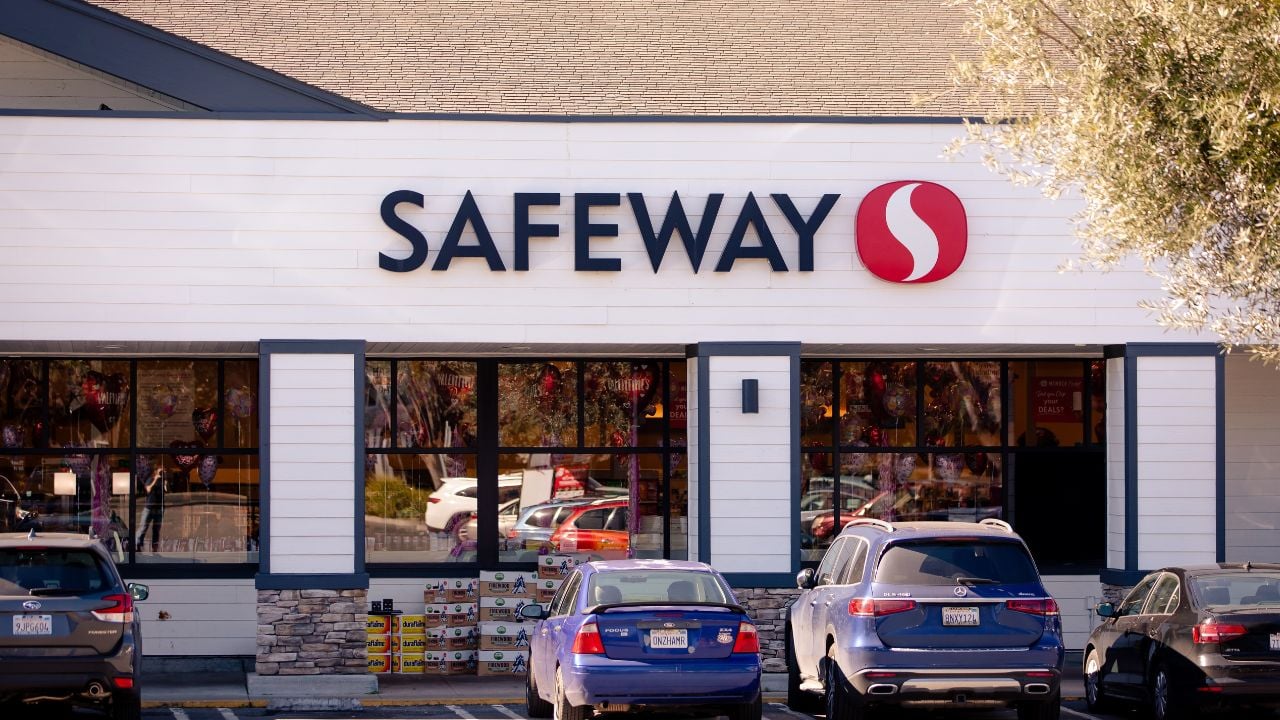
Bay Area Californians Could Pay $149 at Safeway for $100 at WinCo

A can of Campbell’s soup is the same can wherever you buy it in the Bay Area.
But the price isn’t.
Here’s how much more Bay Area Californians could pay at Safeway than at WinCo, and what that gap means for your weekly budget.
Who Ran the Numbers
Checkbook priced a basket of 150 items from July 27 to August 1, 2025.
It mixed national-brand foods that don’t spoil with fresh produce, meat and dairy.
The prices include sales you could get, and it assumes you’d use a club card at any store that offers one.
Digital-only discounts and coupons weren’t counted.
Each store was then compared with the survey average.
The results are a snapshot of that week, last updated in November 2025.
It covers Bay Area stores only. It can’t tell you what shoppers in Fresno or San Diego pay.
Some stores charged close to twice what others charge for the same products.
Here are the price results, starting with the lowest prices.
WinCo and the Lowest Prices
WinCo’s prices ran about 31% lower than the survey average.
So a basket that costs you $100 at the survey average would cost about $69 at WinCo.
Walmart came in about 26% lower, and Grocery Outlet about 23% lower.
Trader Joe’s ran about 22% lower, though it was priced with a modified survey.
Checkbook credits part of that to its smaller stores, which cost much less to run.
Where Safeway Landed
How much more did Safeway charge than WinCo?
About 49% more, on average.
So groceries that cost you $100 at WinCo would cost about $149 at Safeway.
That’s a big gap.
Safeway ran 39% higher than Walmart and 16% higher than Target.
Lucky, Nob Hill and Raley’s had prices about the same as Safeway’s.
We think no store gets everything right. Your store may land in between.
Psst! Where does your usual store land in Checkbook’s results? Sort the table and see if you can spot the biggest gaps.
What WinCo’s Discount Saves a Family
Say your family spends $300 a week at the supermarket.
By Checkbook’s math, WinCo’s 31% discount would save you about $93 a week, or $4,836 a year.
If you spend $200 a week, the same discount comes to about $62 a week.
Your savings also depend on how much you use sales and coupons.
Now say you spend $300 a week at Safeway.
The survey’s 49% gap would put the same groceries at about $201 at WinCo, by our math.
That would save you about $99 a week, or roughly $5,100 a year.
How Checkbook’s Percentages Work
The 49% for Safeway starts from WinCo’s prices. The 31% for WinCo starts from the survey average. Different starting points mean different numbers.
A price score of 90 means prices about 10% below the survey average. A score of 110 means about 10% above it.
Start from Safeway’s prices instead, and the gap shrinks to about 33%, by our math. Put simply, a basket that costs $149 at Safeway costs $100 at WinCo.
The $4,836 comes from $300 a week over 52 weeks, or $15,600, times 31%.
Quality Ratings and Price
Price isn’t everything.
Quality counts too.
Survey members rated stores “inferior,” “adequate” or “superior” on quality.
At least two-thirds of customers rated Safeway, Lucky, Target and Walmart less than “superior” overall.
FoodMaxx, FoodsCo and Smart & Final got the same.
FoodMaxx, FoodsCo and Walmart scored lowest. Fewer than 10% of customers called them “superior.”
Trader Joe’s did better.
76% rated its overall quality “superior.”
For produce, Berkeley Bowl charged nearly as little as Walmart. And 96% of its customers judged its produce “superior.”
Draeger’s, Lunardi’s, Piazza’s Fine Foods and United Markets earned top quality ratings.
But their prices ran higher.
In short, a low price and a top quality score don’t always go together.
Same Soup, Different Price
Take national-brand foods that don’t spoil, where quality isn’t an issue. The survey still found huge price gaps.
A can of soup is the same wherever you buy it.
Fresh meat and produce aren’t. Checkbook says those quality differences may explain some of the price gaps you see.
We’d say packaged goods are the fairest way to compare stores.
Psst! How much do you know about grocery prices? Take our quiz and see if you can ace it.
Quiz
Grocery Price IQ
Answer these questions on grocery shelves, labels and prices. We bet you can’t get them all right. Prove us wrong?
In 1974, what was the first item ever scanned with a barcode at a US store?
Prices Since the Survey
Grocery prices have risen since the 2025 survey.
The Bureau of Labor Statistics (BLS) tracks grocery prices in the San Francisco-Oakland-Hayward area.
They were up 4.3% in the 12 months ending August 2025. The rise slowed to 2.2% in the 12 months ending August 2026.
If you spend $300 a week on groceries, a 2.2% rise adds about $6.60 a week to your bill.
Over those same 12 months, food prices overall rose 3.1% in the area.
Prices for food away from home rose 4.1%, faster than the 2.2% for groceries. So eating out got pricier faster than cooking at home.
9 Things Californians Who Moved Inland Miss About the Coast, and What They Don’t
Many Californians have traded the coast for cheaper homes inland.
These are the things many of them miss about the coast, and a few they don't.
9 Things Californians Who Moved Inland Miss About the Coast, and What They Don’t
6 Old-Fashioned Businesses Making an Unexpected Comeback in California
Some old-fashioned businesses that many people assumed were gone are drawing customers again.
These are the old-fashioned businesses making an unexpected comeback in California.
6 Old-Fashioned Businesses Making an Unexpected Comeback in California
