
Why Florida Homeowners Are Being Dropped by Their Insurance Company

Citizens Property Insurance, Florida’s insurer of last resort, is down to 278,662 policies as of June 2026, from 1.41 million in late 2023.
Florida homeowners get dropped over paperwork more than behavior: a four-point inspection, a roof past a carrier’s age line, a filing deadline nobody flagged.
None of that shows up as a warning first, and the notice periods run short.
Note: This is general information, not legal or insurance advice. Notice periods and underwriting rules are subject to change, so confirm your policy’s specifics with your insurer or agent, or check current requirements with the Florida Office of Insurance Regulation.
Nonrenewal: One Way Insurers End Coverage Outright
The most straightforward reason a homeowner loses coverage is that the insurer simply decides not to renew the policy at all.
Florida law gives homeowners the most warning for exactly this scenario, at least 120 days‘ written notice before a nonrenewal takes effect.
That’s about four months’ warning.
The notice has to name the actual reason, not a vague form letter.
It also has to reach the policyholder listed first on the policy.
Cancellation Notice Moves on a Faster Clock
Cancellation works on a much shorter clock than nonrenewal, and it can happen in the middle of a policy term instead of waiting for the end.
For the first 60 days a new policy is in force, an insurer can cancel it for almost any reason with just 20 days’ notice.
That’s not much runway.
Miss a payment at any point in the policy, and that notice period drops again, to 10 days.
After 60 days, the law narrows the cancellation reasons down to four things.
Those four things are a misstatement on the application, nonpayment, a failure to meet underwriting requirements, and a change in the risk the home now carries.
A roof or inspection problem is what usually lands a homeowner in one of those last two categories.
The 4-Point Inspection That Can Cost You a Policy
Citizens Property Insurance Corporation requires a four-point inspection on any home more than 20 years old, and private insurers often set a similar age threshold.
A licensed inspector checks four systems, electrical, plumbing, heating and cooling, and the roof.
That’s four systems covered in one report.
Exposed wiring, an aging panel, or an active leak on that report gives the insurer grounds to require repairs before it will write or renew the policy.
That’s not a small ask.
Left unresolved, that finding becomes the paper trail behind a nonrenewal notice.
The Roof Ages That Trigger Extra Paperwork
Citizens Property Insurance Corporation sets separate roof-age lines inside that same four-point inspection.
A composition shingle roof needs proof of five years’ remaining life once it passes 25 years old.
A tile or metal roof gets a much longer runway, 50 years, before that same paperwork applies.
Why Roof Age Trips Up so Many Homeowners
Roof age is the one condition Florida law singles out by name for insurance underwriting.
An insurer can’t refuse to write or renew a homeowners policy on a roof under 15 years old just because of its age.
Fifteen years is the line.
Once a roof passes that mark, the homeowner can order an inspection from an authorized inspector.
Coverage has to continue if that inspection shows at least five years of useful life left.
A 2024 update to that law also let licensed roofing contractors perform the inspection, not just engineers or building inspectors.
That made it easier to book an inspection in a hurry.
Psst! How much do you know about Florida’s hurricane insurance rules? Take our quiz and see how many you can get right.
Quiz
Florida Insurance IQ
Answer these on Florida’s hurricane insurance history and rules. We bet you can’t get them all right. Prove us wrong?
Citizens Property Insurance Corporation formed in 2002 by merging two older programs. What did one of them cover?
Citizens Property Insurance and the 20% Rule
Citizens Property Insurance Corporation is Florida's insurer of last resort, and state rules only let a homeowner use it that way.
A tool called the Clearinghouse checks every new application, and every renewal, against private-market offers.
Once a private offer comes in at no more than 20% above what Citizens would charge, that homeowner is locked out of Citizens.
Twenty percent is the cutoff.
That comparison runs again at renewal.
It can push a homeowner who qualified for Citizens last year to a private company this year, even if nothing about their home changed.
Depopulation: When a Private Insurer Takes Over Your Policy
Citizens Property Insurance Corporation also runs a program called depopulation, and it can move a homeowner off Citizens even faster than the Clearinghouse does.
A private insurer offers to assume a batch of Citizens policies, and Citizens sends a choice letter to everyone caught in that offer.
Some homeowners get options in that letter, stay with Citizens, or switch to the private company on its terms.
Not everyone gets a choice.
A homeowner who no longer meets Citizens' retention rules gets a notice that the private company will simply take over, with no vote involved.
Citizens hands every one of those private insurers a monthly spreadsheet loaded with more than 300 data points on each home it covers, from roof age to claims history.
That data lets a company cherry-pick the safest policies first.
That's why a homeowner with a clean record can land back on the market if that same insurer decides not to renew later anyway.
That shuffle is a big part of why Citizens sank to 278,662 policies by June 2026, down from 1.41 million in late 2023.
Once You Know Why: What Homeowners Can Do Before the Deadline
Knowing the reason behind the notice is what makes it possible to push back before the deadline passes.
Homeowners keep a few options once a nonrenewal or cancellation notice shows up in the mailbox.
Florida's Department of Financial Services runs a consumer complaint line built for exactly this kind of dispute, and it can push an insurer to justify a nonrenewal that looks off.
Homeowners filed more than 23,400 of those insurance complaints in 2024 alone, more than double the number filed just four years earlier.
It's free, and it's fast.
The notice itself already has to name a reason under state law, so a homeowner can hold the insurer to whatever reason it gave in writing.
A licensed insurance agent can also rerun the Clearinghouse comparison at the next renewal.
Private rates shift enough year to year that a home which failed the 20% test once can pass it later.
FAQ
Quick answers to the questions homeowners ask most when their insurance company drops them.
Can a Florida insurer drop me without any warning?
No. State law requires at least 120 days' notice before a nonrenewal. A cancellation gets far less warning, just 20 days within a new policy's first 60 days, or 10 days for nonpayment.
Can my insurer drop me just because my roof is old?
Not automatically. Florida law protects roofs under 15 years old from age-based nonrenewal. A roof 15 years or older can often keep its coverage with an inspection showing at least five years of useful life left.
What is the Citizens Property Insurance 20% rule?
It's the Clearinghouse rule. It keeps a homeowner off Citizens, or moves them off at renewal, whenever a private insurer's offer isn't more than 20% higher than what Citizens would charge.
Can Citizens Property Insurance transfer my policy without my okay?
Yes, in some cases. Homeowners who no longer meet Citizens' retention rules get a notice that a private insurer will assume their policy through the depopulation program, with no vote involved.
One protection kicks in only after a governor's emergency declaration. An insurer can't nonrenew a storm-damaged Florida home until 90 days after the repairs are finished.
Homeowners rebuilding from an active storm season get that window whether their insurer likes it or not.
7 Storm Season Scams That Target Florida Homeowners Every Year
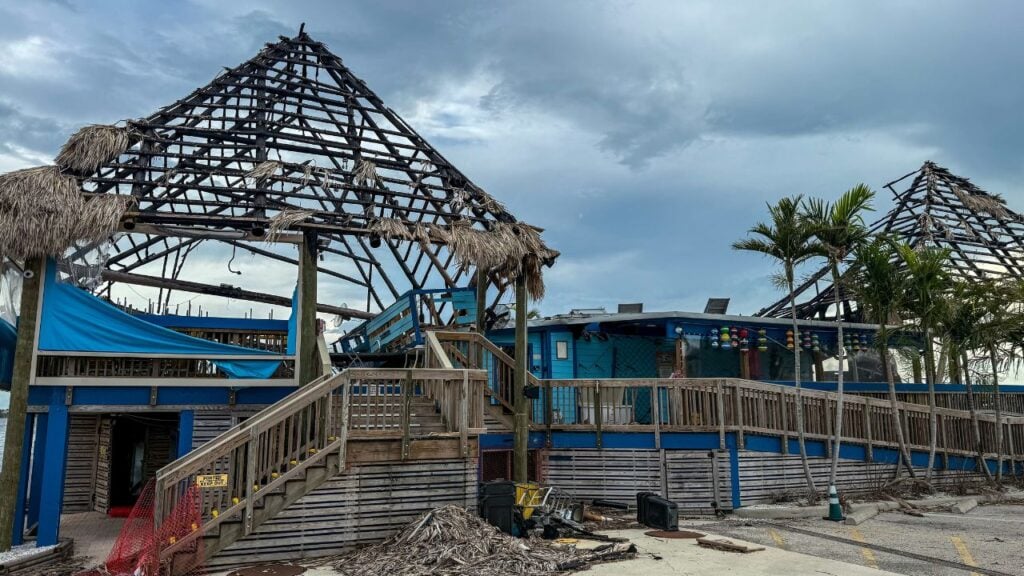
The federal disaster-fraud hotline Florida homeowners used to rely on shut down for good in March 2026, shortly before another hurricane season got underway.
The scams that hotline used to field haven't gone anywhere, and a few of them time their pitch to land right after a homeowner files a claim.
7 Storm Season Scams That Target Florida Homeowners Every Year
8 Things Florida Homeowners Should Know About the Property Tax Amendment a Judge Sent Back
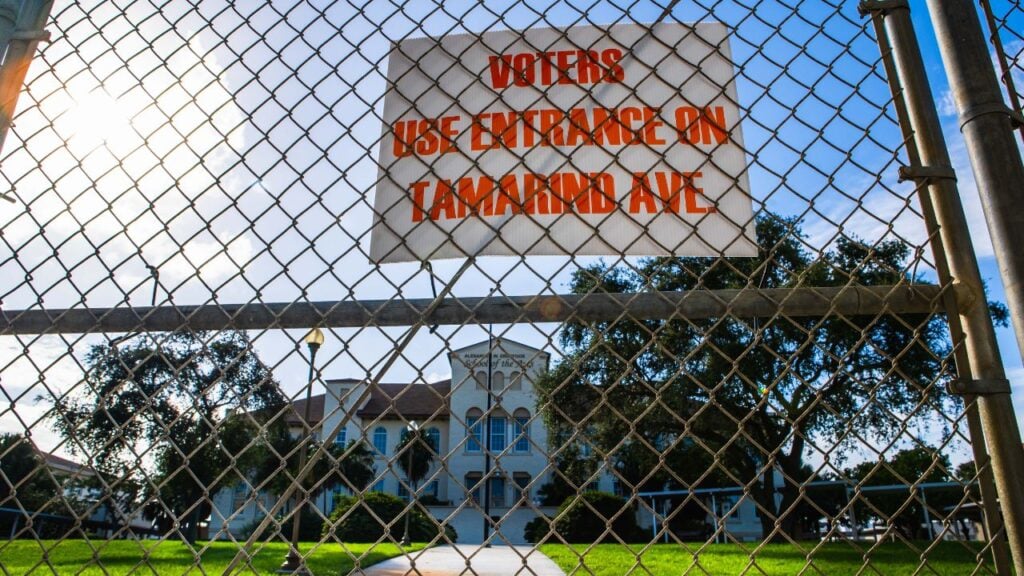
Florida's homestead exemption could look very different after a ballot measure this November, and not in the way many homeowners assume.
A judge recently forced the state to describe that measure more plainly, and the fine print changes what a homeowner gets.
8 Things Florida Homeowners Should Know About the Property Tax Amendment a Judge Sent Back
