

Is It Rude to Correct Someone Who’s Wrong? 8 Times Pennsylvanians Should Keep Quiet

Pennsylvanians love being right. But Punxsutawney Phil makes that hard to prove.
The famous groundhog has correctly called the weather just 39% of the time since 1887.
That’s worse than a coin flip.
So, is it rude to correct someone who’s wrong? In our opinion, these are the situations when Pennsylvanians are better off keeping quiet to keep the peace.
1. Pennsylvania Dutch Isn’t Dutch
Pennsylvania Dutch has nothing to do with the Netherlands. Correcting a coworker who assumes otherwise over a lunch break isn’t the flex it sounds like.
The name comes from Deutsch, the German word for German, worn down by English tongues generations ago.
Many Pennsylvania Dutch families trace back to German and Swiss settlers who landed in Lancaster, Berks, and Lebanon counties in the 1700s, not Amsterdam.
German through and through.
Tourism boards and bakery labels across Pennsylvania have used the same confusing name for generations.
So when a coworker repeats it, they’re echoing the state’s own signage, not making up a mistake.
Jumping in to correct it just makes you the annoying one at the lunch table.
2. Ordering “Wit” at the Counter
Ever hear someone order a cheesesteak “wit Whiz” at a Philadelphia counter and want to correct them?
Save the correction.
It only slows the line down more.
“Wit” and “witout” are Philadelphia’s own words for onions, not cheese, and that friend at the counter ordering wit Whiz just asked for onions and Cheez Whiz in the same breath.
Pure Philly shorthand.
There’s no official cheese, either.
Provolone, American, and Cheez Whiz are all correct answers, no matter what a friend insists at the register.
Interrupting someone’s order to argue cheese philosophy in a packed line at Pat’s or Geno’s earns dirty looks from everyone behind you, not gratitude from your friend.
3. Punxsutawney Phil’s Groundhog Forecast
Every February 2, a crowd packs Pennsylvania’s Gobbler’s Knob to watch Punxsutawney Phil call the weather.
Point out his actual accuracy to a neighbor mid-cheer.
The fun morning turns into a math lecture nobody asked for.
Phil’s record sits at just 39% correct since his first recorded prediction in 1887, and his accuracy over the last decade runs even lower.
Not exactly reliable.
A neighbor already knows Phil is more mascot than meteorologist, and reciting his stats while they’re excited about an early spring doesn’t teach them anything new.
Punxsutawney has run this tradition since the 1880s.
Nobody shows up for the science.
4. Liberty Bell’s July Ring
The Liberty Bell draws a line of Pennsylvania tourists every summer, and correcting a fellow visitor’s version of its history is rarely worth the interruption.
Contrary to the popular story, the bell never rang for the Declaration of Independence on July 4, 1776.
The document went to the printer that day, not to a bell tower.
Even the backup date people reach for, July 8, 1776, comes with an asterisk.
The steeple was in such poor shape by then that historians doubt it could have rung at all.
Even historians hedge.
The National Park Service itself hedges on the bell’s own history.
Cutting off a stranger’s tour-group retelling to win an argument nobody can settle is the quickest way to become the least popular person on the tour.
Psst! How often do you turn into the fact police? Run through this checklist and see where you land.
5. Cream Cheese Named Philadelphia
Order a bagel with Philadelphia cream cheese anywhere in Pennsylvania, and you’re holding a tub named after a city it never touched.
Many bagel shops across the state stock it without a second thought, so correcting a stranger’s assumption that it’s made in the city isn’t worth the awkward pause at the counter.
The cheese was invented by a dairyman in Chester, New York, in 1872.
A cheese distributor slapped the name “Philadelphia” on it in 1880 purely for marketing, borrowing the city’s reputation for fine dairy at the time.
Good branding.
Wrong state.
A barista’s harmless assumption isn’t hurting anyone.
Let it slide with the bagel order and move on with the morning.
6. Yuengling’s “Oldest Brewery” Claim
Yuengling calls itself America’s oldest brewery, and Pennsylvania tailgates repeat that line word for word.
Point out the fine print to a coworker mid-brag.
A fun boast turns into a lecture nobody asked for.
David Yuengling founded the brewery in Pottsville in 1829.
The company’s own claim is carefully worded: America’s oldest brewery still running, not the oldest one that ever existed.
Colonists were brewing in Virginia more than two centuries earlier, but those breweries didn’t survive.
Yuengling did.
A coworker’s shorthand version is close enough for a tailgate.
Save the fine print for a moment when nobody’s holding a plastic cup of lager.
7. Betsy Ross and the Flag
Betsy Ross gets credit for sewing the first American flag in almost every Pennsylvania retelling, and correcting a friend’s version of the story deserves more patience than it usually gets.
The story didn’t surface until 1870, nearly a century after the supposed meeting with George Washington, when her grandson brought it to the Historical Society of Pennsylvania.
No receipt, letter, or record from 1776 backs it up.
But no record disproves it, either.
Historians still argue over whether Francis Hopkinson deserves the credit instead.
Nobody can prove it.
Shredding a friend’s favorite Philadelphia story over a dispute even historians can’t settle only makes the conversation awkward.
When Correcting Someone Helps
Correcting someone isn’t automatically rude, according to researchers who study exactly this question.
A 2023 study in the journal Cognitive Research found the backfire effect, the fear that correcting someone only makes them dig in harder, turned up in barely a sliver of cases.
The bigger risk runs the other direction. Psychologists call it the illusory truth effect: A false claim left uncorrected gets more believable, not less, every time someone repeats it out loud.
The dividing line comes down to stakes, not manners, and a friend’s flag story carries a lot less weight than a wrong number on a shared tax form.
8. Terrible Towel’s Origin Story
Watch any Steelers game in Pennsylvania, from Heinz Field to the parking lot tailgates, and someone nearby is waving a gold Terrible Towel.
Correct a fellow fan’s version of how it started.
The mood dies fast.
Broadcaster Myron Cope invented the towel on December 27, 1975, days before a playoff game against the Baltimore Colts, not for a Super Bowl as some retellings claim.
Close, but not quite.
The Steelers had official gold-and-black towels printed in time for Super Bowl X that January, which is probably where the mix-up with the origin story started.
Cope donated the towel’s rights in 1996 to the Allegheny Valley School in Coraopolis, and royalties from every towel sold since have gone there instead of to him.
9 Signs You Grew Up in a Pennsylvania Steel Town
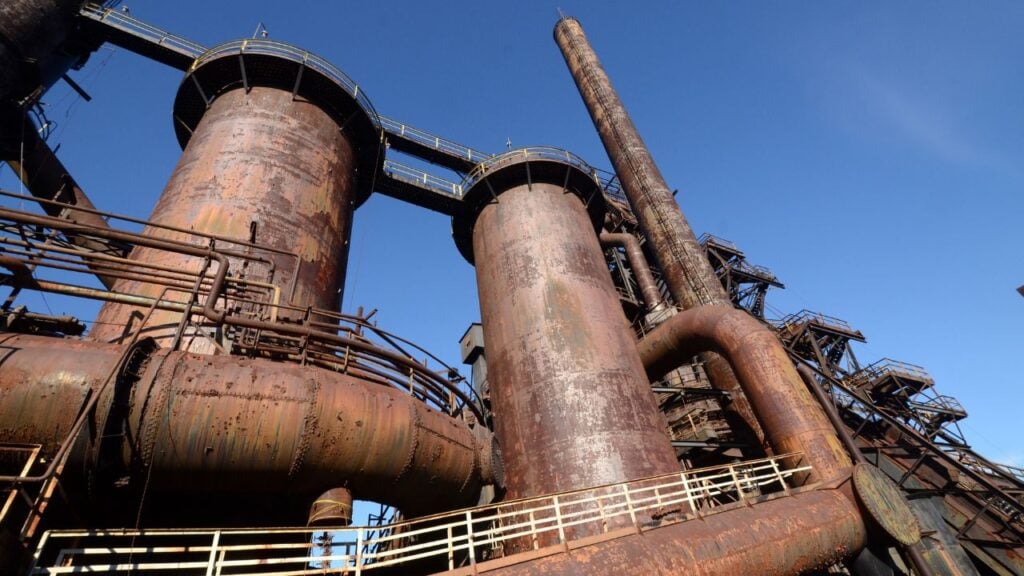
Bethlehem Steel once ran the biggest mill many Pennsylvania families had ever seen, and an entire way of raising a family grew up around its whistle.
Every Sunday, every summer, and even an ordinary Tuesday bent around one furnace’s schedule in a way no other town’s did.
9 Signs You Grew Up in a Pennsylvania Steel Town
7 Pennsylvania Fair Foods That Sound Wrong but Taste Right
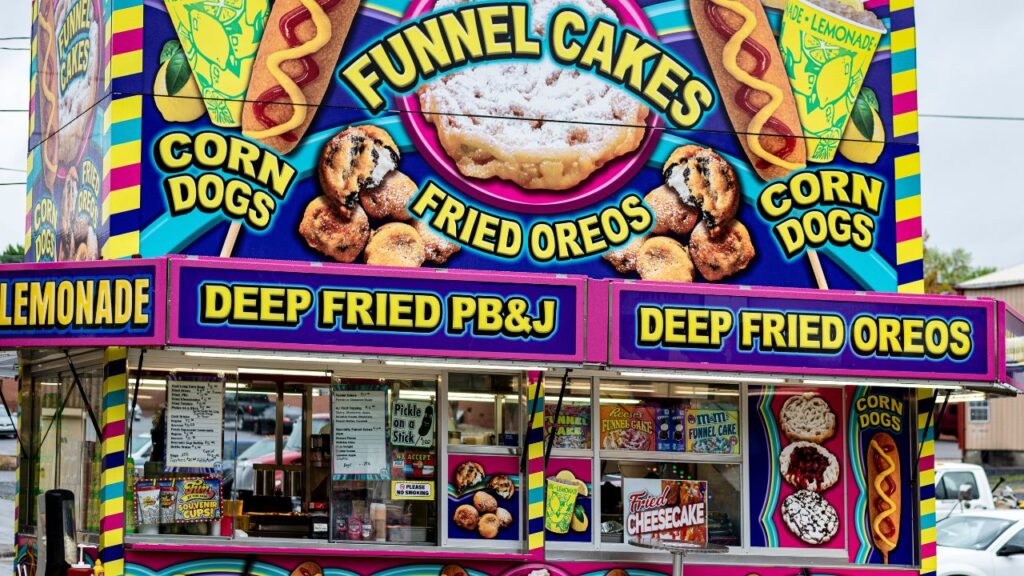
Six Pennsylvania county fairs turned up this summer, from Wayne County in the Poconos to Tioga County near the New York state line, and every one of them served food whose name gets your order wrong before you’ve had a single bite.
Funnel cake is easy enough to guess, but a few of these fair staples sound like a mistake on the menu until the first bite proves otherwise.
