
5 Rules That Limit Where Mainers Can Legally Walk on the Beach

You walk down to the water in Maine on a clear morning with your shoes in your hand, and someone calls out from their porch to go away.
A court ruling from decades ago settles who’s right.
Here are the rules that limit where Mainers can legally walk on the beach.
Note: This is general information, not legal advice. Property laws and court rulings are subject to change.
1. Colonial Ordinance
Maine’s private shoreline starts with the Colonial Ordinance of 1641-47.
Massachusetts Bay Colony wrote that ordinance, which Maine’s highest court relied on again in 2019.
If you buy a beachfront lot whose deed runs to the water, you usually own the wet sand along with the dry.
The wet sand is the strip between the average high-tide line and the average low-tide line.
At most, that title reaches 100 rods from the high-tide line, which is 1,650 feet because a rod is 16.5 feet.
Massachusetts law also lets private parties hold tidelands, but subject to a public easement for navigation and free fishing and fowling.
Who Owns Each Strip of Maine’s Shore
Maine’s shore has three strips, and the State owns only one of them.
The State owns the land below the mean low-water mark, the average low-tide line.
The dry sand above the mean high-water mark usually belongs to the owner of the land behind the beach.
The wet sand between the two marks follows that pattern too, but the public keeps certain rights there.
2. Bell v. Town of Wells
If you’re wondering where you stand on someone’s private shoreline, the answer comes from a case about Moody Beach in Wells.
The 1989 Bell opinion described Moody Beach as about a mile long, with more than 100 privately owned lots along the ocean.
Owners there sued the Town of Wells in 1984 to limit how the public could use the sand.
After a Superior Court win for the owners in 1987, Maine’s highest court sided with them 4-3 on March 30, 1989.
The justices said the public’s rights on that privately owned land stop at fishing, fowling and navigation, read liberally.
Fowling means hunting wildfowl.
3. Takings Rule
Maine’s private shoreline is protected partly by a takings rule, which says the government can’t take property for public use without paying for it.
In 1985, lawmakers passed the Public Trust in Intertidal Land Act, which declared that the public, you included, has a right to use the wet sand for recreation.
In Bell, the justices held that the Act, on its face, was an unconstitutional taking of private property for public use.
You can still find the Act in Maine’s statute books, even though Bell ruled against it.
The justices said the State or a town could instead buy the access it wants.
A town can also use eminent domain, which lets government take property for public use if it pays the owners.
Next door to Moody Beach, the Village of Ogunquit acquired Ogunquit Beach by eminent domain in 1925.
While Maine’s Act fell, Oregon’s 1967 Beach Bill set up a permanent public easement for access and recreation along its ocean shore.
That easement runs seaward of the existing line of vegetation, regardless of ownership.
Psst! How much do you know about Maine’s coast? Take our quiz and see if you can ace it.
Quiz
Maine Shore Smarts
Answer these questions on Maine’s coast, tides and property law. We bet you can’t get them all right. Prove us wrong?
Three of the seven justices dissented in the 1989 Moody Beach ruling. What did they say the public’s rights were broad enough to include?
4. Ross v. Acadian Seaplants
A private shoreline includes the rockweed attached to its rocks and ledges between the tides, a point the Acadian Seaplants ruling settled.
Acadian Seaplants harvested rockweed, a brown seaweed, at mid-tide from skiffs with specially designed cutting rakes.
On March 28, 2019, Maine's highest court held that living rockweed attached to the shore belongs to the owner of the land behind it.
The justices also held that harvesting rockweed isn't fishing.
They called the boat travel in a harvest secondary to the harvest itself, so navigation didn't cover it either.
If you own a beachfront lot whose title reaches the low-tide line, you own the rockweed in front of it too.
The majority left Bell alone, but three justices wrote separately to say they would overrule it.
5. Binding Precedent
A Superior Court judge ruled for the Moody Beach owners in early 2024, saying a trial court cannot overturn Bell.
Unless Maine's highest court revisits Bell, the wet-sand limits stay the same.
The State or a town could also buy or condemn access.
If you walk north from Ogunquit's North Beach, you cross into Moody Beach.
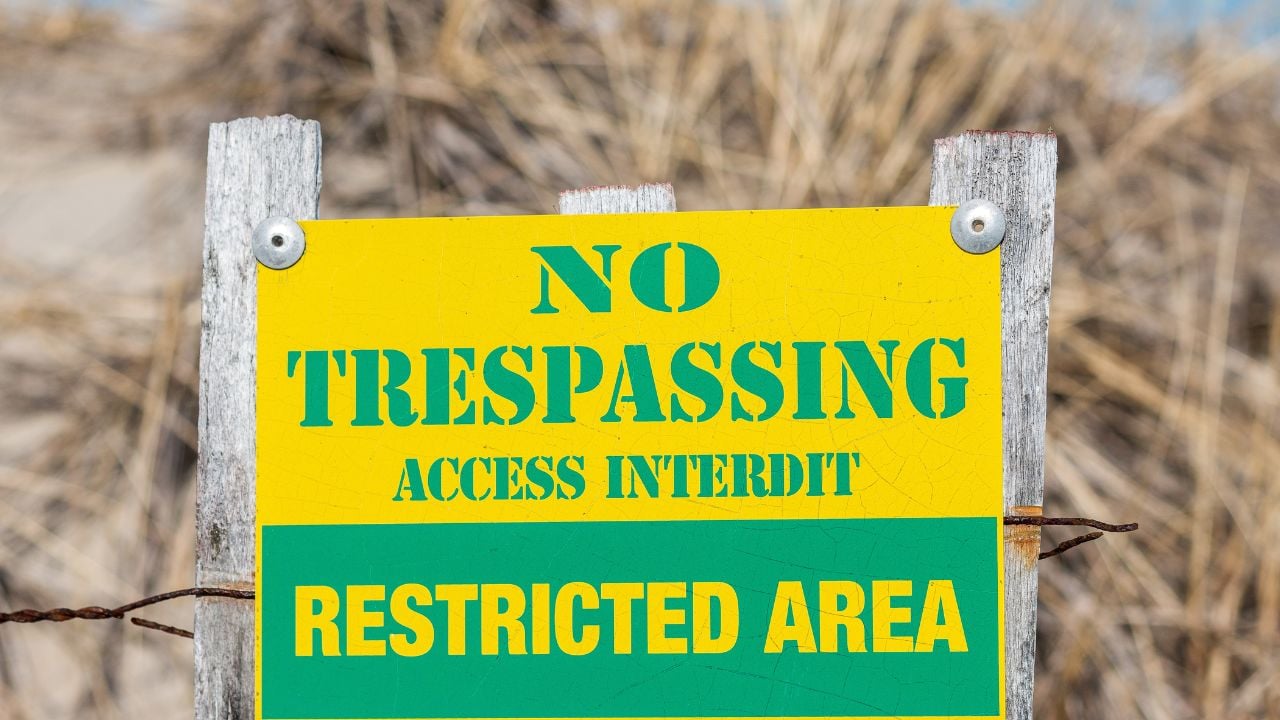
A sign at that line, photographed in September 2017, advises beachgoers that Moody Beach is private to the low-water mark.
Nearly every party appealed, including the Attorney General and the plaintiffs asking for recreational use of the wet sand.
Maine's highest court heard arguments on October 10, 2024, at Lewiston High School.
A lawyer for those plaintiffs asked the justices to overturn Bell, while a lawyer for one of the owners said overturning it would be a taking.
Many of the justices' questions focused on whether the plaintiffs had standing to sue.
As of mid-October 2026, we found no ruling from Maine's highest court in the case, which it heard in October 2024.
Unless a ruling is out there that we missed, Bell still governs what you can do on the wet sand at Moody Beach.
Where the Public Has Rights
A private shoreline has a narrow public exception for scuba divers.
In the 2011 McGarvey case, the Maine Supreme Judicial Court said the public may walk across private wet sand to reach the ocean for scuba diving.
All six justices agreed on that result but split evenly on the reasoning.
If you're carrying scuba gear to the water, the court allowed you to cross that sand on those facts.
In 2019, Maine's highest court ruled that the Town of Kennebunkport, not the owners of 22 disputed properties, holds title to the beach at Goose Rocks.
The deeds behind most of those lots stopped at a seawall or bank.
The usual rule that title runs to low water applies when a deed includes a call to the water, a reference to it.
In the Almeder case, that meant the Town held title to the beach seaward of the seawall, for the benefit of the public.
The court limited that result to the unique circumstances of the case.
5 Maine Lighthouses You Can't Get Inside
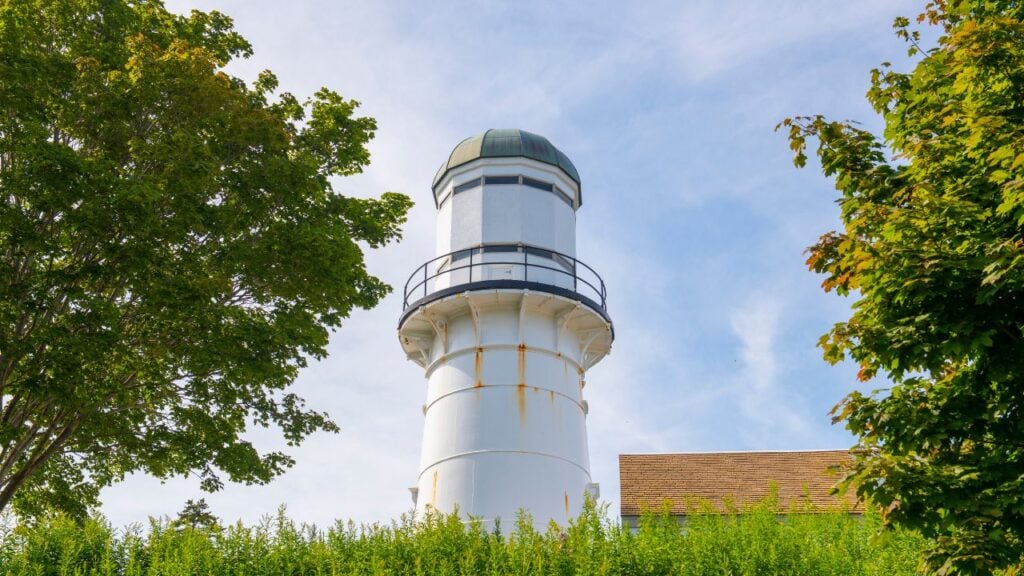
Many Maine lighthouses are easy to see from the shore.
Getting inside a lighthouse is another matter.
5 Maine Lighthouses You Can't Get Inside
9 Things You'll Only Understand About Maine After a Winter There

Summer visitors see Maine at its best.
A Maine winter brings the early dark and the chores that come with the cold.
9 Things You'll Only Understand About Maine After a Winter There
