

New York’s Used Car Lemon Law: How Long Your Warranty Lasts and What It Covers

New York’s used car lemon law runs anywhere from 30 days to 90 days, depending on how many miles were on the odometer the day you bought the car.
Nobody at the dealership decided to offer that warranty out of the goodness of their heart.
It’s the law, and New York is one of only seven places in the country where a dealer can’t sign it away with an “as is” sticker.
Many buyers assume “as is” means no protection.
In New York, it usually doesn’t.
Note: This is general information, not legal advice. Lemon law protections and mileage thresholds are subject to change, so confirm the current requirements with the New York State Attorney General’s office.
Which Used Cars New York’s Lemon Law Covers
New York’s used car lemon law doesn’t apply to every used vehicle sold in the state.
A car only qualifies once it’s been driven past 18,000 miles or two years from its original delivery, whichever comes first.
A newer used car falls under the separate new-car lemon law instead.
The vehicle also has to come from a licensed New York dealer, not a private seller.
The sale or lease price has to run at least $1,500.
And the car needs fewer than 100,000 miles on it at the time of purchase.
Personal use only.
A business fleet purchase doesn’t count.
Where New York’s Used Car Law Doesn’t Reach
A handful of sales fall outside New York’s used car lemon law entirely, no matter how badly the car breaks down afterward.
A private sale between two individuals, a car sold for less than $1,500, or a car with more than 100,000 miles at the time of sale all fall outside it.
Motor homes, off-road vehicles, and cars the state classifies as historical are excluded too, along with narrow dealer categories like employee sales and certain public utility auctions.
How Long the Warranty Lasts by Mileage
New York sets the warranty’s length by the odometer reading on the day you buy a used car, not by one flat number everyone gets.
A car with 18,001 to 36,000 miles carries a minimum warranty of 90 days or 4,000 miles, whichever comes first.
Between 36,001 and 79,999 miles, the warranty drops to 60 days or 3,000 miles.
A car with 80,000 to 100,000 miles gets 30 days or 1,000 miles.
Mileage decides everything.
Higher mileage means a shorter runway to catch a problem.
The dealer has to put this warranty in writing, and it has to spell out these minimums at or before you sign.
Notify the dealer of a covered defect before the warranty period runs out.
The dealer still has to fix it under the law, even if the calendar flips past the deadline before the repair happens.
What Parts the Warranty Has to Cover
The warranty New York requires doesn’t cover the whole vehicle bumper to bumper.
It has to cover the systems the law names outright.
The engine is one covered system, including the water pump, fuel pump, and engine block.
The transmission is another, along with its internal parts and the torque converter.
Drive axle parts count too, from the axle housings to the propeller shafts.
So do the brakes, from the master cylinder to the disc brake calipers.
Add the radiator, the steering gear and pump, and the alternator, generator, starter, and ignition system.
The battery is the one common part left out entirely.
The dealer has to repair any failure in those parts, or reimburse you for a reasonable repair cost.
No charge to you.
How Many Repair Tries Before You’re Owed a Refund
Under New York’s lemon law, you don’t have to accept endless trips back to the shop.
The law treats a dealer’s repair chance as reasonable once the same problem has been through three or more repair attempts and still isn’t fixed.
It’s also reasonable once the car has sat out of service for a cumulative 15 days or more during the warranty period because of that problem.
That 15-day clock can stretch if the dealer is waiting on a part, as long as the dealer is working to track it down.
Even then, once the car hits a cumulative 45 days out of service, you’re entitled to a refund or a replacement no matter what’s holding up the parts.
You don’t need both triggers to pull.
Either one is enough.
That entitles you to a refund of the purchase price, or a comparable replacement car if the dealer offers it instead.
You get to pick, not the dealer.
Two exceptions apply: A problem that doesn’t seriously hurt the car’s value, or a problem you caused yourself through abuse, neglect, or an unauthorized modification.
Psst! How much do you know about New York’s other car laws and inspection rules? Take our quiz and see how many you can get right.
Quiz
New York Car Law Trivia
Answer these questions on New York’s auto laws and inspection history. We bet you can’t get them all right. Prove us wrong?
Which state passed the nation’s first modern lemon law, a year before New York’s own new-car version?
Requesting Arbitration Through the Attorney General
The Attorney General's office gives New York buyers a path when a dealer won't make it right.
You can request arbitration through the New York Attorney General's Lemon Law Unit instead of heading straight to court.
Fill out the Request for Arbitration form, and lay out the problem along with the exact dates and mileage involved.
The Attorney General's office reviews the claim to confirm it qualifies, then forwards it to an outside administrator.
That administrator appoints an arbitrator who typically hears the case within 35 days.
If the arbitrator rules in your favor, the dealer has 30 days to comply with the decision.
Miss that window, and the dealer owes an extra $25 for each business day, up to $500, on top of the original award.
That penalty adds up fast.
Why "As Is" Doesn't Cancel the Warranty
A dealer in New York can't sign this warranty away, no matter what the buyer's order says.
Any agreement that tries to waive, limit, or disclaim these rights is void under the law.
No exceptions for fine print.
Even if a dealer never hands over a written warranty at all, state law treats the dealer as having given it anyway.
The sticker on the windshield doesn't change that.
New York is one of just seven places in the country whose used car lemon law survives an "as is" disclaimer.
Hawaii, Massachusetts, Minnesota, New Jersey, New York, Rhode Island, and the U.S. Virgin Islands round out that short list, according to the National Consumer Law Center.
The nonprofit singles out New York's version as particularly strong, since it lets a buyer sue directly to enforce the warranty instead of waiting on a regulator to act.
The way out of this law isn't a sticker.
It's one of the actual exemptions: A private sale, a car under $1,500, a car over 100,000 miles, or the handful of dealer categories the statute names outright.
FAQ
Quick answers to what New York used car buyers ask most about the lemon law.
Does New York have a lemon law for used cars?
Yes. Dealers must give buyers a written warranty covering named parts, with a length set by the car's mileage at the time of sale, running from 30 days up to 90 days.
Which used cars does the law cover?
Cars bought from a New York dealer for at least $1,500, with fewer than 100,000 miles at purchase, driven past 18,000 miles or two years from original delivery.
Can a dealer sell a used car "as is" in New York?
A dealer can use the phrase, but it can't legally cancel the required warranty. Any waiver of these rights is void, and the dealer is treated as having given the warranty by law either way.
What happens if the dealer can't fix the problem?
After three or more failed repair attempts on the same issue, or 15 cumulative days out of service, you're entitled to a refund or a comparable replacement car.
How do you request arbitration?
Complete the Attorney General's Request for Arbitration form and send it to the Lemon Law Unit by email or mail. An arbitrator typically hears the case within 35 days.
New York also puts a four-year deadline on taking a lemon law claim to court, running from the vehicle's original delivery date.
Buyers who win in court can also recover their attorney's fees, on top of whatever refund or replacement the law already guarantees.
9 Things New Yorkers Do at a Deli That Confuse Everyone Else
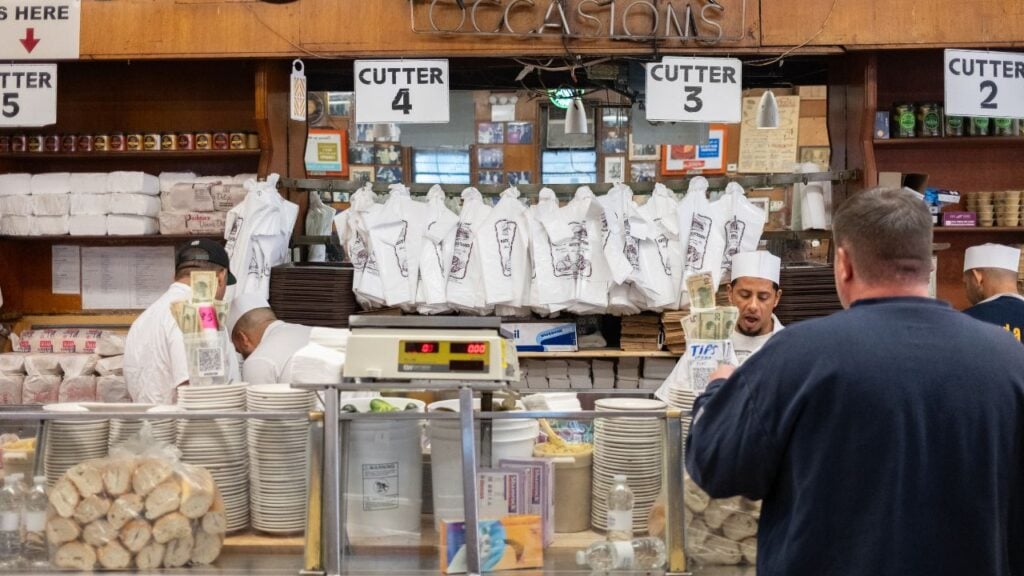
New York City is home to thousands of delis and bodegas. Every one of them runs on the same unwritten rules.
Almost nobody explains those rules to a first-timer, and the mistakes give tourists away instantly.
9 Things New Yorkers Do at a Deli That Confuse Everyone Else
6 Fast Food Orders That Cost More Than New York City Residents Expect in 2026

Fast food prices in New York City have risen further than many people realize.
A few familiar orders now cost enough to make even regulars do a double take at the register.
6 Fast Food Orders That Cost More Than New York City Residents Expect in 2026
