
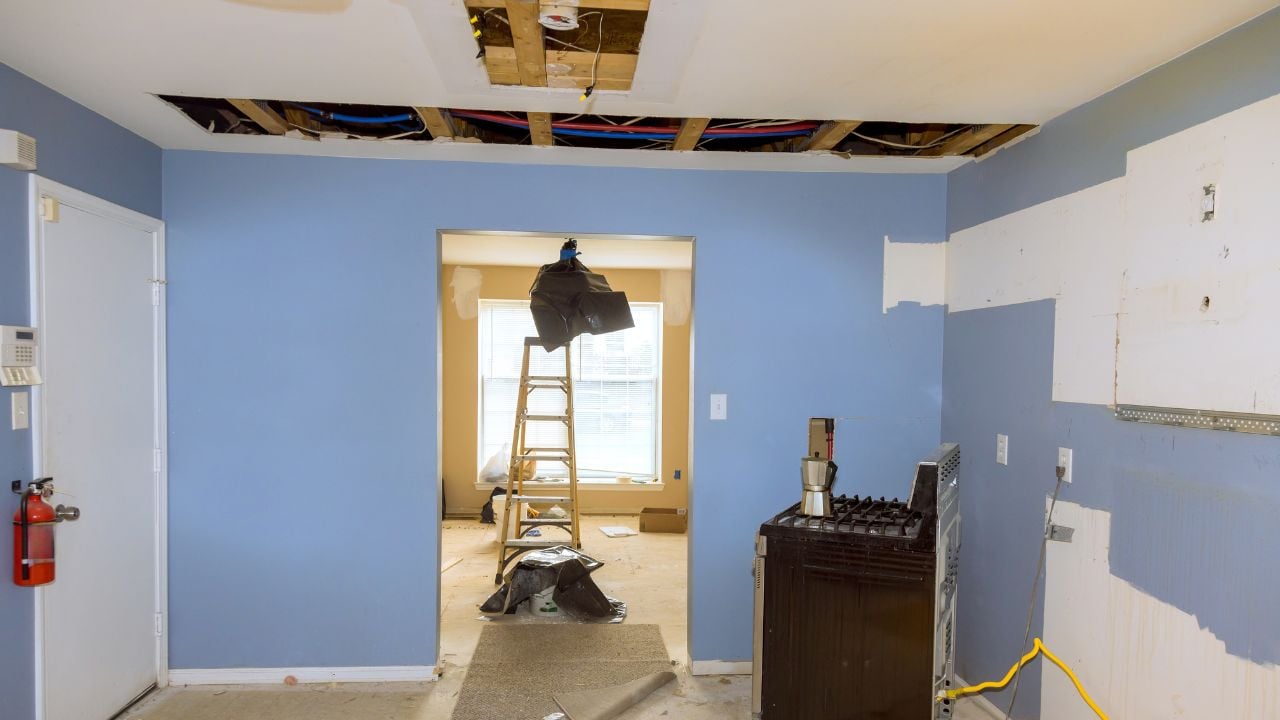
What Happens If a North Carolina Contractor Doesn’t Finish the Job They Agreed To?

One North Carolina homeowner paid $35,000 for a kitchen remodel that never got finished. They sued, won a judgment, and still waited nearly two years for a partial payout, WRAL News reported.
A homeowner in that position has recourse.
But the fund is the last stop, not the first, and many factors determine how long it takes.
Note: This is general information, not legal advice. Contractor licensing rules and court procedures are subject to change.
When a Contractor Doesn’t Finish the Job, Start With a Written Notice to Cure
A North Carolina contractor who stops answering calls on a half-finished job hasn’t legally breached the contract in a way a judge will act on right away.
Not yet.
Courts and attorneys expect a homeowner to send a written notice first, spelling out exactly what’s undone and giving the contractor a reasonable deadline to finish or respond.
Send it by certified mail, and keep a copy.
That notice does two things.
It starts building your paper trail.
It also turns a stalled job into a documented material breach if the contractor still doesn’t show.
Once a contractor materially breaches, a homeowner in North Carolina can generally cancel the contract and hire someone else to finish the work.
That homeowner can then sue the original contractor for the difference between what finishing cost and what was left on the original price.
North Carolina gives a homeowner three years to sue over a written contract, under North Carolina General Statutes § 1-52.
That clock counts from when the contractor stopped performing, not from when the job was supposed to be done.
Filing a Complaint With the Licensing Board
North Carolina’s Licensing Board for General Contractors can discipline a licensed contractor who abandons a job, but only after a homeowner files a written complaint.
Under North Carolina General Statutes § 87-11(a), the Board can refuse to renew, suspend, or revoke a license for gross negligence, incompetency, or misconduct in a contractor’s work.
Abandoning a paid job counts as misconduct.
The complaint goes to the Board.
The contractor then gets a copy, along with a chance to respond before staff decide whether to investigate further.
It’s not fast, and not every complaint reaches a formal hearing.
A complaint disciplines the license more often than it puts money back in your pocket.
Checking that same license before signing anything is one of the mistakes that cost North Carolina homeowners thousands.
It takes about a minute on the Board’s website.
Does This Apply If Your Contractor Wasn’t Licensed?
North Carolina only requires a general contractor license for a residential job costing $40,000 or more, a threshold the legislature raised from $30,000 in October 2023.
Hire someone for a smaller job and they walk off, and the Licensing Board has no license to discipline, so the complaint route above mostly disappears.
The Recovery Fund below can still cover a claim against an unlicensed contractor who fraudulently claimed to be licensed, though that’s a harder claim to prove than ordinary misconduct.
The Homeowners Recovery Fund, as a Last Resort
North Carolina’s Homeowners Recovery Fund reimburses homeowners for a licensed contractor’s dishonest or incompetent conduct, but it sits at the very end of the process, not the start.
You have to sue the contractor in civil court first, win, and still be unable to collect the judgment before the fund will even consider your claim.
Any single award can’t exceed 10% of whatever sits in the fund on the day it’s approved, and the fund never covers attorney’s fees, court costs, or punitive damages.
The wait can stretch on for years.
One homeowner paid a contractor $35,000 for a kitchen remodel the contractor never finished.
The homeowner sued, won a judgment, and still waited nearly two years for a partial payout from the fund, according to that Raleigh station’s report.
Eligibility is narrower than many homeowners expect, too.
Only the owner or former owner of a single-family home can file, and only for construction-related losses on that home, not a rental or a commercial building.
Psst! How much do you know about North Carolina contractor law and construction history? Take our quiz and see how many you can get right.
Quiz
NC Contractor Law IQ
Answer these questions on North Carolina contractor law and construction history. We bet you can’t get them all right. Prove us wrong?
What year was the North Carolina Licensing Board for General Contractors created?
Your Exposure to a Subcontractor's Lien
A general contractor who walks off a half-finished job is often the same contractor who stopped paying subcontractors and suppliers first.
That's exactly when a homeowner can face a lien from a subcontractor or supplier the general contractor never paid, even after writing the last check.
An unpaid sub has 120 days after their last day of work on the site to file a claim of lien on the property.
That sub then has 180 days after filing to sue to enforce it.
A sub's lien against a homeowner's property is generally capped at whatever the homeowner still owed the general contractor when the sub filed it.
Pay the general contractor in full, and a first-tier sub's claim usually runs out of anything left to attach to.
Lower-tier subcontractors and suppliers do have additional notice-based protections under North Carolina's lien law.
A lien from a sub you never dealt with directly isn't always as limited as the payment math above suggests.
North Carolina also requires the owner to designate a lien agent on any job costing $40,000 or more.
That agent is a title company that logs every notice a sub files on the project.
Check that registry before you sell or refinance.
Taking It to Small Claims Court
A North Carolina homeowner can sue an unfinished-job contractor in small claims court without hiring a lawyer, and magistrates handle these cases fast, often in a matter of weeks.
Small claims magistrates can only hear cases up to $10,000 under state law, and some counties set their local limit even lower.
Owe more than that in unfinished work or a lost deposit?
The case moves up to district court instead, a longer process that usually calls for an attorney.
Filing is cheap and the paperwork is short.
Bring your contract, your payment records, photos of the unfinished work, and any written notice you already sent the contractor.
The magistrate decides based on what you can document that day.
What the Attorney General's Office Will (and Won't) Do
North Carolina's Attorney General's office will take a complaint against a contractor who never finished the job.
Its Consumer Protection Division can't sue on your behalf just to get your money back, though.
What it can do is forward your complaint to the contractor and try to mediate a resolution between you.
Patterns matter more.
Enough matching complaints against the same contractor can also trigger a broader investigation into illegal business practices.
One complaint rarely does that on its own.
A complaint that includes your signed contract, every payment record, and copies of your messages with the contractor gives the Consumer Protection Division something concrete to act on.
If mediation stalls, the office's guidance points you toward small claims court or a private attorney next.
FAQ
Quick answers to what North Carolina homeowners ask most about an unfinished contracting job.
What happens if a contractor doesn't finish the job in North Carolina?
A homeowner can file a complaint with the state Licensing Board and pursue the Homeowners Recovery Fund as a last resort. Beyond that, a homeowner can guard against liens from unpaid subcontractors and sue for breach of contract in small claims or civil court.
Can a subcontractor put a lien on my house if I already paid the general contractor?
Sometimes. North Carolina generally limits a subcontractor's lien to whatever you still owed the general contractor when the sub filed it. Lower-tier subcontractors do have additional notice-based protections under state lien law, though, so it's worth asking an attorney if a lien shows up unexpectedly.
How do I file a complaint against a contractor in North Carolina?
Submit a written complaint to the North Carolina Licensing Board for General Contractors describing the unfinished work, your contract, and your payments. The contractor gets a chance to respond before the Board decides whether to investigate.
What's the most I can recover in North Carolina small claims court?
Small claims magistrates can hear cases up to $10,000 under state law, though some counties set a lower local limit, so check with your county courthouse.
Does the Homeowners Recovery Fund pay for an unfinished job?
Only after you've sued the licensed contractor in civil court, won a judgment, and still can't collect. Even then, the fund caps payouts at 10% of its balance and doesn't cover attorney's fees.
9 North Carolina Property Rules That Surprise New Homeowners

Closing on a North Carolina house doesn't just hand you the keys.
It hands you a stack of legal responsibilities many new owners never read until something goes wrong.
9 North Carolina Property Rules That Surprise New Homeowners
7 Cook Out Habits That Separate North Carolina Regulars From Everyone Else
Cook Out built a loyal following in North Carolina long before it ever crossed a state line.
Regulars order a certain way, and getting it wrong at the register gives you away instantly.
7 Cook Out Habits That Separate North Carolina Regulars From Everyone Else
