
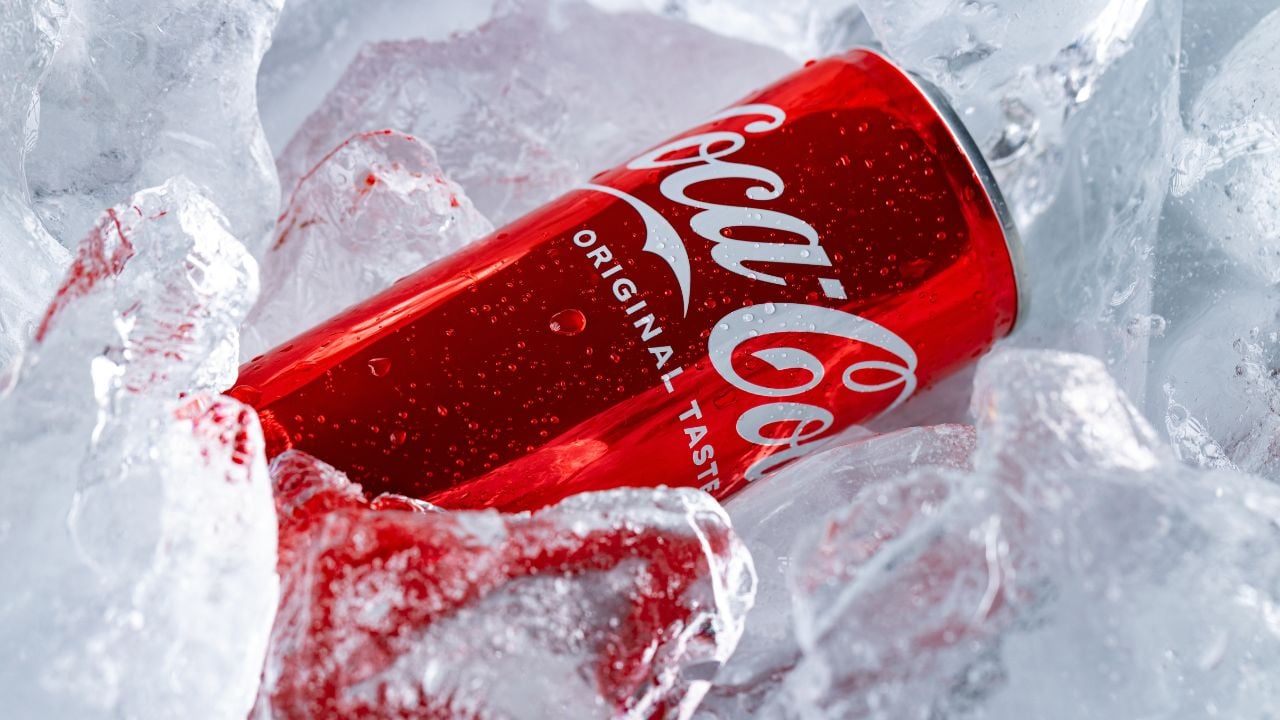
Some Missourians Say ‘Pop,’ Others Say ‘Soda,’ and the Harvard Dialect Survey Helped Map the Argument

Ask for a soft drink at a table full of Missourians, and you’re likely to hear at least two words for it.
A third word in the argument traces back to Atlanta.
Here’s how the Harvard Dialect Survey helped map the argument over whether Missourians say pop or soda.
How the Survey Worked
The Harvard Dialect Survey came from Bert Vaux and Scott Golder, who ran it in 2003.
That makes it more than 20 years old.
The survey had 120 questions.
Those questions covered mergers, pronunciations and regional vocabulary.
One of them asked what you call a fizzy drink.
Others ranged from how you say “caught” to whether you say “y’all”.
Dialect questions ask what you say, not what’s correct.
Nobody graded anyone.
A graduate student’s statistics project later turned the answers into maps.
From Survey to Map
The Harvard Dialect Survey’s maps began as an end-of-year statistics project.
Joshua Katz built them while he was a North Carolina State University graduate student.
His algorithm weighted the responses around each location.
The map shows you a pattern. Coastal areas lean toward soda, the upper Midwest leans toward pop, and a few southern holdouts stick with coke.
Missouri isn’t on a coast, and it isn’t in the upper Midwest.
Dots became regions.
So that three-way split can’t answer for the state.
None of the sources here gives a Missouri-only count from the survey.
Katz later built an interactive quiz and map for The New York Times.
The University of Cambridge’s language sciences site said in December 2013 that the survey was the basis for a short film called Soda Pop Coke.
What the Dots Became
The Harvard Dialect Survey’s original maps marked each answer as a single color-coded dot.
Each dot let you spot an individual response.
Katz’s smoothing blends those dots into regions.
A region’s color shows a leaning, not a headcount for your town.
St. Louis and Soda
Pop and soda were already an argument in St. Louis in 2002, when an online vote turned up “soda” there.
The Associated Press called that curious because the Midwest around it otherwise voted “pop.”
That vote came from a different project, a college student’s website with about 29,000 votes.
In that vote, “pop” and “soda” each drew about 39 percent nationwide, while “coke” trailed with about 4,800 votes.
Voters picked themselves, and a Washington University marketing professor said that made the results unreliable.
Two St. Louis natives who own STL Style told Missouri Life they say “soda.”
The magazine adds that St. Louisans of the last century opted for “soda” over “pop.”
If you’ve assumed everyone around you says “pop,” that early vote gives you a reason to doubt it.
Psst! How much do you know about soft drinks? Take our quiz and see how many you can get right.
Quiz
Soft Drink Smarts
Answer these questions on soft drinks and where the words come from. We bet you can’t get them all right. Prove us wrong?
The company behind Seven-Up started out as the Howdy Company, named for its featured soft drink. What flavor was Howdy?
Outside St. Louis
Pop and soda both turn up outside St. Louis, based on a Missouri Life poll of its reader ambassadors.
Those ambassadors answered on Facebook, and Missouri Life described the replies as evenly split between the two words.
It was an informal poll, not a scientific sample.
An ambassador in northwest Missouri's Gentry County said “pop,” while one in Dent County said “soda.”
In rural Bates County, an ambassador said you'll often hear the two combined as “soda pop.”
A Missouri State University professor of Ozarks studies recalls getting a “sody-pop” at the store as a kid, not a “soda-pop.”
A Kansas City native who studies dialects says he called any soft drink “Coke.”
Coke gets a vote, too.
If you grew up in the Ozarks or Kansas City, the word you learned may differ from a St. Louis neighbor's.
How Other Surveys Asked
Other surveys have asked whether you say pop or soda, too.
The Dictionary of American Regional English, a University of Wisconsin project, asked a similar question about ordinary carbonated soft drinks.
Its 2013 to 2014 version was slightly altered from the question it used in 1965 to 1970.
That means its answers span two eras, so you shouldn't read any one map as a single snapshot.
In 2012, a senior editor of the dictionary told National Public Radio the divide is often regional, with soda in the Northeast and pop in the Upper Midwest.
She also said the term “coke” appeared to be moving north.
If you've switched words after a move, that migration may sound familiar.
A 2015 Web Tally
A website that collects pop, soda and coke votes also posts a state-by-state tally, and its Missouri page shows 9,452 responses.
In that count, soda drew about 71 percent, pop about 21 percent and coke about 6 percent.
If you wonder who voted, those visitors chose to. The tally describes who answered, not every Missourian.
It also leans toward soda more than the Missouri Life ambassadors did, so the split may be smaller than the Missouri Life poll suggests.
The page was generated in 2015, and it doesn't break the answers down by county.
You can use it as one clue, but keep its age in mind.
Where Soda Came From
The word “soda” in your glass likely came from sodium, since early fizzy drinks often contained salts.
By the early 1800s, carbonated water had become popular as a health drink and was often called “soda water.”
Sodium came first.
Soda's popularity in the Northeast likely reflects the soda fountain's longer history there.
“Soft drink” began as a way to separate nonalcoholic drinks from “hard drinks” made with spirits.
So when you say “soft drink,” you're using a term built to rule out liquor.
Where Pop Came From
The earliest American use of “pop” for a sparkling drink appeared in the 1840s, in a flavored version called “ginger pop.”
Pop's path into the Midwest is harder to trace, so you won't find one clean answer.
Linguist Valerie Fridland wrote in July 2025 that linguists don't fully know why “pop” became so popular in the Midwest.
The question stays open.
So if you've never known why you say “pop,” you're not alone.
One theory credits a bottling company that used “pop” in the names of its sodas.
Another says bottles were more common in the Midwest, so drinkers there heard the “pop” sound more often.
Where Coke Came From
Coca-Cola was first served in Atlanta in 1886, Fridland wrote.
Since it began in the South and was overwhelmingly popular there, people almost always asked for “Coke.”
That habit made “Coke” a generic name for soft drinks in the South.
If you've ever asked for a “Coke” and meant any drink, you've used that habit.
Fridland compared it to Kleenex and Band-Aids.
Names stick.
5 Schnucks Checkout Traps That Can Cost Missourians More Than They Save
A receipt can say you saved money without saying what it cost to get there.
These are the checkout traps that can sometimes cost Missourians more than they save.
5 Schnucks Checkout Traps That Can Cost Missourians More Than They Save
3 Things Missouri Landlords Lose the Right to Keep Once the Security Deposit Deadline Passes

Missouri landlords are on the clock the moment a tenant moves out.
Here's what a landlord gives up when time runs out.
3 Things Missouri Landlords Lose the Right to Keep Once the Security Deposit Deadline Passes
