
The Mothman Has a Statue in Point Pleasant. 6 Other West Virginia Legends West Virginians Grew Up On

If you’re from West Virginia, you probably grew up hearing about a valley in Clay County where people died or disappeared in the early 1900s.
It has a name you can’t forget.
Here are some of the other West Virginia legends that locals grew up on.
1. Flatwoods Monster
The Flatwoods Monster legend arose in Braxton County near dusk on September 12, 1952.
A fireball streaking across the sky startled a group of local youths in the middle of a football game.
Kathleen May, a local beautician, joined the boys to investigate.
At the top of the hill, the group of seven spotted a pulsing red light, and Gene Lemon aimed a flashlight toward a pair of shining eyes.
Estimates of its height ranged from about 7 to 17 feet, depending on who told it.
If you picture it, picture a round red face, a dark or green body and a head shaped like the ace of spades.
They ran.
The sheriff searched the site that night and found nothing, but the next day a newspaper reporter found skid marks and an odd gummy deposit in a field.
Flatwoods marked the 50th anniversary with a community festival in 2002.
2. Greenbrier Ghost
The Greenbrier Ghost legend starts with Zona Heaster Shue, a Greenbrier County woman who died mysteriously in 1897, just months after her wedding.
The local coroner attributed her death to natural causes, but her mother, Mary Heaster, said Zona’s spirit had appeared to her four times.
According to Mary, the ghost named her husband, Edward Shue, as the killer.
Mary took the story to the county prosecutor, who ordered the body exhumed.
The exhumed body had a broken neck and a crushed windpipe.
A state historic marker describes it as the only known case in which a ghost’s testimony helped convict a murderer.
You can find Zona’s tombstone a few miles from the marker, where it calls her the Greenbrier Ghost.
Inside the Greenbrier Ghost Trial
The Greenbrier Ghost of legend never took the stand at Edward Shue’s murder trial, which stretched from late June into early July 1897.
Her mother testified instead, and newspaper reports of the trial carry the ghost’s words as Mary Heaster repeated them.
The jury found Shue guilty of first-degree murder and recommended clemency, so the court sentenced him to life in prison.
One newspaper of the day reported that circumstantial evidence, not the ghost, convicted him.
3. John Henry
The John Henry legend centers on a steel driver in a famous race against a steam drill.
Builders dug the Big Bend Tunnel in what is now Summers County between 1870 and 1872, and legend places John Henry there.
Scholars suspect the contractor, Capt. W. R. Johnson, hoped to replace his steel drivers with a steam drill.
He may have organized a contest between the drill and his best steel driver.
In the legend, John Henry wins the race but overexerts himself and dies.
Scholars say they cannot know the details of his life, and some doubt he existed at all.
You can find the legend’s home on the hillside above the tunnel entrance, where a statue of John Henry first went up in 1972.
In 2012, a restoration moved the statue closer to the entrance as part of the John Henry Historical Park.
The U.S. Postal Service gave him a 32-cent stamp in 1996.
4. Grafton Monster
The Grafton Monster legend began beside Route 119 near Grafton in June 1964.
If you’d opened the Grafton Sentinel two days later, you’d have read Robert Cockrell’s account of an almost headless creature, seven to nine feet tall, with seal-like skin.
It also made a whistling sound.
Local teenagers began forming search parties.
People poured into town to track the monster down.
The Sentinel itself rejected the story as a spring fever fantasy and encouraged the visitors to go home.
Grafton hosted the first annual Grafton Monster Festival in June 2024.
Psst! How much do you know about the Mothman and other West Virginia legends? Take our quiz and see if you can ace it.
Quiz
Mountain Legends IQ
Answer these questions on monsters, ghosts and folk heroes. We bet you can’t get them all right. Prove us wrong?
In a 1966 letter to the Huntington Herald Dispatch, a young Breece D’J Pancake argued the Mothman was which bird?
5. Tony Beaver
Tony Beaver is a lumberman of West Virginia legend, and you may know him as the state's version of Paul Bunyan.
Writer Margaret Prescott Montague wrote two stories about him in 1923.
She credited woodsmen with dreaming up his world.
Folklore sources say the tales came from loggers called woodhicks, who tried to out-lie each other during evenings in the logging camps.
It is possible Montague invented Eel River herself.
He was born at regular size but grew enormously during childhood.
Tony built his lumber camp high on a mountain, up the mythical Eel River.
In one story, winter gets so cold and snowy that people can't get outside for firewood.
Tony strolls across the snowbanks and delivers it right down their chimneys.
In another, he grows a potato that covers four acres and feeds the entire population for several weeks.
6. Booger Hole
The Booger Hole legend centers on the Rush Fork Valley near Ivydale in northern Clay County.
A string of murders or disappearances in the early 1900s made the valley famous.
Booger is local usage for bogeyman.
Henry Hargis was alleged to have been killed for an inheritance.
Lacy Ann Boggs supposedly said she could find his body before her pipe went out, and she was killed sometime afterward.
Accounts vary on how many people died, so you won't find a firm count.
Estimates are generally between six and eight.
One version of the name holds that a stone mason at the valley's mouth grew tired of the violence and moved, saying he was leaving Booger Hole.
Locals have told the story for generations.
Motorists on Interstate 79 pass near the valley, which lies south of the highway between Wallback and Big Otter.
Hatfields and McCoys
Beyond those six, the Hatfield-McCoy legend includes a hog trial in 1878, when Randolph McCoy accused Floyd Hatfield of stealing the animal.
Floyd Hatfield prevailed, and juror Selkirk McCoy, Randolph's cousin, provided the decisive vote for acquittal.
The Hatfields lived mostly in Logan County, West Virginia, while the McCoys lived across the Tug Fork in Pike County, Kentucky.
You'll find Hatfields and McCoys on both sides of the struggle, since the families had intermarried.
Kentucky's governor asked Governor E. W. Wilson to extradite the Hatfields, and Wilson refused.
On the night of January 1, 1888, Hatfields led by Jim Vance set fire to the McCoy family's cabin in Pike County.
Calvin and Alifair McCoy were killed.
Ellison Mounts was hanged in Pikeville, Kentucky, on February 18, 1890.
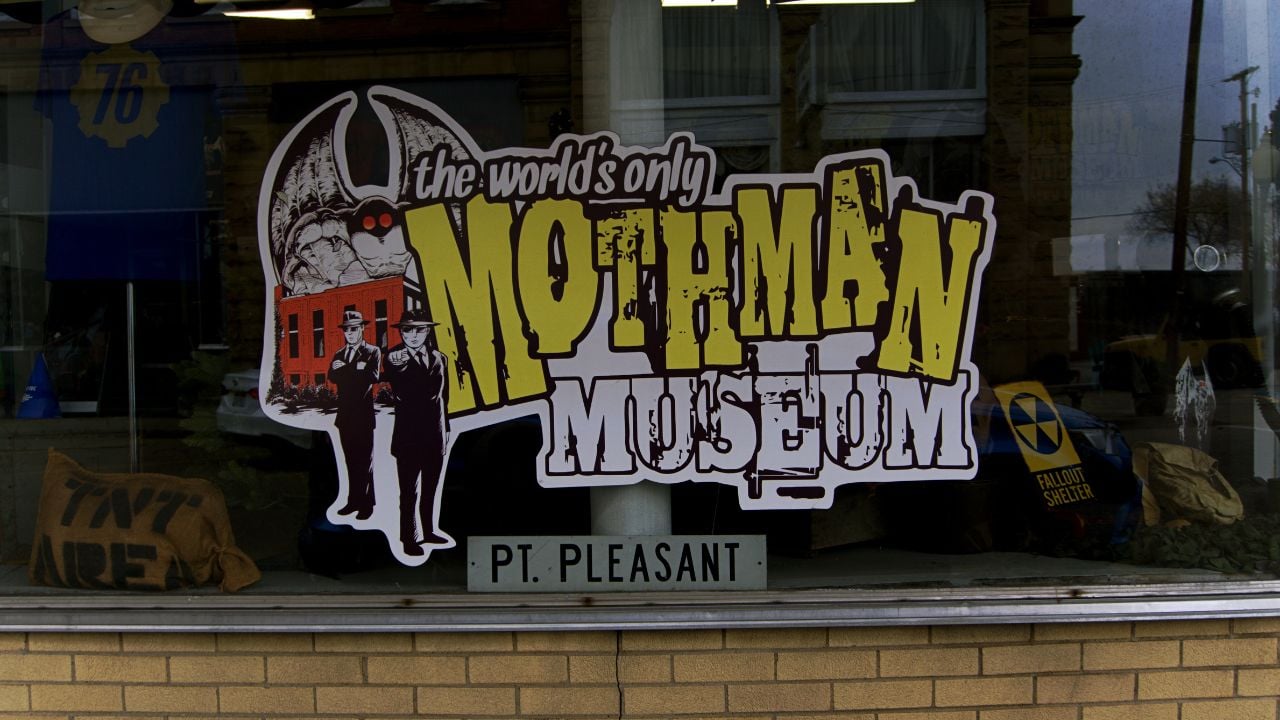
Mothman Statue
The Mothman statue in Point Pleasant is a 12-foot stainless steel sculpture by artist Bob Roach.
Persistent sightings of the Mothman began in November 1966, and Point Pleasant installed the statue downtown in September 2003.
Festivalgoers line up for pictures with the statue, often from the front and the back.
The Mothman Museum sits just steps from the statue, so you can pair your photo with a museum stop.
The 2026 Mothman Festival, held Sept. 19 and 20, drew thousands of visitors to Point Pleasant.
6 West Virginia Scenic Roads That Shut Down for the Winter
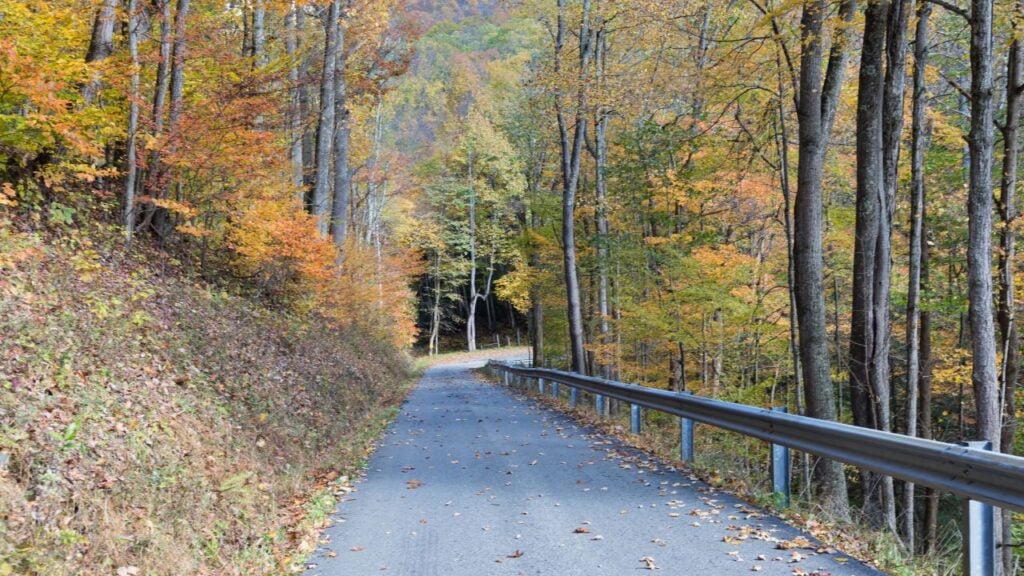
Some of West Virginia's scenic mountain roads lock their gates once winter arrives.
A closure can come with little notice, so it helps to know which scenic drives lock their gates for winter.
6 West Virginia Scenic Roads That Shut Down for the Winter
9 Things West Virginians Are Tired of Explaining to Everyone Else

West Virginia has been its own state since 1863.
Some people still treat it like a leftover piece of another one.
9 Things West Virginians Are Tired of Explaining to Everyone Else
