
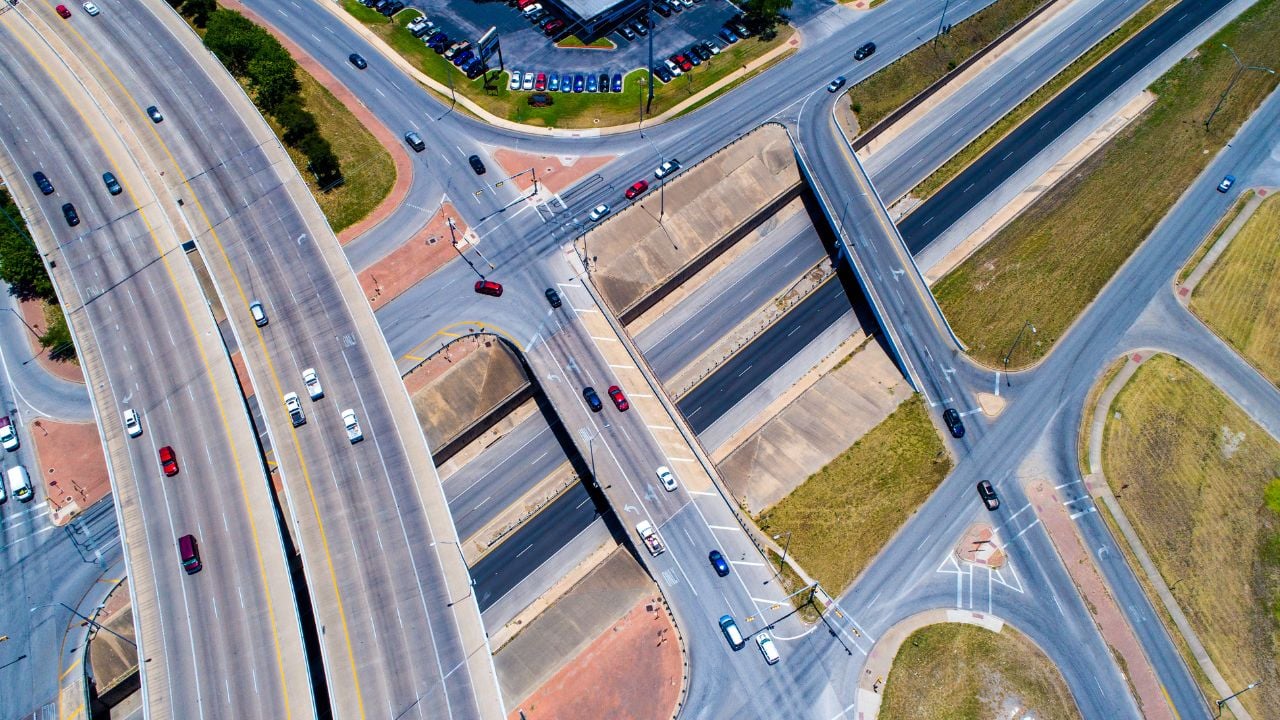
The Real Reason Texas Highways Have So Many Feeder Roads

You exit for a Buc-ee’s, roll down the feeder road past a Whataburger and a tire shop, and swing back onto I-45 without a single red light.
You’ve done it a hundred times.
Yet that road running beside the freeway traces back to a choice Texas made and most states didn’t.
This is the real reason Texas highways have so many feeder roads.
Cheaper Than Buying Access
The real reason Texas has so many feeder roads comes down to money and land.
When the state turned old two-lane highways into high-speed freeways, it ran into a problem.
Every gas station, farmhouse, and diner along the route had a legal right to reach the road.
None of it was free.
Take that access away, and Texas would owe each of those owners for the loss.
The bill adds up fast.
So highway planners left a road running alongside the new freeway, and every driveway still connected to it.
Building that frontage road cost less than buying up all those access rights.
That was the whole trade.
How a Feeder Road Works
Every Texas feeder road runs one-way, aimed the same direction as the freeway lanes beside it.
Miss your exit, and you don’t backtrack a mile; you drop onto the feeder road and grab the next ramp up.
No harm done.
The whole point is keeping 30-mph errand traffic and 75-mph freeway traffic from ever mixing, so engineers file the feeder road under collector.
So on one Houston feeder road, a school run and a cross-town commute share the same lane.
Feeder, Access, or Service Road
What a Texan calls the feeder road depends on where they grew up.
In Houston, it’s the feeder, a word that traces back to 1800s railroad talk about smaller lines feeding a main trunk.
In Dallas and Fort Worth, the same strip of pavement goes by service road.
Drivers around San Antonio and points south say access road instead.
El Paso calls it the gateway, and the state’s own signs read frontage road.
Same road, five names.
Guess wrong at a dinner table in Houston, and you’ve marked yourself as a transplant.
Psst! How much do you know about Texas highways? Take our quiz and see how many you can get right.
Quiz
Texas Highway IQ
Answer these questions on Texas highways, driving, and geography. We bet you can’t get them all right. Prove us wrong?
One Texas toll road near Austin posts the highest speed limit in the entire United States. How fast can you legally go?
Texas Turnaround
Driving those one-way feeder roads once came with a headache, and the Texas turnaround is the fix.
It's the U-turn lane cut through the underpass, letting you swing from one feeder road onto the opposite feeder road.
You skip both traffic lights at the cross street.
No lights, no waiting.
Engineers dreamed it up because crossing from one frontage road to the other used to mean sitting through two signals.
Each turnaround can run about $1 million to build, and a couple of yield signs are all it takes.
A few states copied the idea, from Michigan to Florida, but Texas poured the most concrete.
Sometimes the Feeder Comes First
Here's the part that surprises even longtime Texans: The feeder road often shows up before the freeway does.
TxDOT builds the frontage roads as a first phase, opens them to two-way traffic, and lets drivers use them for years.
The main lanes come later, dropped in between the two frontage roads once the money and the traffic counts line up.
Frame first, freeway later.
When that day arrives, crews flip the frontage roads from two-way to one-way to match the new high-speed lanes beside them.
Many Houston-area freeways grew up exactly this way, US-290 among them.
Why Other States Have Fewer
Other states have feeder roads too, just nowhere near as many as Texas.
The habit started early, back when the Texas Highway Department opened its doors in 1917.
By the interstate boom of the 1950s and 60s, under longtime state engineer DeWitt Greer, continuous frontage roads had become standard practice.
It stuck.
Most other states carved their interstates through fresh countryside, bought the land outright, and blocked direct access.
No businesses on the shoulder meant no need for a feeder road.
Texas laid its freeways over old highways already lined with stores and farms, so it kept the access and built the feeder roads to match.
That's the split.
The Detour Nobody Notices
Feeder roads prove their worth to drivers most in a wreck.
When a pileup shuts the main lanes of I-10, troopers wave everyone down onto the frontage road and back up the ramp past the mess.
Instant detour.
The same setup lets crews close a lane for repaving without stranding a single business.
That constant access is also why an unbroken wall of car dealers, taquerias, and motels lines every Texas freeway.
A storefront on the feeder road gets a freeway's worth of eyeballs without a freeway's speed rushing past the door.
What Changed in 2001
For most of a century, a new Texas freeway came with feeder roads by default.
That changed in 2001.
The Texas Transportation Commission voted to build new controlled-access freeways without frontage roads, unless an engineering and cost study shows the frontage roads are worth the price.
The math had shifted, since the land and concrete for miles of extra pavement adds up to a fortune.
Safety mattered too, since more crashes happen at those feeder road intersections, where local and freeway traffic mix.
So a brand-new stretch of Texas freeway might skip the feeder road altogether, while the tens of thousands of existing miles aren't going anywhere.
The feeder road outside your windshield on I-35 or the Gulf Freeway was poured decades before anyone rethought the rule.
12 Texas Habits Transplants Can't Fake
A Fort Worth native rattles off directions past the feed store and the water tower without blinking.
A transplant can copy the boots and the drawl, but a dozen everyday habits give the newcomer away every time.
12 Texas Habits Transplants Can't Fake No Matter How Hard They Try
9 Texas Gas Station Foods Locals Swear By
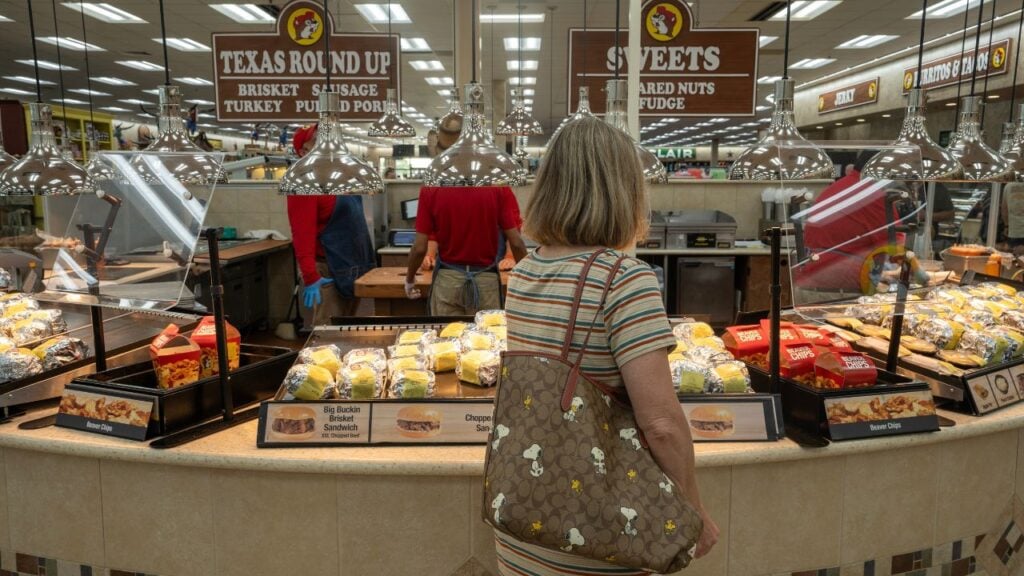
A Shell station off Interstate 35 sells kolaches by the thousand before most Texans finish their first cup of coffee.
The tourists gas up and drive off, while locals head straight for the taco window and the hot case in the back.
9 Texas Gas Station Foods Locals Swear By That Tourists Drive Right Past
