
The Reason Ohio Cars No Longer Need a Front License Plate

An Ohio state trooper runs a plate off the rear bumper now because Ohio cars only carry one plate anymore.
It wasn’t always that way.
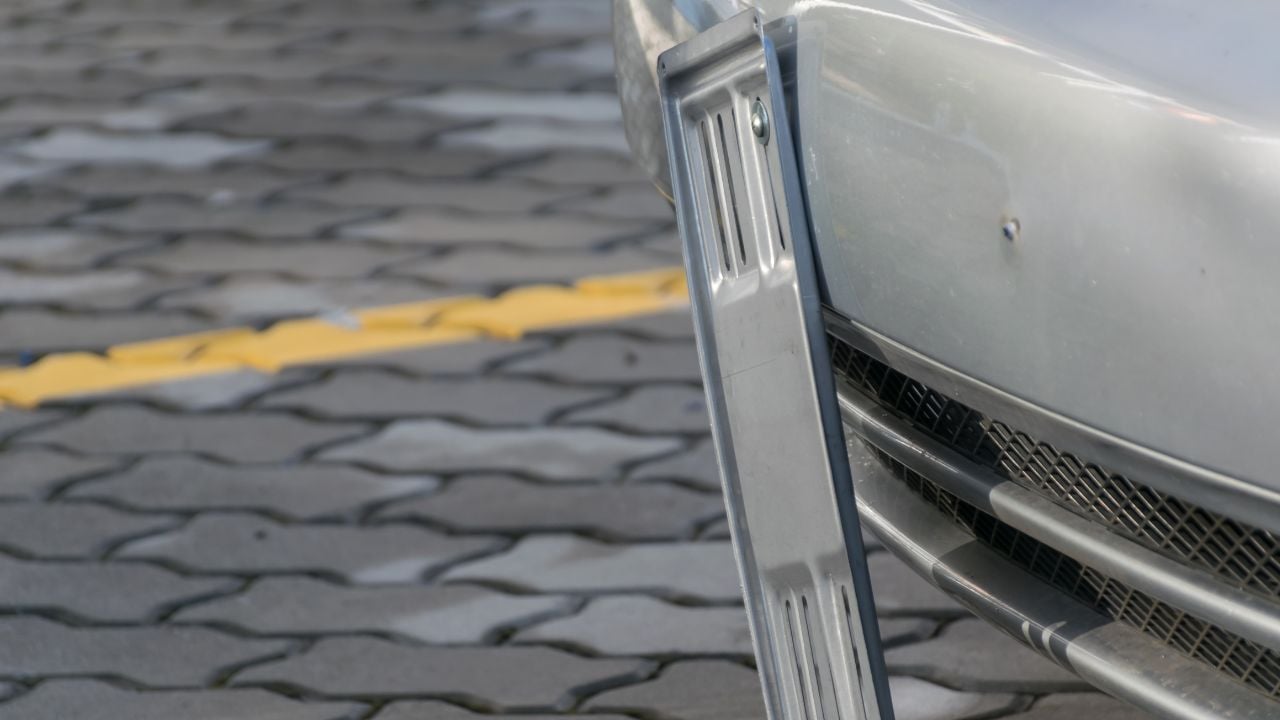
Many Ohio cars still carry two empty screw holes up front, left over from a fight that played out at the Statehouse.
These are the reasons Ohio dropped the front plate, from the money behind it to the officers who spent years trying to bring it back.
Note: This is general information, not legal advice. Ohio’s license plate rules are subject to change, so confirm the current requirements with the Ohio Bureau of Motor Vehicles.
Ohio’s Front License Plate Disappeared in 2020
Ohio’s front license plate stopped being a legal requirement on July 1, 2020.
That date sat buried in House Bill 62, the two-year transportation budget Gov. Mike DeWine signed the year before.
Lawmakers tucked the change into a bill mostly about roads and gas taxes.
The gas-tax fight in the same bill drew the headlines, and the plate change moved through the House that spring with far less attention.
Before that date, Ohio drivers bolted a plate to both bumpers.
The front went bare.
Ohio’s motor vehicle code still carves out one exception for commercial tractors, which display their single plate on the front instead of the rear, while everyday cars, trucks, and sport utility vehicles (SUVs) carry theirs on the back.
Cost Savings Started the Push
Ohio lawmakers reached for the front license plate first because of a price tag.
Manufacturing a second plate for every registered vehicle ran the state about $1.4 million a year.
That’s the number repeal backers cited, and the legislature’s own budget analysts landed in the same neighborhood, projecting savings of well over $1 million a year in plate production and distribution.
Those same analysts found a downside, too.
Local governments stood to lose up to $240,000 a year in fines and court costs once officers had one less reason to pull a driver over.
Lawmakers weighed a seven-figure annual savings against a smaller, harder-to-predict loss in ticket revenue.
The repeal stayed in.
Cincinnati Lawmakers Pushed Equity, Too
Ohio lawmakers from Cincinnati argued a different case entirely.
Former state Rep. Alicia Reece and Cincinnati state Rep. Sedrick Denson pointed to how officers enforced the requirement, not just what it cost.
Upscale cars mostly did not come with a front plate when you bought them, Reece said, so the rule was “disproportionately administered.”
That meant officers stopped older or cheaper vehicles far more often.
One case anchored their argument.
A University of Cincinnati police officer stopped Sam DuBose, an unarmed Black driver, over a missing front license plate in 2015, and the stop ended with DuBose’s death.
That case had already reshaped how Ohio lawmakers talked about routine traffic stops, years before the repeal reached a vote.
By 2020, the argument carried new weight.
Nationwide protests over policing that summer sharpened the point, and Denson called the repeal “one less reason to be pulled over.”
Law Enforcement Fought to Keep Two Plates
Ohio law enforcement groups spent years trying to stop this fight before it started.
Earlier attempts had failed for years, including a 2017 repeal that lawmakers wrote into the transportation budget and then stripped out before the final vote.
Police groups fought each attempt, arguing the plate helped identify vehicles in a hit-and-run, an Amber Alert, or a trafficking case.
When House Bill 62 finally passed anyway, two Republican state senators tried to undo it.
Sens. Joe Uecker and Jay Hottinger introduced Senate Bill 179 months later, and Uecker announced it at the Statehouse backed by more than a dozen law enforcement officials.
“In reality, it is an incredible crime-fighting tool,” Hottinger said of the plate.
Ridesharing companies backed him up.
Uber and Lyft both asked Ohio to keep the front plate, since their apps ask riders to match a car’s plate number before climbing in.
The bill never reached a Senate floor vote.
It stalled out in committee instead.
Psst! Think you know Ohio’s license plate rules cold? Flip these cards and see how many you get right.
What Ohio Requires Today
Ohio’s rule hasn’t moved since that fight ended.
Ohio Revised Code 4503.21 requires just one plate today, mounted on the rear of the vehicle, for every car, truck, and SUV registered in the state.
Commercial tractors remain the outlier, mounting their one plate on the front instead of the rear.
Everyone else mounts one plate.
Drivers who want a front plate anyway can ask for a matching second plate at registration, which Ohio still issues for a dollar more than a single plate.
The Ohio Bureau of Motor Vehicles says that plate has to match the rear plate exactly, not a novelty plate or an out-of-state souvenir.
What “Strict Liability” Means for Ohio Drivers
Ohio’s missing-plate law carries a legal label many drivers never notice.
That label is strict liability, and it means the state doesn’t have to prove you meant to drive without a rear plate to make the ticket stick.
It’s still only a minor misdemeanor, Ohio’s lowest criminal classification.
The fine tops out at $150, and Ohio law rules out any jail time for it.
Ohio Isn’t Alone Without a Front Plate
Ohio joined a cluster of nearby states when the front license plate disappeared in 2020.
Indiana, Michigan, Pennsylvania, West Virginia, and Kentucky don’t require one either, so a driver can cross any of Ohio’s borders without spotting a second plate.
That wasn’t always true.
Some of those states dropped the requirement decades before Ohio caught up, long before the cost or the equity argument ever reached the Ohio Statehouse.
Nineteen other states already required only a rear plate when Ohio made the switch.
More have joined since, with Alaska dropping its front plate in 2022 and Utah at the start of 2025.
2021 Redesign Had Its Own Slip-Up
Ohio’s plate got a second, unrelated shake-up the year after the front-plate rule changed.
Gov. Mike DeWine unveiled a new standard design nicknamed Sunrise in Ohio in October 2021, replacing the plate Ohio had used since 2013.
The design put a Wright Brothers plane front and center, pulling a banner that reads “Birthplace of Aviation.”
There was just one problem.
The artist drew the old flyer facing the wrong direction, so the first version showed the banner being pushed instead of pulled.
Ohioans spotted the backward plane on social media within hours of the unveiling, and the state posted a corrected design the next day.
About 35,000 plates had already been printed with the wrong-way flyer, and none of them reached a registrar counter — the state shredded and recycled the batch.
New plates became available that December, backward wing fixed for good.
9 Kroger Traps That Cost Ohio Shoppers Every Week

Kroger hands Ohio shoppers strong weekly deals, but the app and the shelf tags hide a few habits that add up fast.
From unclipped digital coupons to fuel points that expire on a clock nobody watches, these are the traps that catch Ohio shoppers on an ordinary grocery run.
9 Kroger Traps That Cost Ohio Shoppers Every Week
11 Foods Ohioans Grew Up Eating That the Rest of America Has Never Heard Of

Readers of an Ohio newspaper once voted a deep-fried ball of sauerkraut their city’s official food, and Akron wears that title without blinking.
Foods like that never crossed the state line, so the names on an Ohio restaurant menu still stop many visitors cold.
11 Foods Ohioans Grew Up Eating That the Rest of America Has Never Heard Of
