

Utahns Heating With Natural Gas Face a Bigger Bill This Winter

Heating your house is one bill that’s hard to cut back on once the cold settles in.
A federal winter forecast expects bigger gas bills across the West, and Utahns who heat with gas could suffer from it.
Here’s what the forecast could mean for you, and what it can’t tell you.
Note: This is general information, not financial advice. Forecasts and utility rates are subject to change.
The Colder West
The U.S. Energy Information Administration (EIA) tracks energy for the government.
Its Winter Fuels Outlook came out October 6.
It puts the national average at $640 for a home heating mainly with natural gas, from November through March.
That’s a 9% drop from last winter, tied mainly to lower fuel costs.
The West is the exception.
Much colder weather is expected there after an unusually warm winter last year.
Cold is counted in heating degree days.
The November-through-March forecast for the West is 2,781, up 25% from last winter.
In the other regions, the count drops or barely moves.
Cold weather means your furnace needs more energy to hold a house at a set temperature.
If you live in Utah, you’re in the Census Bureau’s Mountain Division. It belongs to the West region along with the Pacific states.
So the West number covers homes from Boise to Los Angeles, not only yours.
What a Degree Day Means for Your Gas Bill
EIA estimates your natural gas heating bill from heating degree days. That’s a count of how far each day’s average temperature falls below 65°F.
Here’s an example. A day with a 33°F high and a 25°F low averages 29°F. Then 65 minus 29 adds 36 degree days.
Work backward from the 25% rise, and last winter’s West total comes to near 2,225 degree days. That’s about 550 fewer than this winter’s forecast.
The Bill in Dollars
EIA’s forecast for a West household’s natural gas bill is $590 across the winter, up 7%.
That’s below the national average, but it’s more than the West paid last winter.
The other three regions are forecast to spend less: $879 in the Northeast, $613 in the Midwest and $511 in the South.
Monthly estimates peak at $137 in December and $131 in January.
Those two months carry the biggest pieces of your bill.
Two moves produce that 7%.
First, the gas itself costs less.
West households are expected to pay 8% less for it, at $15.10 per thousand cubic feet.
That’s still well above the Midwest’s $10.38.
But the cold means West households use 17% more gas. That more than cancels the cheaper price.
Back the 7% out, and last winter’s West average comes to about $551.
So the bump is roughly $40 over the winter, or about $8 more a month across the five months.
Utah had 1,102,955 residential natural gas customers in 2024, up from 1,056,629 in 2022, according to EIA’s state data.
If you’re one of them, remember that these figures are for four regions, not states.
So $590 is a West average, not a Utah average. Your bill depends on your home.
Psst! How much do you know about heating your home through the winter? Take our quiz and see if you can ace it.
Quiz
Winter Heating IQ
Answer eight questions on home heating, winter energy and record cold. We bet you can’t get them all right. Prove us wrong?
Peter Sinks, a limestone sinkhole in northern Utah’s Bear River Range, fell to -69.3°F on Feb. 1, 1985. Where does that rank among the coldest temperatures ever recorded in the lower 48 states?
Gas Next to Other Fuels
EIA forecasts $590 this winter for a West household heating with natural gas.
For a household heating mainly with electricity, it's $1,151.
The electricity figure is up 9%.
That's the biggest electricity rise of any region, tied to the colder weather.
Nationally, electric heat comes to $1,196, up 4%. So the West is rising faster than the country.
Those are averages for two different groups of homes.
EIA warns that you shouldn't assume switching to a fuel with lower averages will cut your bill.
If you heat with propane or heating oil, no West figure is published for you.
The West's electricity bill has two parts, and both are forecast to rise.
Prices run 20.47 cents per kilowatt-hour, up 1%. Use rises 9% to 5,624 kilowatt-hours.
What Could Move the West's Number
EIA's natural gas forecast for the West is a base case. The weather is the assumption that can move it.
The agency also ran two side cases. In one, every region is 10% colder than the base forecast.
In the other, every region is 10% warmer.
A colder or milder winter than EIA assumes can pull your bill away from the average.
The estimates are a broad guide for comparing this winter with last winter.
The size and energy efficiency of your home also change how much you use.
The dollar figures don't account for inflation.
Inflation is assumed to average about 2% this winter, so the West's 7% rise outpaces it.
EIA also points to a strong El Niño pattern from the National Oceanic and Atmospheric Administration.
It says that could cause big temperature swings from the forecast.
Rates have moved before.
Utah's average residential price was $10.48 per thousand cubic feet in 2022 and $13.45 in 2023.
It eased to $13.15 in 2024.
This forecast was finished on October 1.
The next Short-Term Energy Outlook is due November 10. It can raise or lower the West's number.
8 Water Rules That Surprise New Utah Homeowners
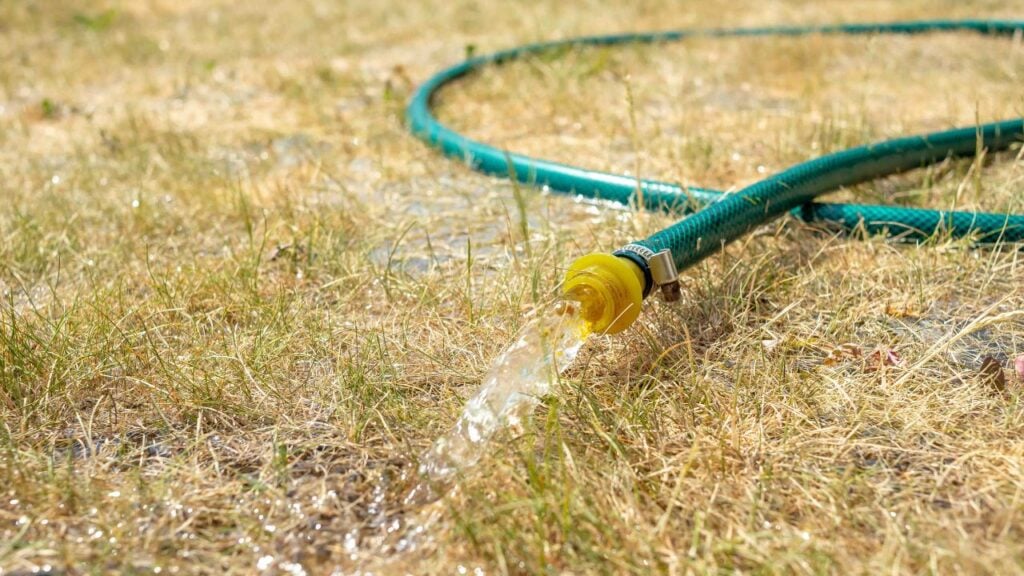
Water in Utah comes with rules that new homeowners don't see coming.
These are the water rules that surprise new Utah homeowners.
8 Water Rules That Surprise New Utah Homeowners
9 Things People Find Out the Hard Way After Moving to Utah
The U.S. Geological Survey puts the odds of a magnitude 6.75 or larger earthquake in Utah's Wasatch Front region at 43% over the next 50 years.
These are the things people find out the hard way after moving to Utah.
