
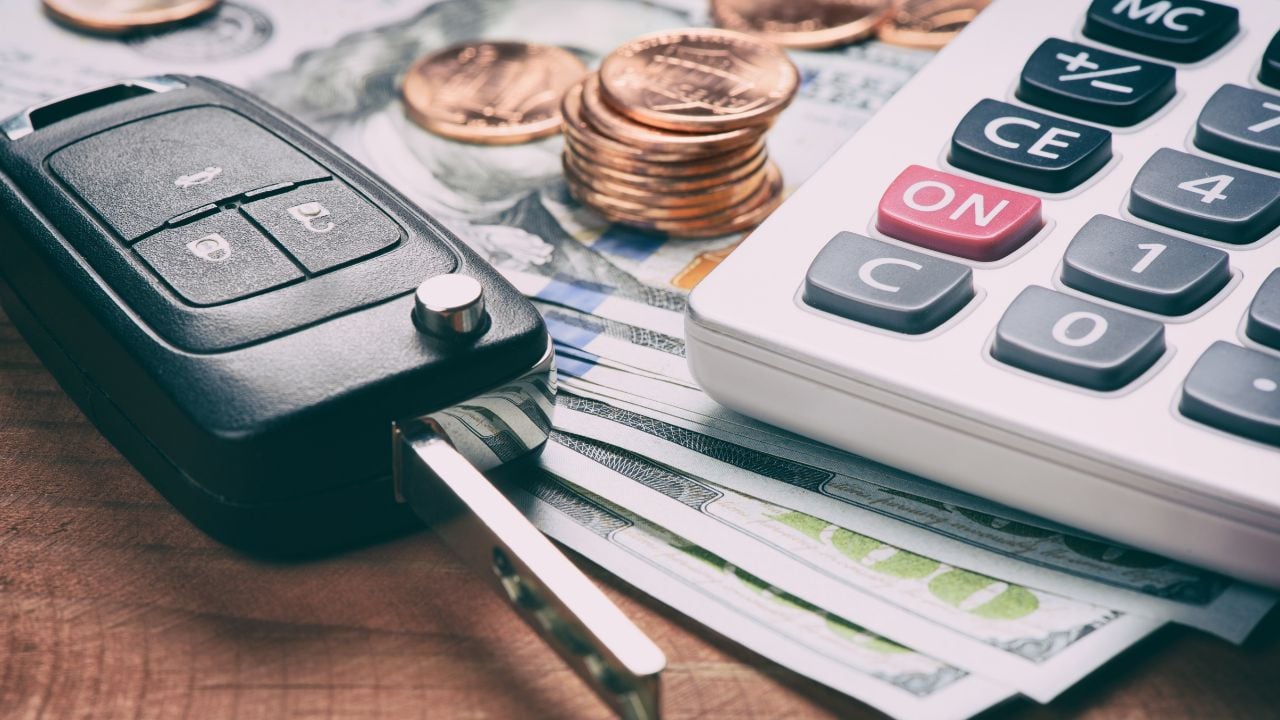
Virginia Car Tax Explained: Why You Pay Personal Property Tax Every Year

The Virginia car tax is an annual personal property tax that your city or county charges on the vehicles you own, based on what each one was worth on January 1.
Virginia treats your car like taxable property, the same way your county treats your house.
Every locality sets its own rate, values your car from a pricing guide, and mails you a bill for every year you own it.
The state chips in relief on the first $20,000 of value, which is why your bill shows a discount you never applied for.
Here’s how the Virginia car tax works, what it costs, and the legal ways to lower it.
Note: This is general information, not tax advice. Confirm the details with a professional before acting.
Why Virginia Taxes Your Car Every Year
Virginia law lets localities tax tangible personal property, and vehicles are the biggest slice of it.
Cars, trucks, motorcycles, RVs, boats, and trailers all count.
The Code of Virginia calls it the tangible personal property tax.
Virginians just call it the car tax.
The bill goes to the locality where the vehicle is garaged, not where you bought it.
Counties and cities lean on this revenue for schools, roads, and police.
So, the Virginia car tax survives every attempt to kill it because billions in local budgets sit on top of it.
How Your Car’s Value Is Set
Your locality doesn’t guess what your car is worth.
Most use the J.D. Power Official Used Car Guide, the book longtime owners still call NADA, as of January 1 of the tax year.
Fairfax County, for example, uses the guide’s clean trade-in value for most vehicles.
That value assumes your car is in good shape with typical mileage.
Fairfax County reads the guide’s Eastern edition dated January 1, and other localities follow the same calendar.
Used-car values fall most years, so the same car usually owes a little less each year it ages.
If your car carries high mileage or damage, the appeals section below matters to you.
How Much the Virginia Car Tax Costs
Rates are written per $100 of assessed value, and they vary widely by locality.
Fairfax County charges $4.57 per $100.
Virginia Beach charges $4.00 per $100.
Run the math on a $10,000 car in Fairfax County: The full tax comes to $457.
State relief, set at 49% in Fairfax County for 2026, knocks that down to $233.07.
Spread out, that’s about $19 a month just for owning a $10,000 car in Fairfax County.
A $30,000 SUV in the same county owes $1,371 before relief and $923.14 after because the relief only touches the first $20,000 of value.
Same car, different county, different bill.
Car Tax Relief and the $20,000 Rule
The discount on your bill comes from the Personal Property Tax Relief Act (PPTRA), passed in 1998.
The state pays a share of the tax on the first $20,000 of your personal vehicle’s value.
Each locality sets that share every year based on its fixed pot of state money.
Henrico County set its relief at 42% for 2025, while Fairfax County landed at 49% for 2026.
One clean break exists: A qualified vehicle assessed at $1,000 or less pays no car tax at all.
Business-use vehicles get no state relief, and you must certify personal use every year.
Which Vehicles Qualify for Relief
A qualified vehicle is a passenger car, motorcycle, pickup, or panel truck with a registered gross weight under 10,001 pounds.
An individual must own or lease it, and personal use must dominate.
Four tests knock a vehicle out of relief.
Claiming more than half the mileage as a business expense, deducting more than half the depreciation, expensing the vehicle under Section 179 of the tax code, or leasing through a company that pays the tax without billing you back all end the subsidy.
One caveat for truck owners: Pickups between 7,501 and 10,000 pounds must register with the Virginia DMV as a pickup, not a truck, to stay eligible.
Why the Car Tax Never Died
Jim Gilmore won the 1997 governor’s race on three words: No car tax.
His plan phased out the tax on the first $20,000 of value starting in 1998.
The campaign priced full repeal at $620 million a year.
The actual cost ran roughly double, and a recession finished the argument.
The state’s share stepped up to 70% by 2001, and there it froze while budgets buckled.
In 2004, lawmakers capped the state’s total reimbursement at $950 million a year, and that cap hasn’t moved since.
Candidates still promise repeal in nearly every statewide election.
Newcomers rarely see the bill coming, and it sits high on the list of retirement mistakes Virginia newcomers make.
Psst! How much do you know about the history behind the car tax? Take our quiz and see if you get stumped.
Quiz
Car Tax Trivia
Answer these questions on car taxes in Virginia and beyond. We bet you can’t get them all right. Prove us wrong?
When and How You Pay
Due dates belong to your locality, so check yours.
Fairfax County's car tax is normally due October 5.
Virginia Beach sends its first personal property bill with a June 5 deadline.
Some localities bill once a year, and others split the bill into two installments.
Late payments draw penalties and interest, so mark the date the bill arrives.
In Virginia Beach, a late payment adds 10% or $10, whichever is greater.
When you move within Virginia, register the vehicle with your new locality so the right office bills you.
Leased and Business Vehicles
Leasing doesn't dodge the Virginia car tax.
The locality bills the leasing company as the owner, and most lease contracts pass that bill straight to you.
State relief covers leased vehicles only when the contract requires you, the driver, to pay the tax.
Company cars sit in a different lane altogether.
A vehicle owned or co-owned by a business pays the full levy at the locality's rate, with no state subsidy softening the bill.
How to Lower Your Virginia Car Tax Bill
Start with your car's condition on January 1.
Localities such as Fairfax County adjust assessments for high mileage, body damage, or serious mechanical defects.
Send a state inspection or service receipt showing the mileage, and the office applies the pricing guide's high-mileage tables.
Pay the bill by the due date even while an appeal is pending.
A won appeal comes back as a refund, but a missed deadline comes back as a penalty.
And don't confuse this annual tax with the 4.15% Sales and Use Tax, which you pay once when the vehicle is titled.
FAQ
Quick answers to the Virginia car tax questions people search most.
Why does Virginia charge a car tax every year?
Virginia law treats vehicles as taxable personal property, and localities depend on the revenue for schools, roads, and public safety.
How is my car's value determined for the Virginia car tax?
Most localities use the J.D. Power Official Used Car Guide value, formerly known as NADA, as of January 1, and many apply the clean trade-in figure.
Do leased vehicles pay the Virginia car tax?
Yes. The locality bills the leasing company, and most contracts pass the cost to the driver. State relief applies only if the lease requires you to pay the tax.
What if my car is worth $1,000 or less?
Qualified personal vehicles assessed at $1,000 or less receive 100% tax relief, though annual registration fees still apply.
Is the Virginia car tax the same as the sales tax on cars?
No. The 4.15% Sales and Use Tax is a one-time charge when a vehicle is titled.
The personal property tax repeats every year you own the vehicle.
8 Things Virginians Are Tired of Explaining to Outsiders
Tell someone you're from Virginia, and there's a fair chance the next thing out of their mouth involves coal mines.
That's West Virginia, and Virginians are tired of drawing the map.
8 Things Virginians Are Tired of Explaining to Outsiders
13 State Fair Secrets Only Longtime Virginians Know

Every fall, a stretch of Caroline County fills with funnel cake smoke and Ferris wheel lights.
