
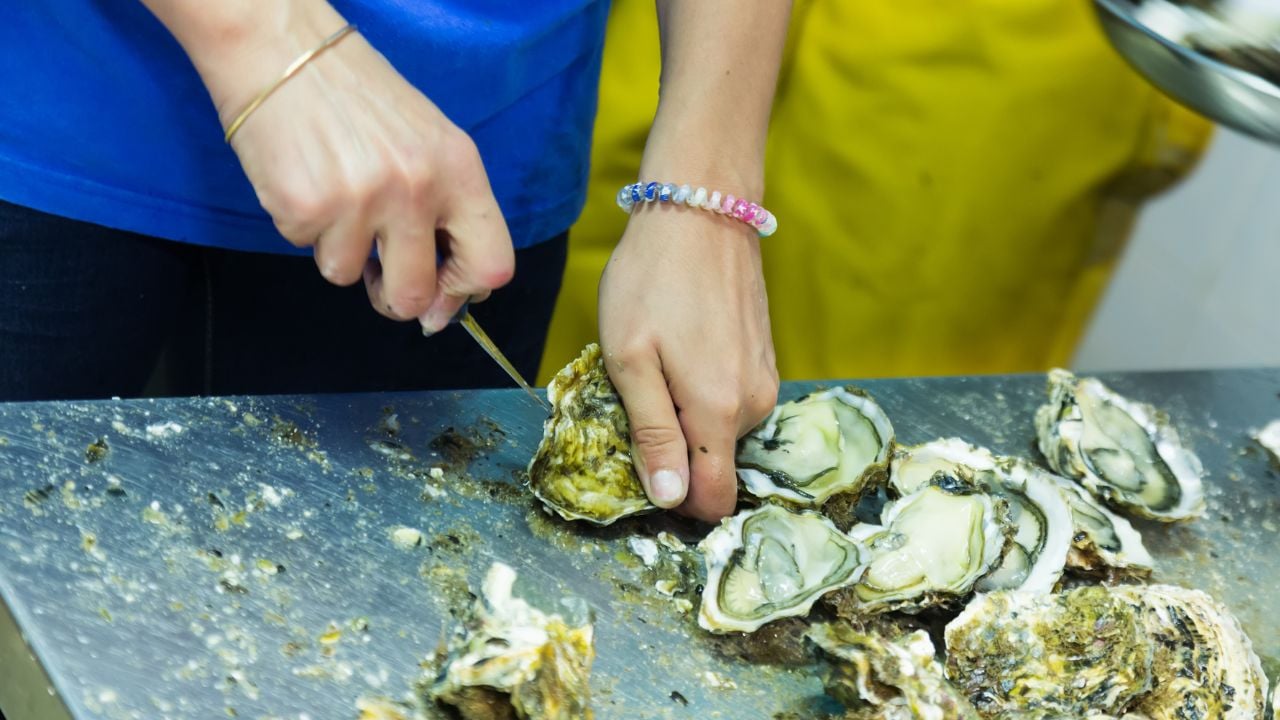
8 Oyster Flavor Regions Virginians Can Identify From the Bay to the Seaside

Most people figure an oyster is an oyster, as long as it’s fresh.
Virginians roasting a bushel over the holiday weekend know better, especially once the grill comes out.
Here are the oyster flavor regions Virginians can identify from the Bay to the Seaside.
1. Seaside
Seaside oysters grow along the Atlantic coast of the Eastern Shore, and they top the Virginia Marine Products Board’s chart for salt.
The Board is the state’s seafood marketing board, set up inside the Department of Agriculture and Consumer Services.
The chart’s 1-to-9 saltiness scale puts Seaside oysters at a 9, with a salinity range of 28 to 32.
The flavor note describes bold saltiness at first, mellowing into sweet butter or cream at the finish.
As an example you can look for, a Virginia Living guide names Shooting Point Oyster Company’s salts, grown at the north end of Hog Island.
2. Upper Bay Eastern Shore
Cross to the bay coast in the northern part of the Eastern Shore, and the oysters you find grow in less salty water.
The chart gives that stretch a salinity range of 16 to 18 and a saltiness score of 5, moderate next to the 9 you’d see for Seaside.
The flavor note calls it the classic bay oyster flavor, with balanced salt and sweet and a savory finish.
3. Lower Bay Eastern Shore
Farther south on the bay side, from Craddockville to Cape Charles, the oysters’ salinity range moves up to 18 to 22 on the chart.
Saltiness rises to a 7, two points above the Upper Bay Eastern Shore’s 5.
The flavor notes read salty and creamy, with a mellow sweetness and a quick finish.
Virginia Living lists Ruby Salts, grown just outside Cape Charles, as an example of this region.
Order a Lower Bay Eastern Shore oyster beside an Upper Bay Eastern Shore oyster, and you may be able to taste the gap in salt yourself.
4. Upper Bay Western Shore
If you plan to grill, roast or fry your oysters, Virginia Living says the milder, less briny oysters from the Upper Bay Western Shore take well to all three.
These oysters grow from the mouth of the Potomac River to north of the Rappahannock River.
The Board’s chart gives the stretch the lowest salinity range of the eight regions, 10 to 17.
The flavor note describes a sweetwater oyster with a light cream taste.
If you want a name to look for, the same guide describes the region’s oysters as fresh and sweet, like those from Bevans Oyster Company.
5. Middle Bay Western Shore
Ask where your Middle Bay Western Shore oysters grew in the Rappahannock River, since Virginia Living says their salinity varies with the spot.
The region sits at the mouth of that river.
On the Board’s chart, the salinity range is 16 to 18 and the saltiness score is a 5.
The tasting notes run to light salt, an easily distinguished cream or butter flavor and a slight minerality.
If you want a name to look for, Virginia Living suggests Rappahannock Oyster Company’s Rappahannocks on the half shell.
6. Lower Bay Western Shore
According to Virginia Living, a grower you can look for here is Big Island Aquaculture, whose oysters come from the waters surrounding Big Island.
The Board’s grower directory lists the company, as Vogt Oyster Company doing business as Big Island Aquaculture, in Hayes.
If you like a mild oyster, the chart’s flavor note for this region is mild saltiness moving to a sweet finish.
Virginia Living uses nearly the same words for oysters grown in Mobjack Bay, which includes the mouth of the York River.
Salinity Isn’t the Whole Story
Four regions on the Virginia Marine Products Board’s oyster chart share a salinity range of 16 to 18.
Their scores for buttery and creamy notes still run from 1 for the Upper Bay Eastern Shore to 5 for Tangier/Middle Chesapeake Bay, region 8 below.
The Board’s tasting guide says a panel of eight tasters scored the oysters, and the numbers are group averages.
The guide also warns that oysters from the same grower can taste different from one harvest to the next because tidal conditions change through the year.
7. Tidewater
Tidewater oysters grow along the shore from south of Yorktown to Virginia Beach.
The Board’s chart gives the region the widest salinity range of the eight, 16 to 30, so two Tidewater oysters you order from the same menu may differ in saltiness.
Expect some salt.
Tidewater’s saltiness score of 8 is one point below Seaside’s, and the flavor note adds some sweetness and a smooth finish.
Virginia Living calls Pleasure House Oysters’ Lynnhavens the best example from this area, so that’s the name you’d look for.
8. Tangier and the Middle Chesapeake Bay
Despite the similar name, you won’t find this region at the mouth of the Rappahannock River with the Middle Bay Western Shore.
It sits around Tangier Island and the north-central part of the Chesapeake Bay.
Tangier’s buttery and creamy score is a 5, the highest of the eight regions in the Board’s tasting guide.
The chart’s flavor note describes a traditional bay oyster flavor, with salt and sweet in balance and a savory butter and cream finish.
If you go looking, Virginia Living names Tangier Island Oyster Company as the place to try oysters from here.
The same guide adds that oysters grown around Tangier Island tend to be small and sweet with a buttery finish.
Psst! How salty do you like your oysters? Sort the chart below and find your region.
Oyster Farm Sales
Oyster sales on Virginia farms more than doubled between 2018 and 2024, according to a Virginia Institute of Marine Science report.
Direct farm sales from Virginia shellfish farms, clams included, totaled $81 million in 2024.
Those sales make Virginia a national leader in both hard clam and eastern oyster production.
The Board’s flavor guide is written for those farm-raised oysters, to help you choose just the right oyster for the occasion.
Psst! How much do you know about oysters and the Chesapeake Bay? Take our quiz and see if you can ace it.
Quiz
Oyster and Bay IQ
Answer these questions on oysters, the Chesapeake Bay and Virginia seafood. We bet you can’t get them all right. Prove us wrong?
Oysters start life as which sex?
The Virginia Oyster Trail
The Virginia Oyster Trail connects producers, farmers, purveyors, seafood restaurants and raw bars in Bay and river towns, according to Virginia Tourism.
On the Trail's website, you'll find Oyster Regions listed alongside Trail Sites, Travel Itineraries and Events.
Its homepage features the Pleasure House Oysters Chef's Table Tour on the Lynnhaven River, the same grower Virginia Living names for Tidewater.
12 Things Virginians Learned in School About History That Historians Have Since Corrected

Some of the stories you learned in a Virginia classroom were told like they'd never change.
Historians have kept digging since, and several of those lessons look pretty different now.
12 Things Virginians Learned in School About History That Historians Have Since Corrected
7 Virginia Speeding Rules That Turn a Ticket Into a Criminal Charge

Many speeding stops end with a ticket and nothing more.
But in some cases, speeding can bring a criminal charge instead of a fine.
7 Virginia Speeding Rules That Turn a Ticket Into a Criminal Charge
