
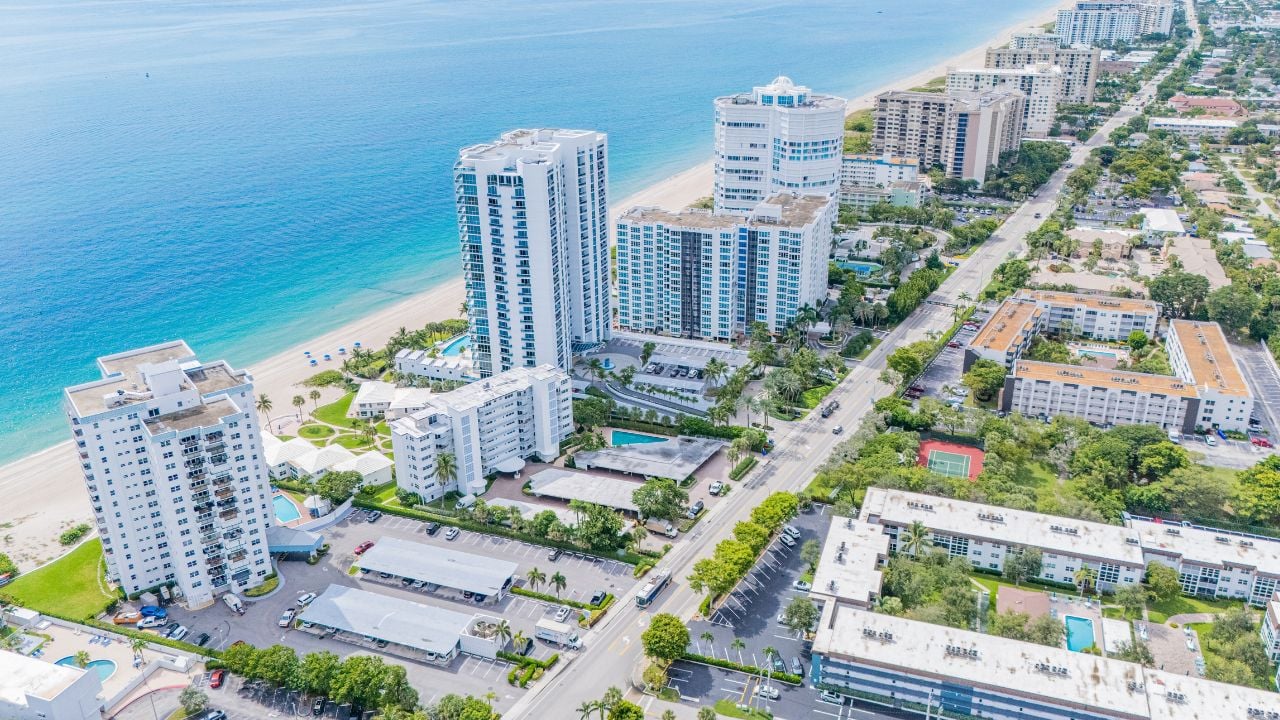
What a $1 Million Retirement Really Looks Like in Florida in 2026

Hitting $1 million in retirement savings puts retirees ahead of most people. Fewer than 3% of Americans with a retirement account ever reach seven figures.
But even so, $1 million isn’t always enough to live comfortably nowadays.
Here’s what a $1 million Florida retirement really looks like in 2026.
Note: This is general information, not financial or tax advice. Dollar figures and tax rules are subject to change, so confirm the current details with a professional.
Monthly Math
A $1 million nest egg doesn’t arrive as one lump check.
It pays out slowly, one withdrawal at a time.
The classic guideline, often called the 4% rule, says a retiree can pull about 4% of that balance in the first year and adjust for inflation after that.
On $1 million, that’s $40,000 a year, or $3,333 a month.
Morningstar’s 2026 research trims that further, to 3.9%, for a retiree who wants steady, inflation-adjusted income across 30 years.
That drops the monthly check to about $3,250.
Add the average Social Security benefit.
The average retirement benefit for January 2026 runs $2,071 a month.
Combine the two, and a retiree living alone on $1 million plus an average Social Security check lands around $5,300 a month before taxes.
What Housing Costs
Housing is where that number starts shrinking.
Florida’s median home sale price ran about $381,667 as of April 2026.
Own that home outright, and you still owe property tax on it every single year.
The average effective property tax rate runs about 0.75% of a home’s value, below the 0.89% national average.
Homestead exemption trims that bill further.
Not a bad deal.
Florida’s homestead exemption now totals $51,411, split into a flat $25,000 that covers every tax and a second, inflation-adjusted $26,411 that skips school taxes.
Subtract that from the median home’s value, and the taxable portion drops to around $330,000.
At that rate, the tax bill comes to roughly $206 a month.
Stay put for years, and the Save Our Homes cap limits how fast the taxable value can rise, at 3% a year or the inflation rate, whichever runs lower.
New arrivals don’t get that protection yet.
They pay full freight until they’ve owned the place a while.
Insurance Squeeze
Property insurance is the bill many new Florida retirees don’t see coming.
A standard $300,000 dwelling policy in Florida costs about $5,838 a year, among the priciest premiums of any state in the country.
That’s roughly $487 a month.
Nationally, the same coverage runs 58% cheaper, about $2,424 a year.
Insurance costs run even higher in coastal counties.
There’s some relief on the way, though.
Citizens Property Insurance, the state’s insurer of last resort, cut its average rates 8.7% statewide for 2026, following tort and insurance reforms Gov. Ron DeSantis signed in prior years.
More than 330,000 policyholders saw their bill drop.
Combine property tax and insurance, and a retiree who owns a median-priced home outright faces about $693 a month before a single grocery run.
Psst! Curious how your own number stacks up against the $1 million we just walked through? Plug in your savings below and see how long they’re likely to last.
Healthcare Wildcard
Healthcare is the line item that blows up a tidy retirement budget.
Fidelity’s 2026 estimate puts lifetime healthcare spending for a single 65-year-old retiring this year at $185,500, up 7.5% from last year’s projection.
Spread that over roughly 20 years of retirement, and it runs about $773 a month, though some years cost less and others cost more than that average.
That figure already bakes in Medicare premiums.
The standard Medicare Part B premium for 2026 runs $202.90 a month, up almost 10% from 2025.
Earn too much, and that premium rises further.
The income-related monthly adjustment amount (IRMAA) adds a surcharge once modified adjusted gross income (MAGI) tops $109,000 for a single filer, based on the tax return from two years earlier.
A big withdrawal or a home sale in 2024 can raise a Medicare bill in 2026, long after that money is gone.
Long-term care isn’t part of that estimate.
Not one dollar of it.
No-Tax Catch
Florida’s biggest selling point for retirees comes with fine print nobody reads.
Zero percent is the state income tax rate on wages, pensions, IRA withdrawals, and Social Security.
That part is true.
But the federal government works differently.
Every dollar pulled from a traditional individual retirement account (IRA) or 401(k) still counts as ordinary income on a federal return, taxed at rates up to 37%.
Social Security isn’t automatically safe either.
Combined income, adjusted gross income plus any tax-free interest plus half of your benefits, decides how much of your check the Internal Revenue Service (IRS) can tax.
Cross $25,000 as a single filer, and up to half of those benefits become taxable.
Those thresholds haven’t moved since the 1980s.
More retirees drift into them every year.
Withdrawal Rate Fight
Even the experts don’t agree on the safe number.
William Bengen, the financial advisor who invented the 4% rule in 1994, now calls 5.25% to 5.5% a reasonable starting rate for today’s retirees.
Morningstar lands more cautiously, at 3.9%, for a retiree who wants the same paycheck every year no matter what the market does.
The gap between those two numbers is enormous.
On $1 million, it’s the difference between about $3,250 a month and roughly $4,580.
Sequence matters as much as the rate.
A retiree who starts withdrawing right as the market drops sells shares at a loss to cover bills, and that early damage can outlast the recovery.
Starting in a strong market barely registers by comparison.
Eventually, the IRS makes the choice for you.
Required minimum distributions (RMDs) force withdrawals from most retirement accounts starting at age 73, whether the market cooperates that year or not.
What’s Left for Living
Add up the essentials, and the picture gets clearer.
Property tax and insurance run about $693 a month.
Healthcare averages roughly $773 more.
That’s close to $1,500 gone before a single grocery bill arrives.
Against a $5,300 monthly income built on $1 million and an average Social Security check, that leaves close to $3,800 a month for everything else.
Utilities, car insurance, a phone bill, and weekly groceries all come out of that remainder.
The IRS taxes both the IRA withdrawals and a share of Social Security before any of it reaches you.
Retirees in Naples and Ocala stretch that same $3,800 across very different costs of living.
A retiree near the coast in Naples spends more of it on flood coverage and dining out.
Inland, in a market like Ocala, a retiree keeps more of it for travel or hobbies.
Florida’s Property Tax Breaks for Seniors: What Homeowners 65+ Get in 2026

Turning 65 unlocks a second stack of Florida property tax breaks most homeowners never file for.
One of them can wipe out the county’s entire share of the bill.
Florida’s Property Tax Breaks for Seniors: What Homeowners 65+ Get in 2026
8 Hidden Costs That Wipe Out Florida’s No-Income-Tax Advantage
Zero state income tax looks like an automatic raise on paper.
A second stack of bills shows up anyway, no matter what a retiree earns.
8 Hidden Costs That Wipe Out Florida’s No-Income-Tax Advantage
