
What Homeowners Insurance Doesn’t Cover in Ohio, and What It Costs to Add

Ohio homeowners insurance doesn’t cover flood water, sewer backup, earth movement, or a roof past its prime.
Every one of those gaps carries its own price tag to close.
A sewer backup endorsement runs about $75 to $150 a year in Ohio, covering claims that often top $10,000.
But here’s the part that trips up many Ohio homeowners: A cracked foundation and an aging roof don’t come with that same fix.
Note: This is general information, not insurance advice. Coverage and terms are subject to change, so check the specifics with your insurer or agent.
Does Ohio Homeowners Insurance Cover Flood Damage?
An Ohio homeowners policy leaves flood water off the list entirely, whether it rolls in from a swollen creek, a storm surge off Lake Erie, or three straight days of rain.
No exceptions.
Flood coverage in Ohio comes from a separate policy, the National Flood Insurance Program (NFIP), and the price swings hard by zip code.
Ohio’s average NFIP premium runs about $1,085 a year, though homes near the Ohio and Great Miami rivers often pay several times that.
NFIP building coverage caps out at $250,000 for a single-family home, so a pricier house needs private flood coverage to fill the rest of the gap.
Is Sewer Backup Covered in Ohio?
Ohio homeowners insurance excludes sewer and drain backup by default, and a failed sump pump falls into the same gap.
Basements take the hit first.
Buy the endorsement, though, and it’s one of the cheapest fixes on this whole list.
Many Ohio insurers price it around $75 to $150 a year for $5,000 to $10,000 of protection, a Federal Emergency Management Agency (FEMA) estimate relayed by insure.com.
Ask about raising that limit if your basement is finished, since some carriers offer more.
Drywall and carpet make a backup claim add up fast, so a finished basement is exactly where that extra limit earns its keep.
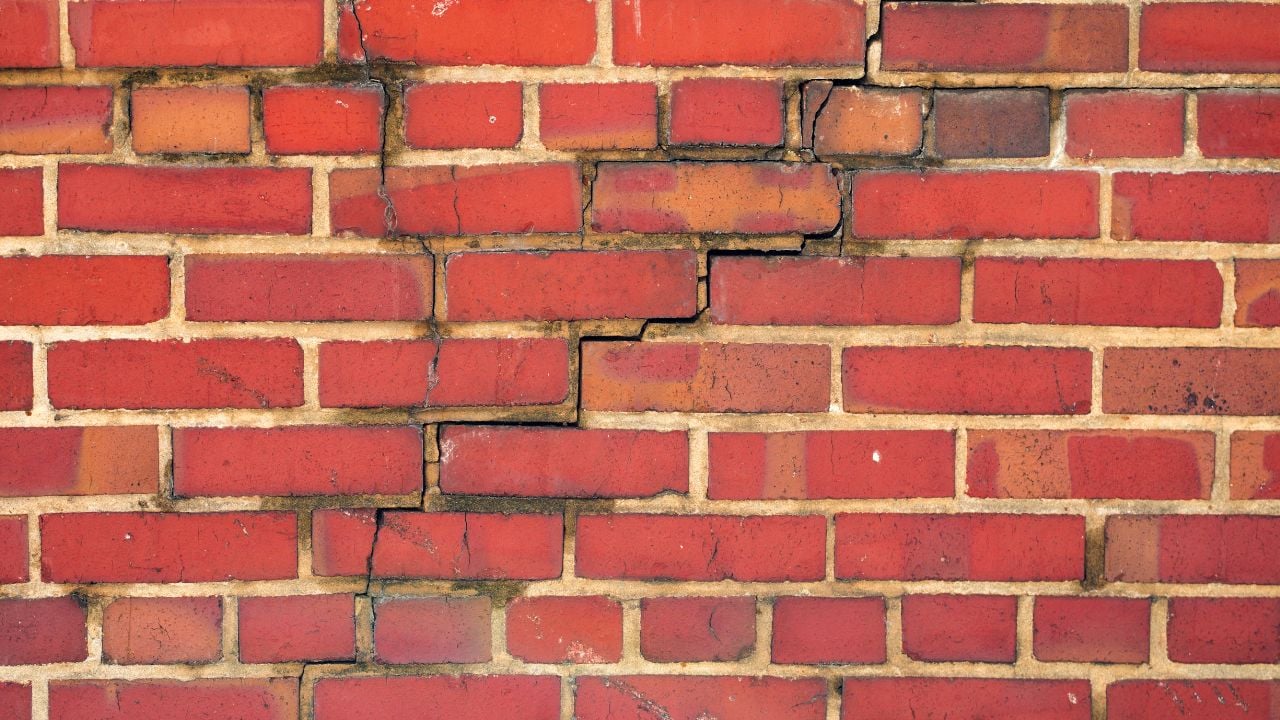
Does Ohio Homeowners Insurance Cover Foundation Cracks?
A cracked or shifting foundation falls outside Ohio homeowners insurance almost every time.
Ohio’s clay-heavy soil expands and contracts with every wet spring and dry summer, which is exactly the kind of gradual earth movement a standard policy excludes by name.
That leaves the homeowner paying the full repair bill.
Foundation work nationally runs about $2,225 to $8,133 for a typical fix, and Ohio’s older housing stock sees its share of it.
No add-on exists to buy this coverage back on a home that’s already built.
None at all.
What Counts as Ohio’s Earth Movement Exclusion
Ohio insurers define earth movement broadly, covering settling, shrinking, expanding, and shifting soil, plus sinkholes and landslides, regardless of what triggered it.
A foundation crack traced back to a burst pipe works differently.
Insurers often pay that claim because a covered peril, the pipe, caused the damage, even though the crack looks the same as one caused by dry soil.
Psst! How much do you know about the history behind your homeowners policy? Take our quiz and see if you can ace it.
Quiz
American Insurance History IQ
Answer these questions on insurance’s biggest firsts and disasters in America. We bet you can’t get them all right. Prove us wrong?
After the 1906 San Francisco earthquake and fire, how many American insurance companies went bankrupt trying to pay claims?
Does Ohio Homeowners Insurance Cover Mold?
Mold caused by a sudden leak still falls under Ohio homeowners insurance, but the payout rarely covers the whole job.
Standard policies often cap mold cleanup at $1,000, and a rider from Policygenius shows that ceiling can rise to $10,000 to $50,000.
Not much of a cushion.
Professional mold remediation runs about $2,368 on average nationally, and bigger jobs rise past $3,700, according to Angi.
That low ceiling rarely covers a full professional remediation job.
Raising the limit itself typically costs $500 to $1,500 a year, according to Insurance.com, depending on the home and its location.
One bad mold claim can wipe out several years of that premium at once.
Insurers pay when a sudden event, like a burst pipe, causes the moisture; a slow leak behind a wall for months reads as neglect instead.
Ask your agent to raise it before you need it.
Does Ohio Homeowners Insurance Cover an Aging Roof at Full Value?
Ohio homeowners insurance still covers an aging roof, but not always at what it costs to replace.
Many Ohio insurers switch a roof from full replacement cost to actual cash value somewhere between 15 and 20 years old.
That's when depreciation starts reducing the check.
The National Association of Insurance Commissioners lays out the gap in dollars. A $15,000 roof claim paid $14,000 under replacement-cost coverage, after the deductible, versus just $4,000 under actual cash value once depreciation was subtracted.
A $10,000 gap.
No endorsement buys back full replacement cost on a roof that's already old.
Only a new roof adds that value back.
A full re-roof runs about $9,607 on average nationally, according to Angi.
Go with an impact-resistant or metal roof and that new-roof cost buys something back: State Farm offers a discount of up to 35% for one in some states, and other insurers' discounts run 5% to 15% or more, according to Consumer Reports.
Psst! See exactly how Ohio's biggest coverage gaps stack up, cost and all. Tap through the table below to find the one that worries you most.
Why Ohio Homeowners Insurance Doesn't Cover Wear and Tear
Ohio homeowners insurance never covers wear, tear, or plain neglect, no matter how you phrase the claim.
A slow roof leak nobody caught for two years reads as neglect, not damage.
So does a water heater that finally gave out after 15 years.
A slow leak under a kitchen sink that swells the cabinet floor over months reads the same way.
Keep receipts for routine upkeep, since an adjuster sometimes asks for proof a home was maintained before paying a claim at all.
No wiggle room.
The Ohio Department of Insurance's own consumer guide lists poor maintenance right alongside flood and earthquake as a standard exclusion.
Rising premiums are one more reason some Ohio homeowners are eyeing the exits these days.
The Underground Gap Many Ohio Homeowners Miss
Ohio homeowners insurance stops at the house itself and skips the buried pipe that connects it to the street.
A cracked water or sewer line under the yard is the homeowner's bill unless a separate service line rider is in place.
The rider typically covers water, sewer, gas, and electric lines a homeowner owns between the house and the street, not just water pipes.
Many companies price it at $20 to $50 a year, according to NerdWallet, for a coverage limit often set at $10,000.
A sewer line replacement runs about $3,300 on average, well inside that limit.
A bigger break can still outrun it: NerdWallet points to a $13,000 sewer line job that left a homeowner covering $3,000 out of pocket once the $10,000 limit and the deductible were factored in.
A $3,000 shortfall.
Even then, the rider still covered the bulk of the bill.
Does Ohio Homeowners Insurance Cover Dog Bites?
Ohio homeowners insurance liability coverage can vanish over something as ordinary as the family dog.
Insurers restrict or exclude breeds like pit bulls, Rottweilers, and German shepherds from liability coverage altogether, while insurers who don't exclude the breed outright typically raise rates by about 1% on average, according to ValuePenguin.
A small bump, but only if the insurer allows the breed at all.
Ohio logged 885 dog bite and dog-related injury liability claims in 2023, part of a $1,116 million national payout that year, according to the Insurance Information Institute.
Nearly $1.2 billion in claims, one bite at a time.
Ohio's Avery's Law, in effect since March 2026, requires an owner of a dog legally designated dangerous or vicious, based on its conduct rather than its breed, to carry at least $100,000 of liability insurance.
Dog wardens, not a judge, now make that designation directly, per The Vindicator.
Closing an ordinary breed-exclusion gap costs far less than that $100,000 mandate.
Far less.
A breed test to prove a dog isn't the restricted breed runs $50 to $200, ValuePenguin notes, and an umbrella policy that layers on extra liability typically runs $200 to $380 a year for $1 million or more in coverage, according to NerdWallet.
FAQ
Quick answers to what Ohio homeowners search most about their policy's blind spots.
What does homeowners insurance not cover in Ohio?
A standard Ohio policy excludes flood damage, sewer and drain backup, sump pump failure, earth movement, wear and tear, and mold beyond a low dollar cap. Many of those gaps can be closed with a separate policy or endorsement, except for earth movement and ordinary wear and tear.
Is flood damage ever covered by homeowners insurance in Ohio?
No. Flood coverage requires a separate National Flood Insurance Program policy, which runs about $1,085 a year on average in Ohio and more near major rivers.
How much does sewer backup coverage cost in Ohio?
Many Ohio insurers price a sewer and water backup endorsement around $75 to $150 a year for $5,000 to $10,000 of protection, a FEMA estimate reported by insure.com.
Does Ohio homeowners insurance cover foundation cracks?
Usually not. Foundation damage from earth movement, settling, or shifting soil is a standard exclusion, and no endorsement exists to buy it back on an existing home.
Why does an old roof affect an Ohio insurance payout?
Many Ohio insurers switch a roof to actual cash value after 15 to 20 years, so a claim on an older roof pays its depreciated value instead of the full replacement cost.
Avery's Law also tightened confinement and registration rules for a dog carrying the dangerous designation, on top of the $100,000 insurance floor, according to The Vindicator.
A dog can be seized immediately once a warden decides its owner can't keep it under control, no court order required first.
9 Kroger Mistakes Ohio Shoppers Make Every Week

Insurance isn't the only place Ohio budgets leak money every week.
A few checkout habits cost loyalty-card shoppers more than they realize.
9 Kroger Mistakes Ohio Shoppers Make Every Week
The States With the Worst Drivers, Ranked. Here's Where Ohio Falls
Insurance rates and driving habits are more connected than many Ohioans realize.
A new nationwide ranking puts Ohio's drivers exactly where you'd expect, or maybe not.
The States With the Worst Drivers, Ranked. Here's Where Ohio Falls
