
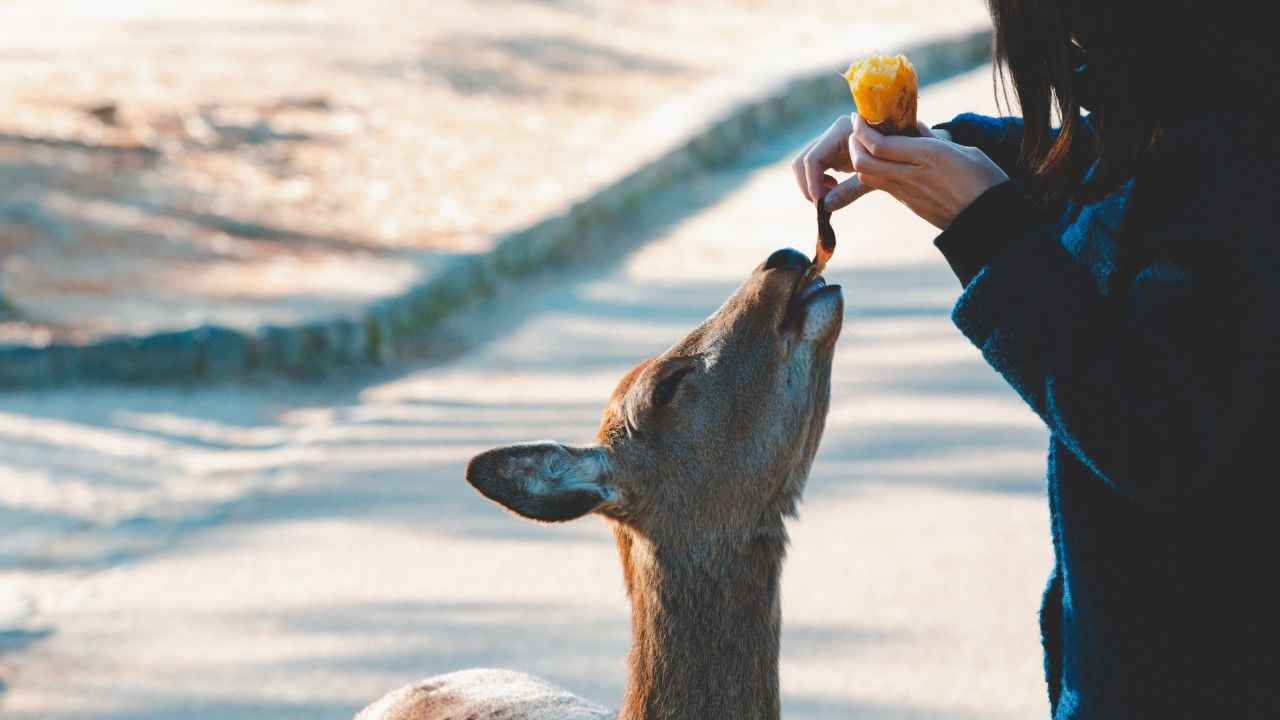
What West Virginians Can Be Fined for When They Feed Bears or Deer

If you’ve got a bird feeder outside your kitchen window, you already know it doesn’t only feed the birds.
What you might not know is what the law says about that if bears or deer come around for a nibble.
Here’s what West Virginians can be fined for when they feed bears or deer.
Note: This is general information, not legal advice. Wildlife rules and fine amounts are subject to change, so confirm the current requirements with the West Virginia Division of Natural Resources (DNR).
First Bear Offense
West Virginia’s bear law sets a fine of $500 to $1,000 for a first conviction of feeding a black bear, and the court can’t suspend it.
The same law allows 10 to 30 days in jail, and the ban applies at any time of year.
Bears now live in all 55 counties, so no yard in the state sits outside the ban.
DNR says a bear that grows used to human food often has to be humanely killed, so a handout can end badly for the bear too.
If a bear keeps turning up at your kitchen window, it’s one to watch, not feed.
What Counts as Bear Bait
West Virginia’s bear law lists corn and other grains, animal carcasses or remains, grease, sugars in any form and scent attractants as bait.
The list ends with other edible enticements, so a food that isn’t on it may count too.
Under the bear law, the state won’t accept a damage claim for property commonly used for feeding, baiting, observing or hunting wildlife, and that includes artificial feeders and trail cameras.
Repeat Bear Offenses
A second conviction for feeding bears raises the fine to $1,000 to $3,000, and the law allows 30 to 100 days in jail.
A third conviction, or any conviction after it, carries $2,500 to $5,000 and six months to a year in jail.
If you hold a hunting or fishing license, a first conviction puts six points on it.
A second conviction suspends your licenses for five years, and a third suspends them for 10.
Ten years without a fishing license is a steep price for a bucket of corn.
Baiting a Bear for the Hunt
Baiting a bear to hunt it falls under the same law as feeding one, so a first conviction carries the same $500 to $1,000 fine.
For a first violation, the code adds a two-year license suspension if it ends in a bear’s death.
An area stays baited for 10 days after you remove the bait, so clearing it out doesn’t make the spot legal overnight.
DNR’s 2026-27 hunting rules say bear hunting law violations carry fines up to $5,000, up to a year in jail and license suspension up to 10 years.
If you hunt bears, that’s the full ladder to know before you set out a single bucket.
7 West Virginia State Park Lodges Worth a Winter Weekend
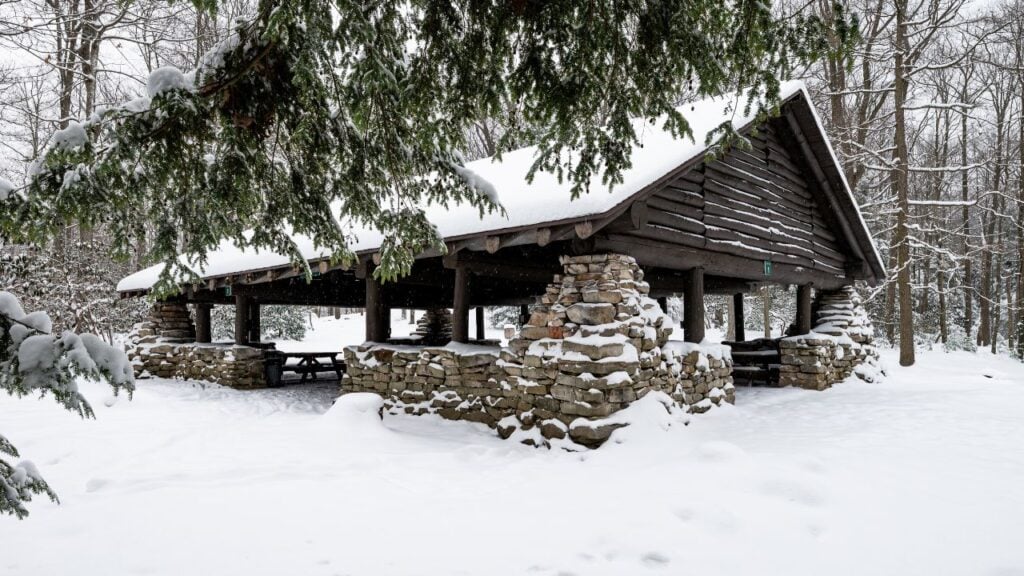
If you’re looking for a winter weekend getaway, a state park lodge can be a cozy base.
These are the state park lodges we’d pick for a winter weekend.
7 West Virginia State Park Lodges Worth a Winter Weekend
Feeding Deer in Eight Counties
In Berkeley, Grant, Hampshire, Hardy, Jefferson, Mineral, Morgan and Pendleton counties, feeding deer at any time breaks the Containment Area rules.
Unless the code sets a different penalty, breaking a state wildlife rule is a misdemeanor with a fine of $20 to $300.
The same statute allows 10 to 100 days in jail.
Those counties make up the Containment Area, which exists because of chronic wasting disease (CWD), a neurological illness in deer.
DNR says feeding draws deer together and raises the odds that any disease in the herd spreads, and CWD has turned up in 902 white-tailed deer.
Outside those counties, DNR still discourages feeding deer statewide.
If you live in one of those eight counties, the doe crossing your lawn is one to watch, not feed.
Feeding Deer on Public Land
DNR says it’s illegal to feed wildlife on any public land, Containment Area county or not.
In a wildlife management area (WMA), DNR punishes rule-breakers under the state’s natural resources code, whose default fine is the same $20 to $300.
State parks and forests, national forests and national wildlife refuges are on DNR’s no-feeding list too, though DNR names no separate fine for them.
So the deer that wander up to your picnic table at a state park aren’t yours to feed.
Psst! How much do you know about West Virginia’s wildlife rules? Take our quiz and see how many you can get right.
Quiz
Wildlife Rules IQ
Answer these questions on West Virginia’s bears, deer and elk. We bet you can’t get them all right. Prove us wrong?
Convicted of a crime that injures or kills an antlered deer, you owe the state $500 for the deer plus an antler charge. What’s the most that charge can add?
Bird Feeders as Deer Feeders
A bird feeder can turn into deer feeding without you meaning to, and that's when the fines above can reach you.
In the Containment Area, DNR's 2026-27 hunting rules let you feed songbirds as long as it doesn't draw deer or other wildlife together.
If deer keep gathering under your feeder, that exception may stop covering you, and the $20 to $300 default fine could apply.
For bears, DNR calls deliberately feeding a black bear illegal and asks you to take your bird feeders down until late fall.
Those same hunting rules let captive deer eat inside facilities the state Department of Agriculture permits.
A pile of corn in your backyard isn't a permitted facility.
Proposed Feeding Rule Changes
In 2026, DNR proposed an amendment to its wildlife disease rule, and public comment closed on July 27.
This fall the change was still moving through the state approval process, and the final wording may differ.
Under the proposal, feeding would mean placing natural or artificial foods, minerals or other attractants that draw wildlife together.
Under that wording, the mineral block you set out for deer would count like a bucket of corn.
Baiting rules would also reach past hunting, to edible attractants you set out for viewing.
Food plots, standing crops and naturally fallen fruit would stay exempt.
7 Kroger Secrets Employees Wish West Virginians Knew
Small Kroger details can cost shoppers money or time.
Kroger workers notice them, and they wish you did too.
