
Why Are Florida Property Taxes So High? What 2026 Homeowners Should Know

Florida property taxes feel high because your bill keeps climbing, but the honest answer is that Florida’s property tax rates sit near the middle of the pack nationally.
What drives the pain is a mix of soaring home values, rising local millage, and a home insurance bill that shares your escrow statement.
With no state income tax to spread the load, local governments lean on property taxes to fund schools, roads, and services.
So, the number on the page can sting even when the rate itself is average.
Here’s what’s behind your bill in 2026, how the rules work, and the ballot change every Florida homeowner should have on their radar.
Note: This is general information, not financial or tax advice. Confirm the details with a professional or your county property appraiser.
Are Florida Property Taxes High?
Not by the rate. Florida’s effective property tax rate on owner-occupied homes is about 0.74%, which ranks 30th among the states and lands below the national average.
So why does the bill feel brutal?
Because a rate is only half the math. The other half is your home’s value, and Florida values have shot up.
A below-average rate on a home worth far more than it was five years ago still produces a bigger check.
Florida also collects no state income tax, so property taxes carry more of the weight for schools and local services than they do in many other states.
How Your Florida Property Taxes Are Calculated
The formula is simpler than it looks: Your assessed value, minus any exemptions, multiplied by the local millage (mill) rate.
A mill is how counties write tax rates.
One mill means you pay $1 for every $1,000 of your home’s taxable value. So, a home taxed on $300,000 at 10 mills owes $3,000.
Those millage rates aren’t set in Tallahassee.
Your county, city, and school board each set their own, then stack them together.
That’s why two identical houses in different counties can carry very different bills, and why a local government’s budget vote shows up on your November statement.
Homestead Exemption and Save Our Homes Cap
If the home is your primary residence, Florida hands you two big breaks that hold your bill down over time.
The homestead exemption knocks up to $50,000 off your taxable value, though the second $25,000 slice doesn’t apply to school taxes.
The bigger long-term win is Save Our Homes.
Once your home is homesteaded, your assessed value can rise no more than 3% a year, or the change in the consumer price index, whichever is lower.
You have to own and live in the home by January 1 and file by March 1 to claim it for the year.
That cap is why a longtime owner often pays far less than the family that just bought the identical house down the street.
Why Second Homes and Rentals Get Hit Harder
Own a rental or a beach place instead?
The friendly rules mostly fall away.
Second homes, rentals, and vacation properties get no $50,000 homestead exemption.
Their assessment cap is a much looser 10% a year instead of 3%, and that cap doesn’t cover school taxes at all.
Sell the property, and the cap resets. The next year, the county reassesses it at full market value.
A lot of new buyers never see that coming, since the seller’s old, capped bill has nothing to do with what they’ll owe.
Can You Take Your Tax Break With You?
Yes, and this is the perk longtime Floridians guard most.
When you sell a homesteaded home and buy another in Florida, you can port your accumulated Save Our Homes savings to the new place, up to $500,000, as long as you do it within three tax years.
That can mean moving to a pricier house without your tax bill exploding to match.
Portability only applies to homesteads, though. It does nothing for that beach condo you rent out.
Psst! Think you’ve got Florida property taxes figured out? The quiz below covers the history and rules behind your bill, and some of the answers will surprise you.
Quiz
Florida Tax IQ
Test yourself on Florida property tax history and rules. We bet a couple of these surprise you. Prove us wrong.
Why Insurance Gets Blamed for Your Tax Bill
Ask a Florida homeowner why their "taxes" jumped, and half the time they're describing their insurance.
Both land in the same monthly escrow payment, so a spike in one feels like a spike in the other.
And Florida insurance has spiked hard.
The state has the most expensive home insurance in the nation, with the average premium projected near $8,458 by the end of 2026, roughly triple the national average.
That's the line item wrecking a lot of Florida budgets, and we've broken down the forces behind it in our look at why Florida home insurance premiums keep exploding.
When the whole escrow bill climbs, the tax portion often takes the blame it doesn't fully deserve.
2026 Ballot Change Homeowners Should Watch
The biggest property tax story in Florida right now is heading to your ballot in November.
Gov. Ron DeSantis pushed a property tax relief plan, and in June 2026, the Legislature passed an amendment for the November 3 statewide ballot.
It needs 60% approval to pass.
If voters approve it, the homestead exemption would climb toward $250,000 over the following years, and the non-homestead cap would drop from 10% to 5%.
There's a catch worth knowing.
The bigger exemption skips school taxes, which make up about 40% of a typical bill.
So even if it passes, "no property tax" wouldn't mean a zero bill.
What You Can Do About a High Bill Now
You don't have to wait on a ballot to trim your bill.
File for your homestead exemption if you haven't, and confirm every exemption you qualify for, senior, veteran, widow, or disability, is on your record.
Then check your assessed value against recent sales.
If the number looks inflated, your county's Value Adjustment Board takes petitions.
If a giant insurance bill is the true culprit, shop the coverage, because some Florida homeowners are doing the harder math and looking at states where the same money buys more house.
Small moves add up. The exemptions are money left on the table if you never claim them.
Frequently Asked Questions
Are Florida property taxes higher than other states?
No. Florida's effective property tax rate is about 0.74%, which ranks 30th and sits below the national average. Bills feel high because home values have surged and there's no state income tax to share the load.
What is the Florida homestead exemption worth?
Up to $50,000 off your taxable value on a primary residence, though the second $25,000 slice doesn't apply to school taxes. You must own and live in the home by January 1 and file by March 1.
What is the Save Our Homes cap?
It limits how much a homesteaded property's assessed value can rise each year to 3% or the change in the Consumer Price Index, whichever is lower. It's why longtime owners often pay less than new buyers next door.
Will Florida eliminate property taxes in 2026?
Not outright. A November 2026 ballot amendment would raise the homestead exemption toward $250,000 and cut the non-homestead cap to 5%, but it needs 60% approval and still leaves school taxes in place.
Why did my Florida property tax bill go up so much after buying?
When a home sells, its assessment cap resets, and the county reassesses it at full market value the next year. The seller's old capped bill has little to do with what you'll owe as the new owner.
One more date for your calendar: TRIM notices, the proposed-tax previews, hit mailboxes in mid-August, and you get just 25 days from the mailing date to petition the Value Adjustment Board if the assessment looks wrong.
Paying early helps too, because Florida knocks 4% off bills paid in November, 3% in December, and a point less each month through February.
11 Reasons Florida Home Insurance Premiums Are Exploding Right Now
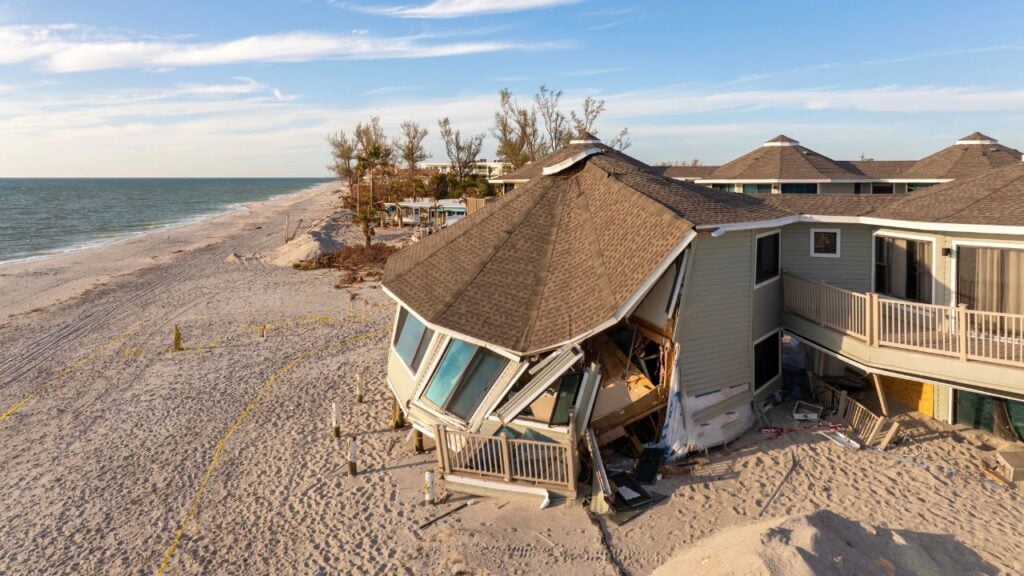
Open a Florida insurance renewal and brace yourself, because the number these days stings.
11 Reasons Florida Home Insurance Premiums Are Exploding Right Now
12 Things Florida Seniors Are Legally Entitled to but Rarely Claim

Florida hands its seniors a long list of breaks, discounts, and benefits.
The catch? Almost nobody hands them to you.
You have to know they exist and ask, or they sit there unclaimed year after year.
12 Things Florida Seniors Are Legally Entitled to but Rarely Claim
