
Why a Tennessee Homeowners Policy Doesn’t Cover Water Damage

The National Flood Insurance Program paid Tennessee policyholders more than $15 million for Hurricane Helene, which sent the Nolichucky over its banks two Septembers ago.
None of that came from a homeowners policy.
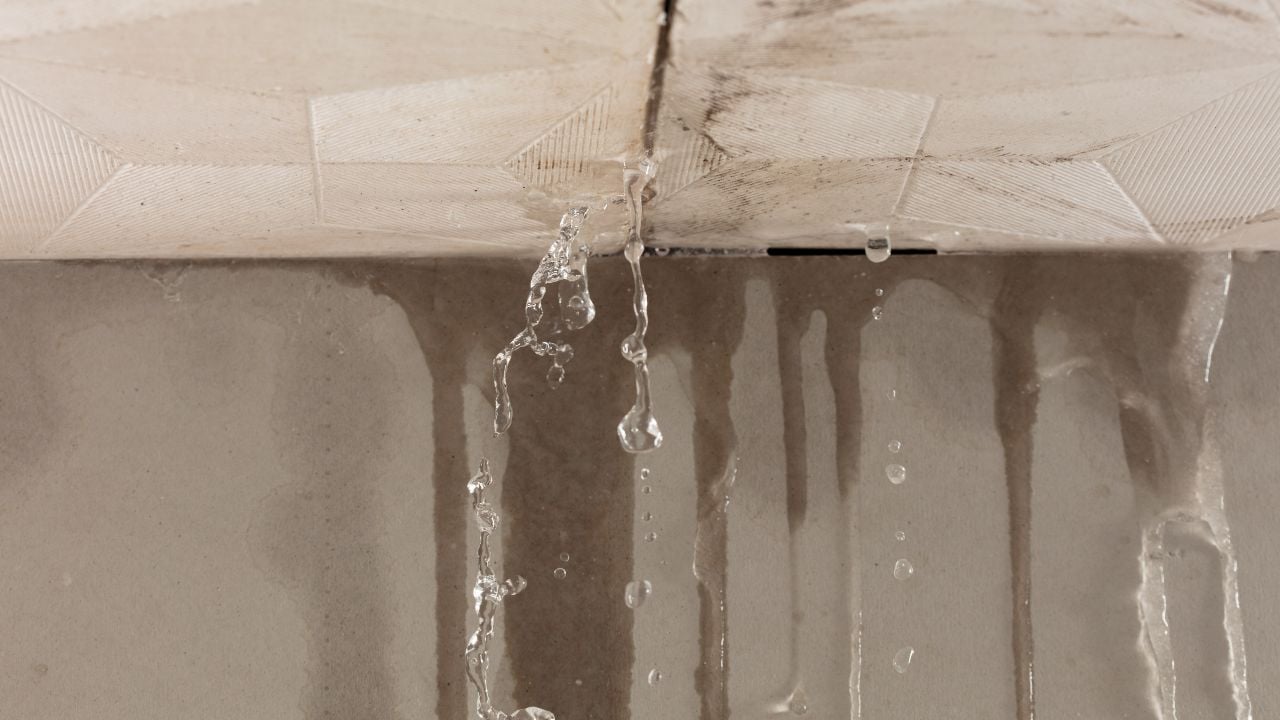
A Tennessee homeowners policy covers water damage only when it’s sudden and accidental, which leaves out flood, and leaves out anything that leaked slowly enough to go unnoticed.
Note: This is general information, not insurance advice. Coverage and terms are subject to change, so check the specifics with your insurer or agent.
Sudden Versus Gradual Water Damage
Tennessee homeowners policies pay for water damage that arrives suddenly and by accident, the same standard nearly every major insurer builds into its base coverage.
Allstate’s guidance to policyholders spells out what qualifies: A washing machine hose that suddenly breaks, a water heater that ruptures, an upstairs pipe that bursts overnight.
Speed is everything.
A slow leak hurts a homeowner’s chances of collecting a payout.
The same policy that pays for a burst pipe typically won’t pay for a leaky toilet a homeowner never fixed.
The same goes for a faucet that’s dripped behind a wall for months, since insurers treat that kind of damage as a maintenance failure rather than an accident.
Wait too long to fix a small leak, and the payout disappears with the evidence.
Flood Damage Sits Outside the Policy
Tennessee’s emergency management agency puts the flood gap in plain terms: Most homeowners insurance doesn’t cover flood damage.
Flood insurance stands apart.
That gap is what left so many Northeast Tennessee homeowners paying out of pocket two years ago.
Hurricane Helene sent the Nolichucky River over its banks in late September 2024, flooding homes across Unicoi, Cocke, Greene, and several neighboring counties.
The state’s initial disaster report confirmed the scope of damage across the region.
By last spring, the National Flood Insurance Program confirmed it had paid Tennessee policyholders more than $15 million for damage from Helene alone.
The Federal Emergency Management Agency (FEMA) says just an inch of standing water inside a house can cause $25,000 in damage.
A homeowner without a separate flood policy absorbs that cost alone.
What Counts as a “Flood” in Tennessee
Tennessee homeowners often picture any standing water as a flood, but the National Flood Insurance Program uses a stricter test than that.
Water only counts as a flood under that official definition when it covers two or more acres of normally dry land.
The same definition applies when water reaches two or more properties, not just one waterlogged yard.
A creek that overflows its banks and swamps three backyards on a street meets that bar.
A single downspout that floods only one basement doesn’t, and that water still falls under the same homeowners exclusion for water that seeps in from outside the house.
Sewer and Drain Backup Needs an Endorsement
Tennessee homeowners run into a third gap the moment water backs up through a drain instead of falling from a burst pipe.
A standard policy treats water that backs into the house through an outside sewer or drain the same way it treats a flood: Excluded by default.
State Farm tells its policyholders to check with an agent whether that backup coverage sits on the policy at all.
Coverage isn’t automatic.
The fix is a water backup endorsement, a cheap add-on next to what it protects.
A comparable endorsement runs roughly $75 to $150 a year in a state like Ohio, covering claims that often top $10,000 once a finished basement is involved.
Skip that endorsement, and a clogged municipal line two blocks away becomes the homeowner’s bill.
Psst! How much do you know about the history of homeowners insurance? Take our quiz and see how many you can get right.
Quiz
Home Insurance History IQ
Answer these questions on how homeowners insurance began. We bet you can’t get them all right. Prove us wrong?
Which founding father helped start the country’s oldest still-operating fire insurer, in 1752?
What a Standard Policy Pays For
A Tennessee homeowners policy pays for a lot of water damage.
Seeing what it covers is what makes clear why the rest doesn't qualify.
A frozen pipe that splits open, a dishwasher hose that blows during a normal cycle, and a water heater that fails without warning all clear the sudden-and-accidental bar.
Wind-driven rain that enters through a storm-damaged roof usually clears it too, since the wind opened the hole, not neglect.
Not every claim is obvious.
Insurers don't always agree with a homeowner about which category a claim falls into.
A denied claim can be appealed through a process with set stages and deadlines, similar to the one built into Florida law.
Photos of the damage, and the moment it happened, are what settle that argument.
Why Insurers Draw the Line Here
Tennessee insurers didn't invent the sudden-and-accidental standard on their own.
The standard traces back to why flood coverage left homeowners policies in the first place.
Private insurers spread risk by betting that most policyholders in a pool won't file a claim in the same year.
Not with flood.
Flood breaks that math, since one storm can flood an entire pool of policyholders at once.
The National Association of Insurance Commissioners traces the National Flood Insurance Program back to 1968, when flood was viewed as an uninsurable risk that private insurers largely wouldn't touch.
Congress built a federal backstop instead.
Gradual damage draws the same line for a simpler reason: Insurers cover accidents, not deferred maintenance a homeowner could have caught.
The Tennessee Department of Commerce and Insurance reviews rate filings from insurers doing business in the state.
That review doesn't rewrite the sudden-and-accidental standard those companies build into their policy forms.
Psst! How much do you know about one of Tennessee's worst floods on record? See if you can ace it.
Quiz
Tennessee Flood Trivia
Answer these questions on one of Tennessee's worst floods on record. We bet you can't get them all right. Prove us wrong?
In May 2010, Nashville got hit with how many inches of rain over just two days?
How Tennessee Homeowners Close the Gap
Tennessee homeowners can close every gap a standard policy leaves open.
None of it is automatic.
Adding each protection by hand is what completes the answer to why the base policy falls short on its own.
Homeowners can buy flood coverage through the National Flood Insurance Program or a private flood insurer, often from the same agent who sold them the homeowners policy.
That flood policy can cover the house, the belongings inside it, or both, and homeowners pick separate limits for each.
A homeowner adds water backup coverage as an endorsement on that same policy, usually for a fraction of what a flood policy costs.
A federally backed mortgage forces the flood question for homes sitting in a high-risk zone.
The National Flood Insurance Program requires flood coverage on any home in a Special Flood Hazard Area financed with a government-backed loan.
Some lenders go further and require it even outside those zones.
FAQ
Quick answers to what homeowners ask most about water damage coverage.
Does homeowners insurance cover water damage in Tennessee?
Only water damage that's sudden and accidental, like a burst pipe or a ruptured water heater. A slow leak, a flood, or a sewer backup falls outside a standard policy.
Does homeowners insurance cover flood damage in Tennessee?
No. Flood damage requires a separate policy through the National Flood Insurance Program or a private flood insurer, no matter which company writes the homeowners policy.
Is flood insurance required in Tennessee?
Only for homes in a Special Flood Hazard Area with a federally backed mortgage. Outside that zone, it's optional, though some lenders require it anyway.
Does a Tennessee homeowners policy cover a burst pipe?
Yes, when the pipe bursts suddenly. Insurers usually treat a pipe that's leaked slowly for months as a maintenance issue instead.
Can Tennessee homeowners buy sewer backup coverage?
Yes. Insurers sell it as an endorsement added to a standard homeowners policy, typically for far less than what a backup claim would cost without it.
A new flood policy through the National Flood Insurance Program doesn't protect a Tennessee home the same day it's bought.
Coverage takes 30 days to kick in unless the purchase happens as part of closing on a mortgage.
Waiting for a forecast to buy flood coverage is already too late.
6 Tennessee Dumpster Diving Laws Bargain Hunters Should Know
A dumpster behind a Tennessee shopping center looks like free stuff for the taking after closing time.
Whether that stop is legal depends on a few details many bargain hunters never bother to check first.
6 Tennessee Dumpster Diving Laws Bargain Hunters Should Know
8 Ways a Tennessee Neighbor Can Get You Fined for Noise

A Tennessee neighbor doesn't need much to start a complaint that ends with a fine in the mail.
One decibel number sits at the center of it, and many homeowners have never heard it read out loud.
