
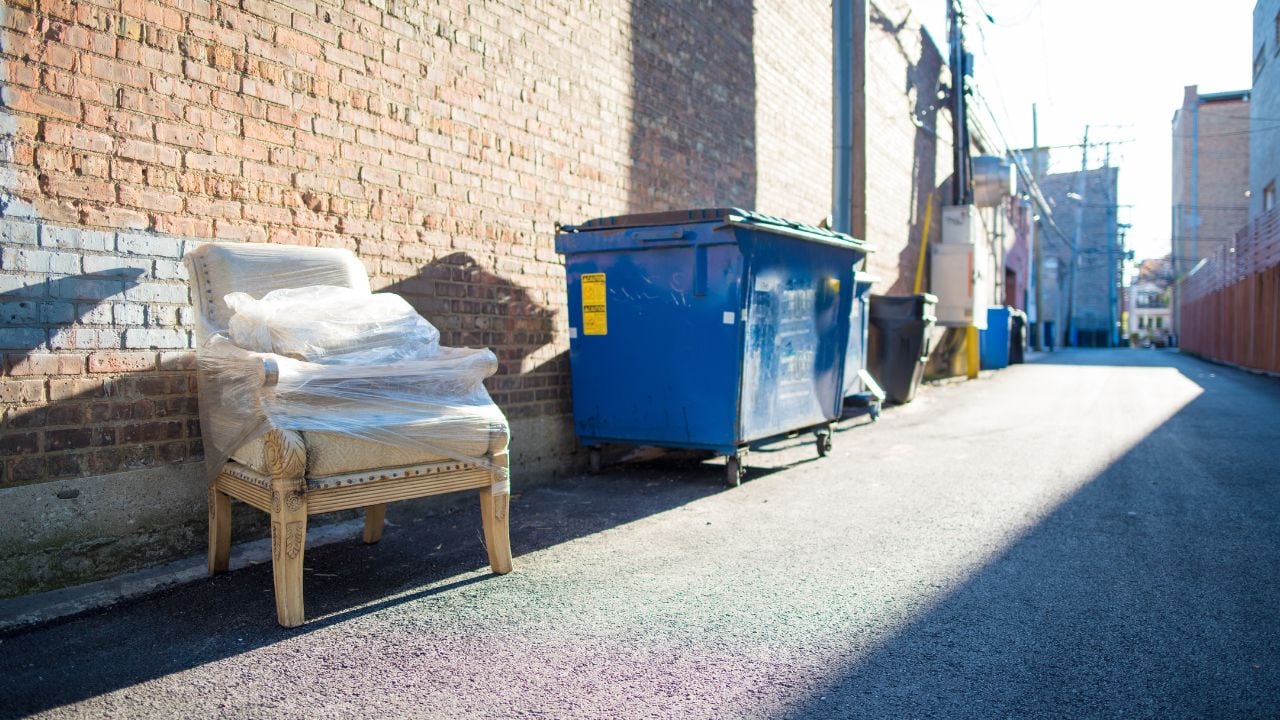
10 North Carolina Dumpster Finds That Are Illegal to Take

North Carolina can charge illegal dumping as a Class I felony.
Whether the items were disposed of legally or not, there are also laws against what you can take out of a dumpster.
These are the North Carolina dumpster finds that are illegal to bring home with you.
Note: This is general information, not legal advice. Trespassing, larceny, and property laws can vary by situation and are subject to change.
1. Firearms
North Carolina’s larceny law treats a stolen firearm as a felony no matter what it’s worth.
North Carolina’s larceny law splits at a $1,000 line, misdemeanor below it and felony above it.
A firearm skips that line completely.
No exceptions.
Pick up a rusted pistol out of a Charlotte dumpster, and North Carolina still calls it a felony.
There’s a second problem waiting under the first one.
A gun that ended up in the trash may already be reported stolen.
North Carolina could charge picking it up as larceny or as possessing stolen property, though a court can only convict on one of the two for the same gun, a rule going back to State v. Perry.
2. Prescription Pills
Finding a stranger’s oxycodone or Xanax bottle behind a pharmacy on Hillsborough Street in Raleigh doesn’t put a person in the clear under North Carolina law.
North Carolina’s controlled substances law makes it illegal to possess controlled prescription medication without a valid prescription in your name, no matter where the pills came from.
Doesn’t matter that you didn’t buy them.
Certain schedules carry felony penalties on their own, and the classification rises with the drug and the amount.
Leave the bottle.
3. Financial Paperwork
A dumpster outside an office building on Wendover Avenue in Greensboro can hand a stranger more than many people realize.
North Carolina’s identity theft law makes it a felony to obtain or use someone else’s Social Security number, bank account number, or other identifying information with intent to use it.
A dumpster full of bank statements or old tax paperwork hands that information over intact.
The paper itself might feel like trash.
What’s printed on it doesn’t become trash just because someone else threw it out.
Numbers don’t expire.
Using a number you found, even once, is where the law reaches you.
What Counts as North Carolina’s “Identifying Information”
North Carolina’s identity theft law names a long list, not just a Social Security number.
Driver’s license numbers, bank account and card numbers, PINs, and even a mother’s maiden name before marriage all count.
A single financial statement in the trash can carry three or four of those numbers at once.
4. Waste Kitchen Grease
A North Carolina restaurant’s grease barrel behind a Bojangles or a Cook Out isn’t ownerless just because it’s sitting outside.
North Carolina’s grease theft law makes it a crime to take a marked waste kitchen grease container, or what’s inside it, without the owner’s written consent.
A rendering company usually holds the contract on that barrel, not the restaurant sitting behind it.
The value sets the charge.
A container worth $1,000 or less is a misdemeanor.
More than that, and North Carolina calls it a felony.
Siphon a barrel out back of a fast-food spot on a slow night, and the label on the container is the only warning many people ever notice.
5. Someone Else’s Mail
A North Carolina dumpster outside a Wilmington apartment community gets its share of mail with somebody else’s name on it, and none of it becomes fair game.
Federal law still owns that letter, not whoever finds it.
Taking or keeping mail that isn’t addressed to you, even mail somebody already threw away, is a crime under federal mail law.
Five years, maximum.
A cluster mailbox stand tosses out many pieces of misdelivered mail a year, and every piece still belongs to whoever it’s addressed to.
Pocketing a stranger’s mailed gift card or a small package out of that bin is a federal case, not a lucky find.
6. Fenced or Posted Dumpsters
North Carolina’s trespass law makes it a crime to enter posted property, or to stay after being told to leave.
Many dumpster corrals behind North Carolina restaurants and strip malls, including the corrals lining Independence Boulevard in Charlotte, are fenced, gated, or marked with a sign for exactly that reason.
The trash inside might be fair game.
Climbing a fence or slipping past a posted gate to reach it isn’t.
Big difference.
The trespass is what turns that dumpster find into a crime, not the diving.
7. Apartment Complex Dumpsters
North Carolina apartment communities along corridors like Bragg Boulevard in Fayetteville reserve their dumpster corrals for tenants and the hauling company, not for the general public.
An invited guest can generally use only the common areas needed to reach a resident’s door.
Someone with no resident to visit doesn’t fit that description.
Not a guest.
Property managers can ask that person to leave, and North Carolina’s trespass law backs up an order to stay away after that.
No unit, no reason to be there.
Psst! Think you already dive safely and legally in North Carolina? See how many of these you’re already getting right.
8. Bins You Force Open
A padlocked dumpster behind a Food Lion or a Harris Teeter isn’t hiding anything worth a second charge.
Not worth it.
North Carolina’s trespass law already covers the locked gate around that kind of corral, and prying the bin itself open adds a second charge on top of it.
Cutting a padlock or bending a lid to get inside counts as property damage under North Carolina law.
A padlock or a chain on a dumpster is a plain warning to stay out.
Force a way past it, and the trespass turns into two separate charges instead of one.
9. Recycling Cart Contents
Recyclables sitting in a North Carolina cart at the curb aren’t unclaimed just because the collection truck hasn’t come yet.
Boone’s town ordinance says recyclables placed at the curb for collection become the town’s property from that moment on.
Picking through a neighbor’s cart for cans or scrap paper is picking through the town’s property, not an abandoned pile.
Boone isn’t the only North Carolina town with that rule on the books.
Other towns ban curbside scavenging the same way, aiming the fine at whoever gets there before the truck does.
The truck still wins.
10. County Drop-Off Dumpsters
Many rural North Carolina counties run their own drop-off dumpster sites for residents who don’t get curbside pickup, and those dumpsters come with rules of their own.
Henderson County’s solid waste ordinance bans anyone but a county employee or an authorized agent from removing recyclable material from one of its collection centers.
Chatham County writes nearly the same rule for its container sites, and it takes written permission from the public works director before anyone can take an item out.
Written permission, not a shrug.
Grabbing a chair or a bike frame off the top of the pile still counts as taking it.
These rules didn’t come from just one county government.
County after county across North Carolina treats a drop-off dumpster the same way: What goes in stays in until the county hauls it away.
9 North Carolina Squatter Laws That Leave Homeowners With No Quick Fix
A “For Rent” sign disappears from a yard outside Wilmington, and nobody in the family remembers taking it down.
North Carolina built a fast lane for exactly this situation, and it still comes with more exits than many homeowners expect.
9 North Carolina Squatter Laws That Leave Homeowners With No Quick Fix
9 Things That Can Get Your North Carolina Driver’s License Suspended (Besides Drunk Driving)

North Carolina doesn’t need a drunk-driving charge on the record to pull a license.
A judge can end a case with no car involved at all and still hand down a suspension that never touches a breathalyzer.
9 Things That Can Get Your North Carolina Driver’s License Suspended (Besides Drunk Driving)
