
11 Old-School Restaurant Features Pennsylvania’s Gen Z Rarely Sees Anymore

Philadelphia invented a meal you paid for with a coin and a little glass door. By the 1940s, it was feeding close to 10% of the city on any given day.
Think you could pull that off in a Pennsylvania restaurant today?
These are the old-school restaurant features Pennsylvania’s Gen Z rarely runs into anymore.
1. Ashtray-Topped Tables
An ashtray used to land on the table right along with the menu at a Pennsylvania diner, with a smoking section that started roughly two booths from the non-smoking side.
The state’s September 11, 2008 Clean Indoor Air Act banned smoking in nearly every Pennsylvania restaurant.
Private clubs can still vote to allow it.
Everyone else cleared the tables.
That law has been on the books for almost 18 years now.
It predates many of the Gen Z servers currently working a Pennsylvania floor, none of whom have ever smelled a smoking section on the way to a booth.
2. Coin-Operated Automats
Before there was ever a register to ring up dinner, Pennsylvania restaurants let a diner buy a full meal from a wall of small, coin-fed compartments.
Horn & Hardart opened the first one at 818 Chestnut Street in Philadelphia on June 9, 1902, turning that coin-operated wall into a citywide habit.
You dropped a coin into a brass window, turned a knob, and pulled out a slice of pie that was already plated behind the glass.
There was no cashier.
There was no line.
By the mid-1940s, that wall of food was feeding close to 10% of Philadelphians on any given day.
That’s an entire city eating out of a wall.
The last Horn & Hardart closed in 1991, just six years before the oldest members of Gen Z were even born.
A Pennsylvania teenager today has never dropped a coin into anything to get dinner.
3. Cigarette Vending Machines
A cigarette machine used to sit by the coat rack or the restrooms in a Pennsylvania restaurant, stocked with fifteen or twenty brands and a pull lever for each one.
Nobody carded the machine.
The U.S. Food and Drug Administration (FDA) restricted cigarette machines to adult-only facilities under a 2010 rule, and a restaurant that seats families doesn’t qualify.
Restaurants across the state unplugged theirs for good.
What the FDA Rule Banned
Pennsylvania’s cigarette machines didn’t disappear because of a nationwide ban.
The FDA’s 2010 rule only restricted sales to adult-only facilities, meaning places where nobody under 18 can enter at any time.
A restaurant that lets in families never meets that bar.
So the machine either had to go, or the whole dining room did.
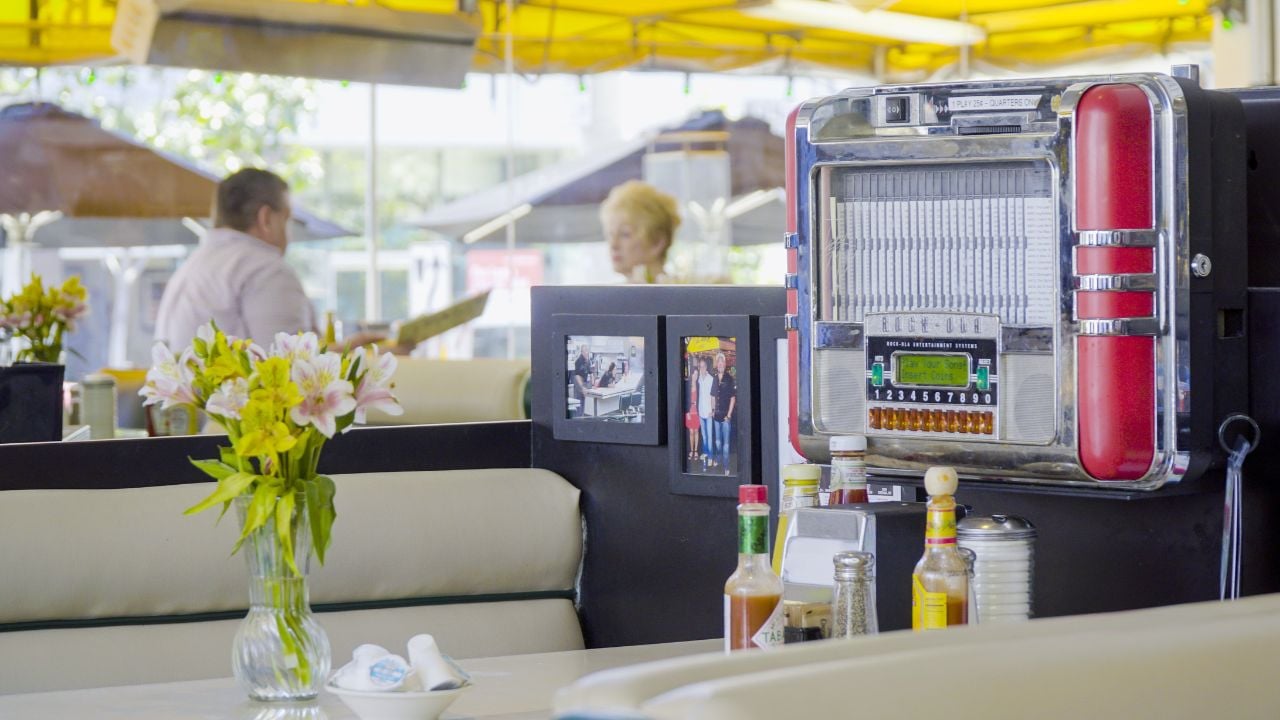
4. Tabletop Jukebox Selectors
Pennsylvania’s diner booths once carried a mini jukebox selector bolted to the wall, a chrome box with a coin slot and a spinning list of song titles.
Seeburg’s Wall-O-Matic units spread through diners nationwide in the 1950s, each one wired to a single jukebox humming somewhere in the back.
A nickel bought three songs.
You picked the song.
Someone two booths over usually played something else first.
Working units are collector pieces now, wired to nothing.
A Pennsylvania diner that still bolts a selector to a booth is showing off a museum piece, not a way to play a song.
5. Manual Card Imprinters
Servers at Pennsylvania restaurants, anywhere from a Philadelphia diner to an Erie truck stop, ran your card through a metal press instead of a screen, sliding a bar back and forth over a carbon-paper slip.
Regulars called it the knuckle buster because the sliding bar caught a finger more often than it should have.
The machine picked up your card’s embossed numbers and left a carbon copy in the restaurant’s files.
Electronic terminals took over through the 1980s and 1990s.
Newer cards barely emboss their numbers anymore, so the old machine wouldn’t have much to press.
It’s extinct now.
6. Payphones by the Restrooms
A payphone hung on the wall near the restrooms in nearly every Pennsylvania diner, usually with a phone book chained underneath it.
You needed a quarter and decent aim at the numbers.
Pennsylvania had 90,603 payphones in 2000.
By 2016, the state was down to 6,224, a drop of more than 93%.
No count has run since.
A Pennsylvania teenager with a dead phone today has better luck borrowing a stranger’s than finding a payphone at all.
7. Self-Serve Salad Bars
Whole walls of Pennsylvania family restaurants used to be built around a self-serve salad bar, sneeze guard and all, where you scooped your own bacon bits and croutons.
You made the plate yourself.
Nobody else touched it.
Wendy’s phased out its SuperBar nationwide by 2006, and the pandemic finished the job at many other chains.
Golden Corral swapped its scoop-your-own line for staff-served portions in 2020 and never fully brought back the old setup everywhere.
Hoss’s Steak & Sea House, the Pennsylvania chain out of DuBois, still runs a soup and salad bar every Sunday, and that’s exactly why it stands out now.
8. Tableside Flambé Desserts
A captain used to roll a cart tableside at a Pennsylvania steakhouse, armed with a bottle of brandy and a lighter for cherries jubilee or bananas foster.
The whole table watched.
Insurers now warn Pennsylvania restaurants away from serving anything flaming, citing burn injuries and the fire risk near tablecloths and full sleeves.
Some carriers won’t write a policy for a place that still does it.
Many Pennsylvania kitchens light the dessert in the back now, if they light it at all.
9. Carbon-Copy Paper Checks
A server at a Pennsylvania restaurant once wrote your order by hand on a carbon-copy pad, tearing off the top sheet for the kitchen and keeping the second copy for the register.
Orders existed on paper only.
Handheld point-of-sale (POS) tablets replaced that pad at many sit-down restaurants over the past two decades, sending the order straight to a kitchen printer instead.
A server’s handwriting is no longer part of the equation.
A misread scrawl can’t turn your onion rings into onion soup anymore.
10. Soda Fountain Lunch Counters
A soda fountain counter lined with a row of stools once anchored whole restaurants across Pennsylvania, with a soda jerk working in full view of every seat.
Pittsburgh knew its version as Isaly’s, a chain built entirely around that same counter.
You sat elbow to elbow.
A soda jerk mixed your milkshake by hand right there at the counter, not behind a closed kitchen door.
Isaly’s alone grew to nearly 400 stores built on that counter setup before fast food and supermarkets pulled customers away.
Nearly every one of those counters closed before Gen Z Pennsylvanians could ever pull up a stool.
11. Paper Reservation Books
A bound ledger sat at the host stand of a Pennsylvania restaurant that took reservations, names penciled into hour-long slots and crossed out when plans changed.
The host guarded that book closely, since it held the whole night’s seating.
There was no digital backup.
OpenTable launched in 1998 to replace that ledger with a screen, and many sit-down restaurants that take reservations now run on some version of a digital system.
A host today taps a name into a tablet instead.
Some Pennsylvania restaurants still keep a paper backup taped under the host stand for the night the internet goes down.
It’s a single sheet now, not a leather-bound book with a pencil tied to a string.
Psst! How much do you know about old-school American diner history? Take our quiz and see how many you can get right.
Quiz
Diner History IQ
Answer nine questions on diners, drive-thrus, and the slang that built them. We bet you can’t get them all right. Prove us wrong?
Diners trace back to a horse-drawn lunch wagon that first rolled out in 1872. What city did it serve?
8 Overlooked Thrift Store Sections Where Pennsylvanians Can Score the Best Finds
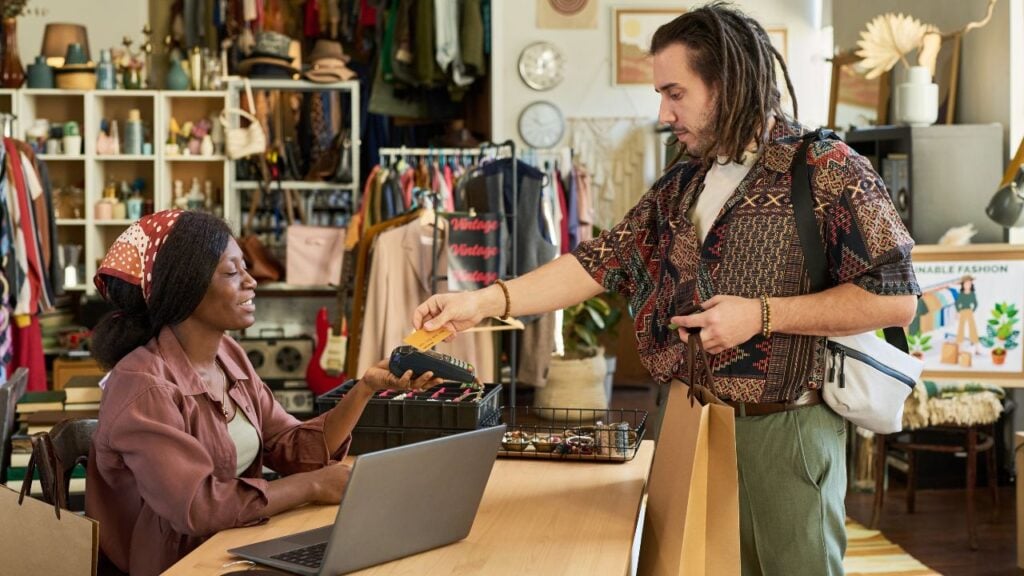
A shopper can walk all 30,000 square feet of the Re-Uzit Shop in New Holland and leave with just two shirts, missing the good shelves four different times.
Pennsylvania thrift stores often stash their best finds where the fewest browsers ever look, and it's usually an accident of who's doing the pricing.
8 Overlooked Thrift Store Sections Where Pennsylvanians Can Score the Best Finds
9 Things Pennsylvania Landlords Can't Legally Do to Renters in 2026
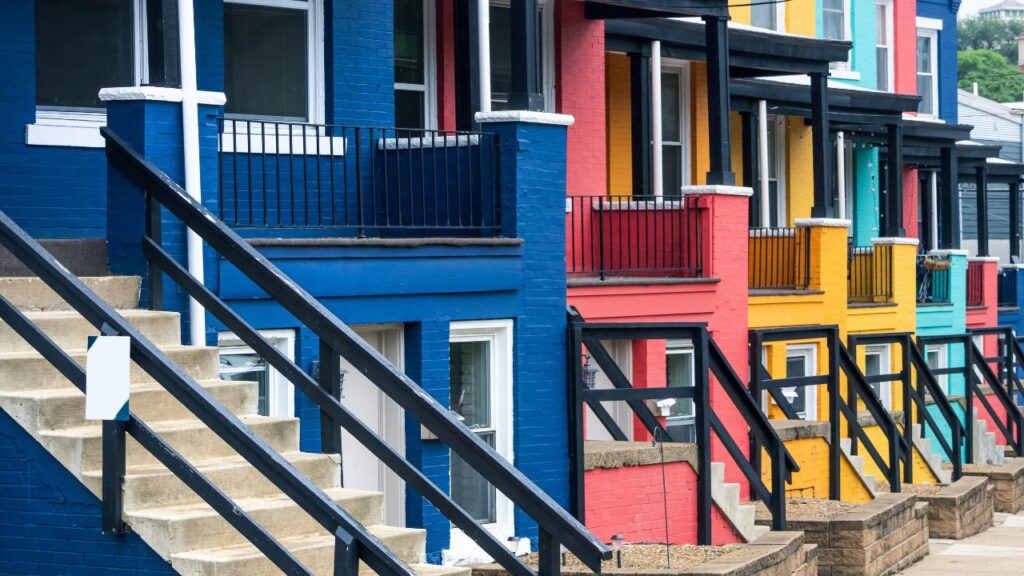
A renter in Scranton can get home from a shift and find her key won't turn.
Her landlord swapped the lock that afternoon over two months of unpaid rent, and that move broke the law, not the lease.
9 Things Pennsylvania Landlords Can't Legally Do to Renters in 2026
