
12 Pennsylvania Town Names That Make Out-of-Staters Do a Double Take

Some Pennsylvania road signs can make you laugh before you even reach the town.
Locals drive past these names without a second thought, but the stories behind them are often better than you’d expect.
Here’s how some of the state’s oddest place names came to be.
1. Blue Ball
Blue Ball takes its name from an inn that hung a blue ball instead of a lettered sign.
The inn stood at the crossing of two Native American trails.
Until 1833, you would have looked for the community under the name Earl Town.
That year, it officially changed its name to Blue Ball.
The sign stuck.
2. Intercourse
Intercourse began as Cross Keys, named for a local tavern.
In 1814 the name changed, and abc27 says no one today is exactly sure why.
Three theories try to explain the name.
One theory has a racecourse at one end of town, with an entrance that may have been called Entercourse.
Another says the crossing of Routes 340 and 772 made the town the intercourse of two major roadways.
The third asks you to remember that the word hasn’t always been a suggestive term.
3. Bird-in-Hand
The name Bird-in-Hand comes from a legend about an inn in the 1730s.
In the story, two men surveying a highway between Philadelphia and Lancaster stopped at an inn that became known as The Bird-in-Hand.
The name echoes a saying you may know: “A bird in the hand is worth two in the bush.”
The saying is about being content with what you have.
The village’s history tells the legend too, with a sign of a bird resting in a hand.
4. Punxsutawney
Punxsutawney comes from a Lenape word, Punkwsutènay, which the Lenape Talking Dictionary translates as mosquito town.
The word joins punkwes-, for mosquito, with -utenay, for town.
5. Slippery Rock
Slippery Rock University tells a legend that ties the town’s name to a creek.
In the legend, soldiers were being chased, but the pursuers, wearing moccasins, slipped on the rocks in the creek bed.
Watch your step.
Those pursuers named the creek Wechachochapohka, meaning a slippery rock.
You may hear a version that puts George Washington in the chase, and the university calls his role highly suspect.
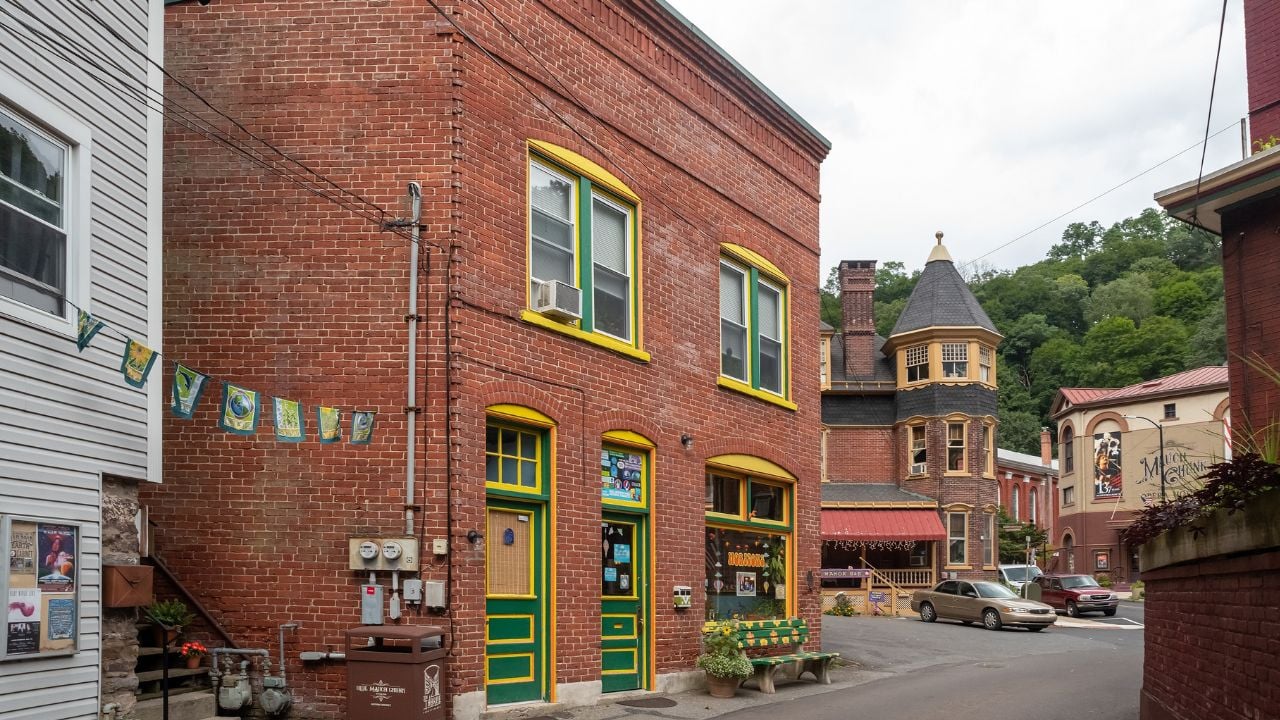
6. Jim Thorpe
The town of Mauch Chunk renamed itself Jim Thorpe in 1954 to honor the famous Native American athlete.
Before the rename, coal, a railroad and a canal system had made Mauch Chunk a wealthy town, beginning in the 1820s.
Thorpe, who died in 1953, had no ties to the town while he lived, the National Park Service says.
He is buried in a 20-ton mausoleum in the Carbon County town, which sits along Mauch Chunk Creek not far from the Lehigh River.
How Mauch Chunk Became Jim Thorpe
Jim Thorpe’s third wife, Patricia, struck a deal with two merging towns, Mauch Chunk and East Mauch Chunk.
The deal called for a memorial and a new town named after him.
In October 2014, a federal appeals court threw out a ruling that could have led to his reburial on American Indian land in Oklahoma.
7. Moon
Moon is a township in Allegheny County, and an 1889 county history ties its name to the Ohio River.
Early settlers named the area after the river’s crescent-shaped curve.
The township has several miles of frontage on the Ohio River.
8. Mars
The town of Mars, in Butler County, started out as Overbrook.
Another town was already named Overbrook, so the name was changed to Mars.
The president of the Mars Area Historical and Landmark Society said in a 2021 Butler Eagle story that no one will ever know which of two theories is correct.
One credits Samuel Parks’ wife, a follower of astronomy, with proposing the name.
The other says the name of Samuel Marshall, one of the town’s founders, was shortened.
9. Burnt Cabins
You’ll find Burnt Cabins in Fulton County, where a state historical marker calls the name a relic of troubled days on the Pennsylvania frontier.
In 1750, provincial forces burned the cabins of early settlers in that area.
The cabins were burned to satisfy Native American protests against trespassers on their lands.
10. Nanty Glo
The name Nanty Glo is Welsh for streams of coal, according to the borough.
The community began in the 1890s as Glenglade and took the name Nant-y-glo on February 20, 1901.
11. Forty Fort
Forty Fort was named for its original forty settlers.
The Susquehanna Company of Connecticut sent forty men to the valley in 1769, and the fort was begun in the summer of 1770.
It was on the river bank near a large spring known as the Great Springs.
Psst! How much do you know about Pennsylvania’s national park sites? Take our quiz and see if you can ace it.
Quiz
Pennsylvania Park Trivia
Answer these questions about Pennsylvania’s national park sites. We bet you can’t get them all right. Prove us wrong?
Hopewell Furnace National Historic Site in Elverson was an iron plantation. What does the National Park Service call its most notable product?
12. Paradise
You'll find Paradise Township in Lancaster County, where the village of Paradise is the largest in the area.
Ask how Paradise got its name, and the township's history points to a post office that needed one.
Postmaster David Witmer, Sr., chose Paradise.
12 Things in Pennsylvania's Woods That Are Worse Than Pennsylvanians Think
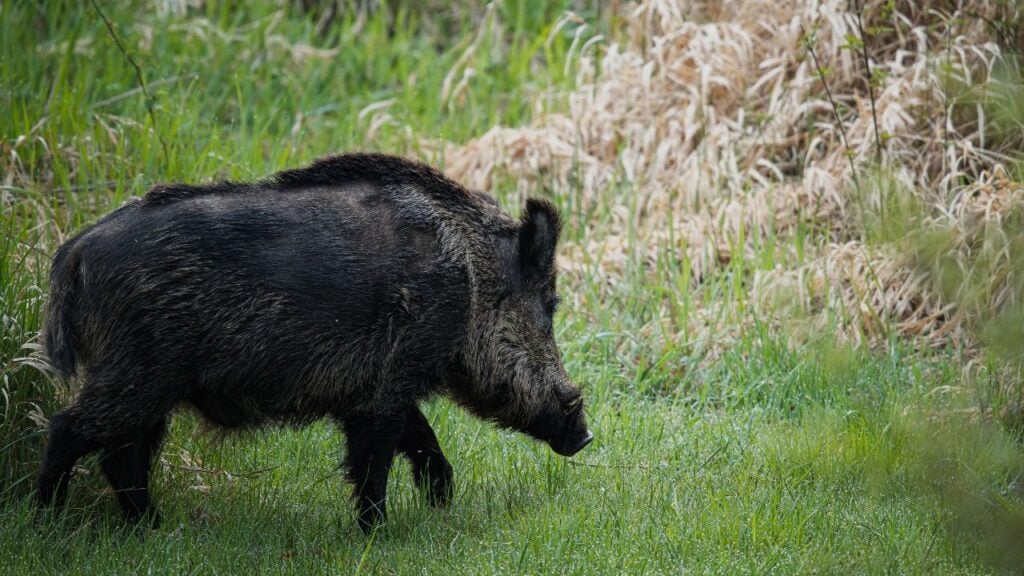
Many hikers and hunters head for the woods every fall, and the risks aren't always the obvious ones.
See what made the list.
12 Things in Pennsylvania's Woods That Are Worse Than Pennsylvanians Think
9 Kitchen Changes That Keep Older Pennsylvanians Cooking Safely
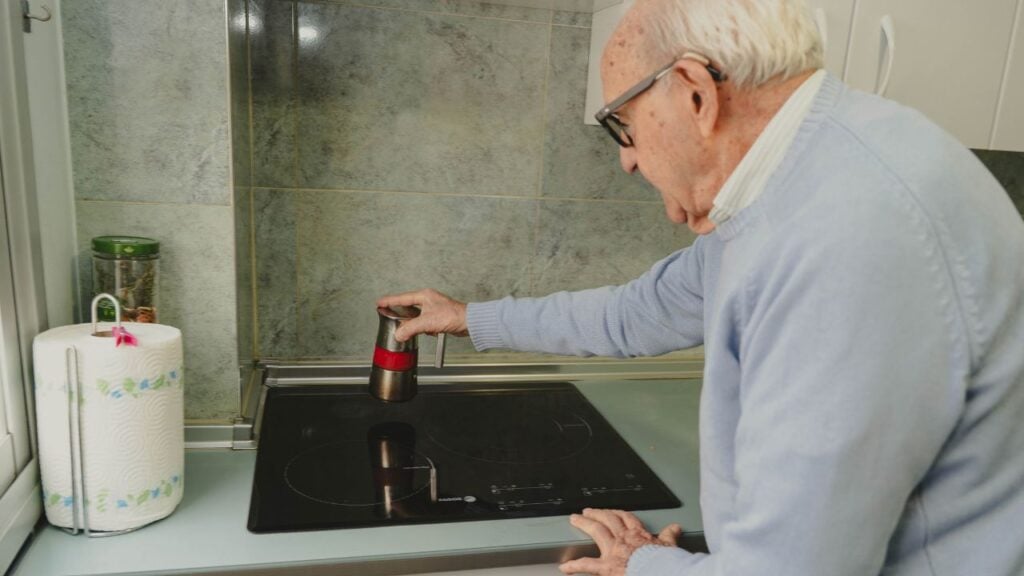
A few small changes in the kitchen can make cooking safer for older adults.
See which nine made the list.
9 Kitchen Changes That Keep Older Pennsylvanians Cooking Safely
