
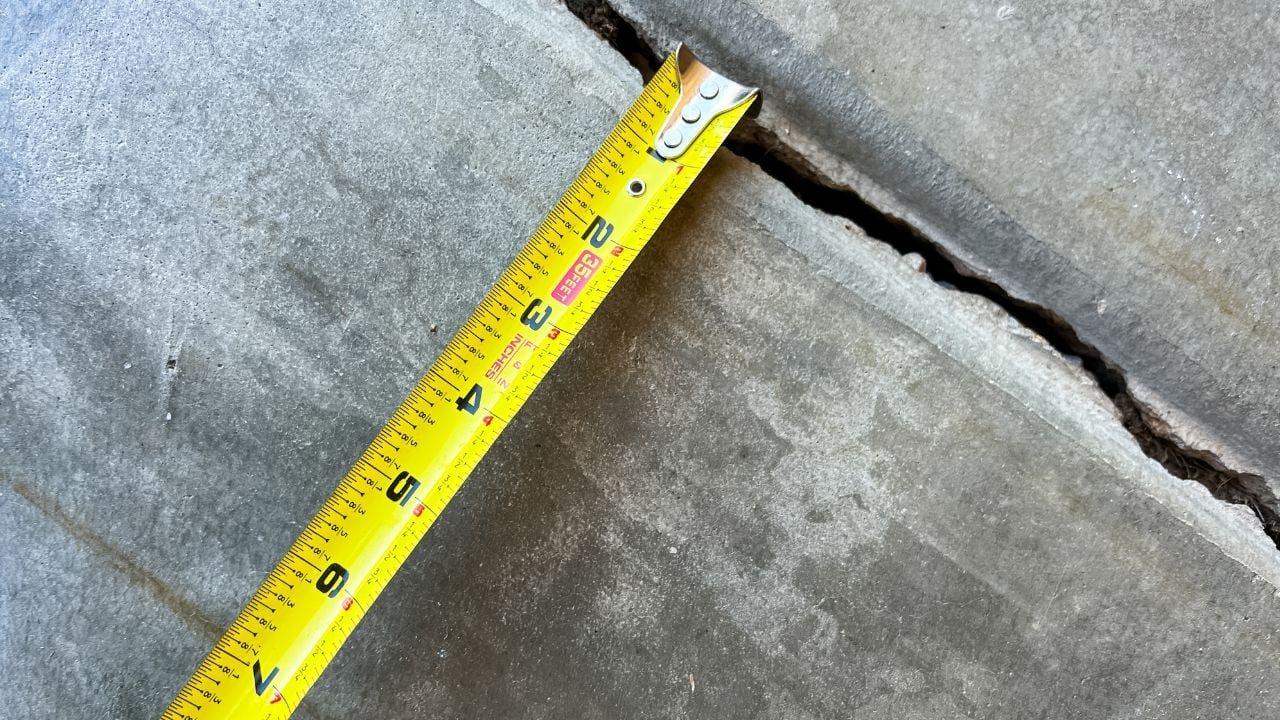
5 Kentucky Rules That Decide Who Has to Fix a Shared Driveway

Few conversations with a neighbor are as awkward as the one about a repair bill.
Kentuckians who share a driveway may assume the cost splits evenly, but the law doesn’t always see it that way.
Here are the rules worth knowing before your quote comes in.
Note: This is general information, not legal advice. Property laws and required timelines are subject to change.
1. What the Deed Says
A shared driveway in Kentucky has a repair rule, and the deed can override it.
The wording wins.
A Kentucky Supreme Court ruling, Sawyers v. Beller, says the written terms of an easement decide what each neighbor can do and owes.
If your deed names who maintains the driveway, that language controls.
If your deed never mentions repairs, the next rule applies.
Read your deed before you hire anyone to regrade the gravel.
2. Shared-Use Cost Split
Two neighbors who both use the same driveway share its repair bill fairly when the deed is silent on upkeep.
No clause, no free ride.
The Kentucky Court of Appeals said in a 2013 ruling, Baker v. Hines, that the cost of maintaining a jointly used easement should be divided equitably.
In that case, the owners of the land under the driveway asked the neighbor who used it to repay a share of upkeep they’d already paid.
If you and the neighbor whose land the driveway crosses both use it, that neighbor can ask you to pay a fair share of its upkeep.
Psst! How much do you know about shared driveways and deeds? Take our quiz and see if you can ace it.
Quiz
Property IQ
Answer eight questions on Kentucky easements, deeds, and old court fights. We bet you can’t get them all right. Prove us wrong?
In the 2019 Kentucky Supreme Court case Melton v. Cross, a family and an earlier owner said they had used a private road across a neighbor’s land continuously since what year?
3. Notice Before the Bill
A neighbor should hear about a repair on a shared driveway before the bill shows up.
Baker v. Hines says a neighbor should get notice and a reasonable chance to take part in repair decisions before owing a share.
Silence can cost you.
Send your neighbor the estimate and a date to talk before the crew shows up.
4. Necessary and Reasonable Repairs
A neighbor doesn't have to split every bill on a shared driveway.
Necessary is the key word.
The duty to pay reaches only necessary and reasonable repairs, done properly, at a reasonable price, the court said.
That standard gives you something to point to if a neighbor wants a share of work the driveway didn't need.
Keep your estimates, invoices, and photos of the damage in one folder.
5. Easement Holder's Duty
Absent an agreement, the duty to fix a shared driveway generally falls on the neighbor who holds the easement, according to a treatise the Court of Appeals cited.
That neighbor is the one with the right to cross the other's land.
The split in the second rule applies only when both neighbors use the driveway.
In Sawyers v. Beller, a trial court gave the family with the easement a duty to maintain the road, but only enough to keep it passable for their vehicles and farm equipment.
The judge barred paving and graveling the road too.
The Kentucky Supreme Court called that limit unreasonable, noting the road had been graveled and kept up for years.
Passable wasn't the ceiling there.
The easement in that case had no reservations or restrictions written into it, so check what yours says before you pour anything.
Easements Without a Deed
A shared driveway can turn into a legal right without a signed deed.
Lawyers call that a prescriptive easement, a right to cross someone's land earned through years of use.
In Allen v. Thomas, the Kentucky Court of Appeals said a prescriptive easement takes actual, hostile, open and notorious, exclusive, and continuous possession for 15 years.
That period traces to Section 413.010, which limits actions to recover land in Kentucky.
Hostile is the odd word.
It mostly comes down to whether the neighbor had the owner's permission.
In Melton v. Cross, the Kentucky Supreme Court said use with permission can't ripen into an easement, no matter how long it goes on.
If your neighbor crosses your land with your permission, those years don't count toward a claim.
Who Proves What in a Driveway Claim
A neighbor claiming a driveway easement has to go first.
That neighbor must prove uninterrupted, continuous use of the driveway for 15 years or more.
Then the landowner has to show the use was permissive only.
Under Allen v. Thomas, the claimant must clearly establish every requirement.
Locked Gates and Fences
A locked gate or a fence across a shared driveway helps or hurts the landowner, depending on whether an easement already exists.
Once an easement exists, the owner has to let the neighbor use the road, and in Sawyers v. Beller the Kentucky Supreme Court threw out a ruling that let the owners keep a gate across it.
In Baker v. Hines, the Court of Appeals found the trial court wrong to let the owners build a fence along the easement's edge.
Think before you lock it.
But a barrier can help before an easement exists.
In Allen v. Thomas, owners who repeatedly put up fences, gates, and No Trespassing signs interrupted the 15-year period.
If a written easement already covers your driveway, the same gate becomes the problem.
Searching the Deed Records
If you're buying a home with a shared driveway, a title search starts with the county clerk's records.
Kentucky law tells owners to record deeds and other required instruments with the county clerk where the property is located, so they're effective against buyers who had no notice.
Section 382.270 says a deed isn't valid against a buyer who paid for the property and had no notice until it is acknowledged or proved.
A deed that is recorded anyway still puts everyone on notice.
Not every right is recorded.
A prescriptive easement rests on years of use, not a recorded document, so a title search may not show a neighbor's claim.
In Sawyers v. Beller, an original deed for land along the road was destroyed when the records in the Allen County Clerk's Office burned.
The landowners later signed a new deed reaffirming the conveyance.
5 Roadside Memorial Rules Kentucky Families Find Out About Too Late

A homemade cross past a highway shoulder feels like a simple way to remember someone.
Kentucky has a lot to say about that, and families often hear it too late.
5 Roadside Memorial Rules Kentucky Families Find Out About Too Late
9 Things Kentucky Veterinarians Can Tell About a Pet's Home Life

A veterinarian sees a lot about a pet before the exam even starts.
Weight, coat, and behavior all say something about what a pet's days at home look like.
9 Things Kentucky Veterinarians Can Tell About a Pet's Home Life
