
5 Missouri Foods That Change Completely Across the State

Order cashew chicken in Springfield, and it comes breaded and fried hard.
Order it somewhere else in Missouri, and you might not recognize it.
Here are the Missouri foods that change completely across the state.
1. Barbecue’s Two Sauces
Barbecue splits into two different traditions across the state, and the sauce shows it first.
Kansas City barbecue runs on a thick sauce built from tomato and brown sugar or molasses.
It goes on ribs, brisket, and the caramelized brisket trimmings known as burnt ends, a butcher’s scrap that turned into the city’s calling card.
A single magazine article in Playboy made the trimmings famous nationwide in 1972, decades after they started as a free giveaway at the counter.
St. Louis disagrees.
St. Louis barbecue starts from that same tomato base, then adds vinegar, which thins the sauce and turns it tangier.
The cut changes with it.
St. Louis fires up pork steaks instead of chasing brisket, a butcher’s cut that’s been around since 1900 and that St. Louis families turned into a backyard habit.
One St. Louis butcher shop alone sells around 125,000 pounds of them every year.
Kansas City, Missouri
Kansas City barbecue sounds like it belongs to the state next door, but the joints that built the reputation never left Kansas City, Missouri.
Arthur Bryant’s flagship and Gates Bar-B-Q both sit a few miles apart on that side of town.
Keep driving west past the actual state line, and the address becomes Kansas City, Kansas, a separate city with a different zip code and a separate set of barbecue joints.
2. Cracker-Thin Pizza
Pizza means something different once you cross into St. Louis.
St. Louis pizza comes cracker-thin and unleavened, cut into small squares instead of wedges.
The cheese is Provel, a processed blend of cheddar, Swiss, and provolone that a grocer on the Hill patented back in 1950.
Imo’s has grown into about 100 franchise locations across Missouri, Illinois, and Kansas since opening on the Hill in 1964.
The squares come small enough to share off one pie at a party, which is exactly how St. Louis serves it: Cut for a crowd, not a single plate.
Drive to Kansas City, or almost anywhere else in the state, and pizza goes back to being round, yeasted, and topped with plain mozzarella.
3. Toasted Ravioli
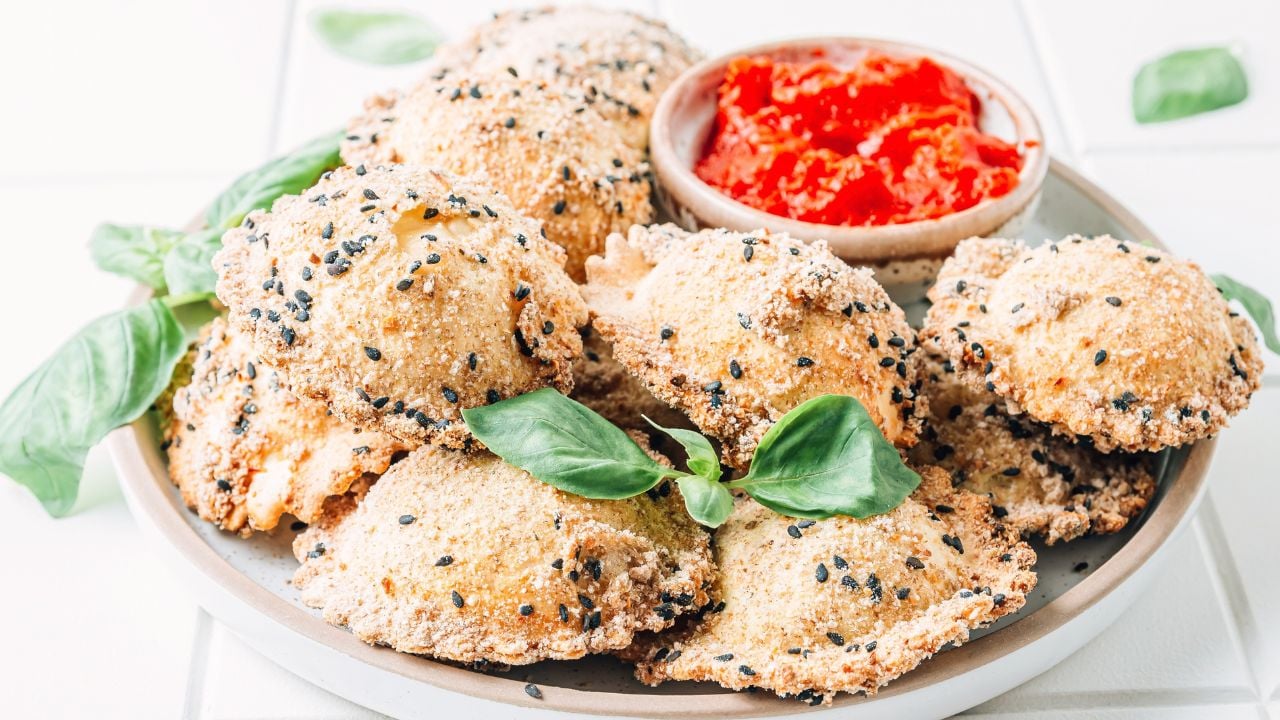
St. Louis’s Hill neighborhood serves toasted ravioli exactly one way: Breaded, deep-fried, and dunked in marinara.
Two Hill restaurants still argue over who invented it first, sometime in the 1940s.
One story blames a distracted cook who dropped raw ravioli straight into the fryer oil.
The other blames a cook who fried an order meant for the boiling pot instead.
Either way, it stuck.
It spread from the Hill’s Italian kitchens to sports bars across the St. Louis area, where it’s often the first thing off the appetizer menu.
Order “ravioli” outside the St. Louis area, in Kansas City or Springfield, and a server brings the regular boiled kind, no fryer involved.
Psst! How much do you know about Missouri’s food history? Take our quiz and see how many you can get right.
Quiz
Missouri Food IQ
Burnt ends, butter cake, and a sandwich named for another city — see how much of Missouri’s food story you know.
Of these foods people credit to the 1904 St. Louis World’s Fair, which one made its debut there?
4. Cashew Chicken
Cashew chicken isn't the same dish everywhere in the state.
In Springfield, it's breaded chicken chunks fried hard, then buried under brown gravy with cashews and green onions.
Chef David Leong built the recipe there in the 1960s to win over customers who wanted something familiar.
By the 1970s, the Leong family says hundreds of Chinese restaurants across the Springfield area were serving their version of the dish.
Even restaurants that don't serve other Chinese food still carry it on the menu.
Visitors from St. Louis or Kansas City try it once in Springfield and then can't find it again once they leave.
Order cashew chicken in St. Louis or Kansas City, though, and a different plate altogether shows up: The standard stir-fry, vegetables and all, in a milder sauce.
5. Gooey Butter Cake
Gooey butter cake exists because a St. Louis baker got a recipe wrong.
Sometime in the 1930s, a German-American bakery mixed up the ratio of butter to flour instead of tossing the batch out.
Someone baked it anyway.
The middle stayed gooey, and the top set into a thin, sugary crust.
It became a St. Louis bakery-case fixture, the kind of thing regulars order by name instead of describing.
St. Louis bakeries still make it the original way, starting from that same yeast dough instead of a boxed mix.
St. Louis Magazine's recipe follows that same method and leaves the cake mix out.
Cross into Kansas City, Springfield, or a grocery store bakery case almost anywhere outside St. Louis, and gooey butter cake usually means something else.
That version starts from a box of yellow cake mix with a cream-cheese layer baked on top.
Food writers say the shortcut has become more common than the original recipe it copies.
Same name, two different cakes, depending on which bakery case you're standing in front of.
The St. Paul Sandwich Mystery
The St. Paul sandwich carries a name that confuses first-time visitors before they even taste it.
As the story most often told goes, restaurant owner Steven Yuen created it at a St. Louis Chinese restaurant in the 1940s, pressing an egg foo young patty between two slices of white bread with mayonnaise, lettuce, and a pickle.
Yuen wanted something unique yet familiar enough to bring more customers into his restaurant, and he named the sandwich after his hometown of St. Paul, Minnesota, a place a thousand miles from where it was invented.
Food historian James Beard offered a different account, tracing the sandwich instead to Chinese cooks working Western logging camps decades earlier.
Neither claim can be proven true.
St. Louis Chinese restaurants still list the sandwich today, usually tucked in next to the egg rolls and fried rice.
New customers ask about the name almost every time, and staff repeat whichever version of the story they were told.
Order the sandwich in Kansas City or Springfield, and many menus don't carry it at all.
Cooks outside St. Louis never adopted it, even though the sandwich has been borrowing a Minnesota city's name since the 1940s.
4 Small-Town Missouri Fixtures Missourians Are Fighting to Save

Excelsior Springs has already spent roughly $1 million keeping the floor of its 1930s bathhouse from caving into the pool below it, and another $2.5 million would finish the job.
Missouri towns are running that same math on old buildings all over the state right now, mostly with money they raised themselves.
4 Small-Town Missouri Fixtures Missourians Are Fighting to Save
5 Things Clarksville, Missouri Does Every Flood Season That Surprise Tourists
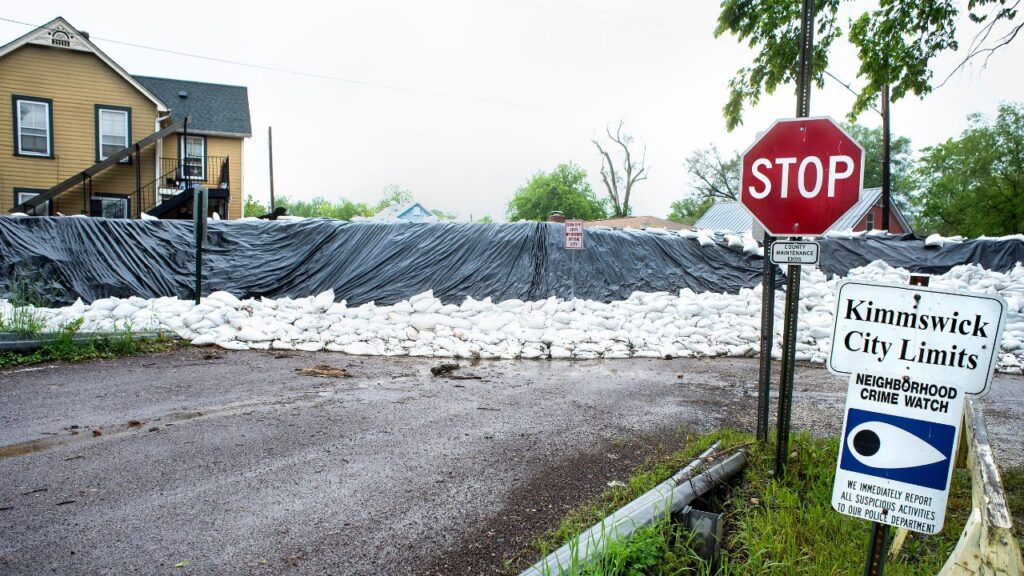
Clarksville spent 187 days underwater during the Great Flood of 1993, according to National Weather Service records, in a town of about 400 people.
These days the town fights the Mississippi River with water, not sandbags, and visitors who show up expecting a sleepy river stop get a surprise.
5 Things Clarksville, Missouri Does Every Flood Season That Surprise Tourists
