

5 No-Fault Insurance Choices That Leave Michiganders Exposed After a Crash

Everyone wants a lower car insurance bill.
Michigan lets you trim your coverage to save money. But each cut can carry a catch.
Here’s where a smart-looking saving may leave you paying out of pocket.
Note: This is general information, not insurance advice. Coverage levels and premium requirements are subject to change, so confirm the current options with the Michigan Department of Insurance and Financial Services (DIFS).
1. The $500,000 Cap
The $500,000 no-fault option caps how much your insurer pays toward one person’s crash injuries, per accident, no matter how the bills add up.
Pick this level, and DIFS requires your insurer to cut your premium by an average of 20% or more.
A brain or spinal cord injury can need decades of paid caregiving, medical equipment, and home changes.
That adds up fast.
A single catastrophic injury can outlast that ceiling within a lifetime.
Once your bills cross that line, you’re personally responsible for whatever your no-fault coverage doesn’t cover.
2. The $250,000 Cap
Michigan’s $250,000 cap cuts your no-fault medical ceiling in half compared with the $500,000 tier, in exchange for a bigger discount.
Choosing it means an average premium cut of 35% or more.
You save more up front.
Pick this tier, and a serious injury’s rehab, home care, and medical equipment all draw from the same quarter-million dollars.
The same math applies whether the crash happens on the highway or in your driveway.
Choosing this tier is a bet that a serious crash stays someone else’s problem.
What a Lower Cap Doesn’t Change
Michigan’s PIP (Personal Injury Protection) dollar caps don’t shrink what your insurer has to cover after a crash.
A lower level doesn’t change what products or services are covered, only the dollar limit on the bills.
A driver on the $250,000 tier and a driver carrying unlimited coverage qualify for the exact same list of medical treatment, replacement services, and home care.
The $250,000 driver simply runs out of money sooner if the bills pass that number.
3. Excluding Household Members
Michigan lets you pair the $250,000 tier with excluding certain household members from PIP medical coverage, as long as they have health insurance that covers auto accident injuries.
Not everyone under your roof qualifies, either.
DIFS requires that outside coverage to cover crash injuries, not just everyday illness, before your insurer can exclude that person.
Drop that outside health plan, or let it lapse, and the excluded household member has no PIP medical coverage at all if they’re hurt in your car.
4. The $50,000 Medicaid Floor
Michigan saves its lowest PIP medical option, just $50,000 per person per accident, for a named insured enrolled in Medicaid.
If that’s you, every other person on your policy needs Medicaid, another auto policy, or health insurance too, or your insurer can’t sell you this tier.
It’s the floor of the whole system.
The required average premium cut for it is 45% or more, the biggest percentage cut on the list.
Fifty thousand dollars is the smallest cushion Michigan offers, and it stays fixed no matter how serious your injury turns out to be.
Psst! How much do you know about Michigan’s no-fault insurance history? Take our quiz and see how many you can get right.
Quiz
Michigan No-Fault IQ
Answer these questions on Michigan’s no-fault insurance history. We bet you can’t get them all right. Prove us wrong?
In what year did Michigan’s original no-fault auto insurance law take effect?
5. The Zero-Coverage Option
This is the only choice on Michigan's menu that lets you drop PIP medical coverage to zero, wiping out that part of your premium.
There's no cap, and there's no coverage.
It's only allowed when the named insured has Medicare Parts A and B, since Medicare is expected to pick up the medical bills instead.
Every spouse and resident relative still needs Medicare Parts A and B, other qualified health coverage, or PIP medical coverage from a separate auto policy.
Without one of those, they have no PIP medical coverage at all after a crash.
You carry that gamble every mile you drive.
The Catch Behind Qualified Coverage
Three of the choices above, excluding a household member, the Medicaid tier, and the full opt-out, all lean on one term: qualified health coverage.
That term comes with conditions attached.
DIFS defines qualified health coverage as Medicare Parts A and B, or a Medicare Advantage or Medigap plan.
It can also be a health policy that "doesn't limit or exclude auto accident injuries" and keeps its deductible under a set amount.
A health plan that excludes car accident injuries, or carries too high a deductible, doesn't count as qualified health coverage.
Checking that your plan qualifies before you sign is worth the effort.
The Household-Member Gap
The household-member gap is the fine print behind three of the choices above: exclusion, Medicaid, and the opt-out all work person by person, not household by household.
One policy makes several separate promises.
You might qualify for the full opt-out through your Medicare, while your spouse or your teenager driving that same car never lined up qualifying coverage at all.
You might not discover that gap until someone is hurt.
By then, it's too late to fix.
Michigan's Reform, by the Numbers
Michigan's 2019 no-fault reform, Public Act 21 of 2019, cut PIP costs by an average of $369 a vehicle.
Other costs increased enough elsewhere that the total savings came to $357 a vehicle.
It remains savings.
Michigan remains the only state that still lets drivers choose unlimited PIP medical coverage at all, according to DIFS.
The Insurance Alliance of Michigan tracked data in 2024 showing more than a quarter of the state's drivers, over 2.5 million people, had already moved off the unlimited tier.
Compared with the prior year, more than 565,000 additional drivers moved off the unlimited tier, and about 250,000 of them picked the $250,000 tier alone.
Another 86,000 or so opted out of PIP medical coverage entirely.
5 Documents You Need to Sell a Car Privately in Michigan
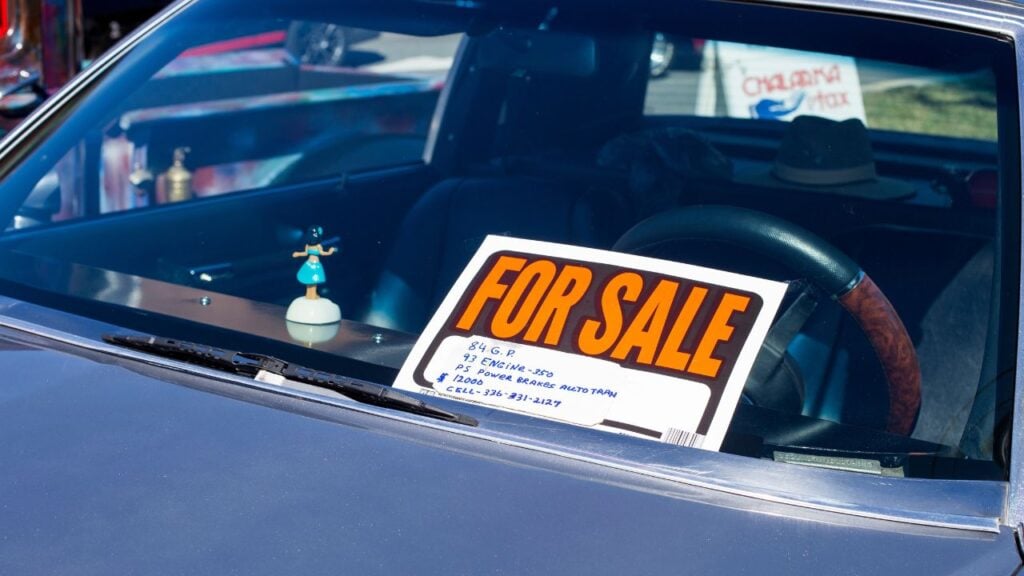
Selling a car privately in Michigan isn't finished the moment cash changes hands.
Michigan's Department of State charges a flat $15 late fee the moment a buyer misses the 15-day window to retitle that car.
5 Documents You Need to Sell a Car Privately in Michigan
8 Signs Frugality Is Costing a Michigan Household More Money

Cutting corners on a used car can end up costing more, not less.
Michigan drivers lose an average of $772 a year to the state's rough roads, according to a 2025 report from TRIP, the transportation research nonprofit.
8 Signs Frugality Is Costing a Michigan Household More Money
