

5 Documents You Need to Sell a Car Privately in Michigan

A private car sale in Michigan isn’t finished until the seller hands over a properly signed title, and that’s only the first document on the list.
Michigan’s Department of State charges a flat $15 late fee the moment a buyer misses the 15-day window to move that title into their name.
That clock starts at the signature.
One of the documents on Michigan’s list surprises even sellers who have sold cars before, and it isn’t the title.
Note: This is general information, not legal advice. Title, odometer, and registration requirements are subject to change, so confirm the current requirements with the Michigan Department of State.
1. Signed-Over Title
The certificate of title is the document Michigan’s private-sale rules won’t let go without, and a photocopy never counts.
The seller fills out their portion completely: Name, address, and signature, plus the buyer’s name and address, written directly on the title.
No blanks.
If more than one name sits on the title, every listed owner signs before the sale can move to the buyer.
Cross out an entry or fudge a name, and Michigan’s Department of State can invalidate it outright, forcing a trip back to a branch office for a duplicate.
2. Odometer Disclosure
The odometer reading needs a written certification from the seller, and Michigan’s title law won’t accept a rounded guess.
Many Michigan titles carry a built-in spot for that entry, so filling out the title correctly usually covers it.
No estimates allowed.
Federal law and Michigan’s vehicle code both enforce that rule, and a false reading can mean fines or worse.
If the title has no room left for the entry, Michigan uses a standalone Odometer Mileage Statement (form BDVR-108) instead, signed by both the seller and the buyer.
Once that number goes on file, Michigan won’t correct it later, so sellers double-check it before signing anything.
Vehicles from model year 2010 or older skip this step, and anything newer still needs the disclosure until it turns 20 years old.
3. Proof of No-Fault Insurance
Michigan puts insurance on the seller’s side of the paperwork too, and that catches many people off guard.
The Department of State’s private-sale checklist lists proof of Michigan No-Fault insurance among what a seller needs on hand for the transfer.
Bring the card.
Michigan requires No-Fault coverage to keep any titled vehicle legal on the road, so a seller who already canceled the policy can run into a snag finishing the paperwork.
4. Lien Release
A lien on the title changes the paperwork for a seller who hasn’t finished paying off the car.
Michigan law won’t let the sale go through with that loan still showing.
The seller needs either a lien termination statement from the lender or the title itself signed by the lienholder before the sale can go through.
Skip that release, and the sale can’t legally close.
Michigan’s title record won’t clear to the buyer’s name until that lien shows satisfied, so sellers still making payments start this step early.
Psst! How much do you know about Michigan’s car and road history? Take our quiz and see how many you can get right.
Quiz
Michigan Car & Road Firsts
Answer these questions on Michigan’s automotive and road history. We bet you can’t get them all right. Prove us wrong?
Woodward Avenue in Detroit made history in 1909 as the country’s first mile of what kind of road?
5. Your Sale Record
Michigan doesn't require a document called a bill of sale, but it does force a choice.
The first option is riding along to a Secretary of State branch with the buyer and finishing the title transfer together.
The second is keeping a signed record of the sale for at least 18 months.
That record can be a photocopy of the reassigned title, or a document carrying the buyer's name, address, driver's license number, and signature.
Pick one.
A bill of sale is the easiest way to satisfy that second option.
It also doubles as proof of the sale price, in case Michigan ever checks it against the car's fair market value.
Michigan's 18-Month Rule
Michigan's vehicle code, Section 257.240, is the law behind the seller's 18-month record.
Skip both protections above, and Michigan can treat the seller as the vehicle's last titled owner.
That means the seller is on the hook for someone else's parking tickets, tolls, or a towing and storage bill.
A seller caught without any sale record on file also owes a civil fine of $15, separate from any liability that follows.
The License Plate After a Sale
Michigan treats the license plate as the seller's property, not the car's.
The plate has to come off before the buyer drives away, unless the sale is going to an immediate family member.
Take the plate.
Once it's off, Michigan gives the seller two honest choices: Cut it up or bend it until it's useless, or hand it to a local recycler.
A buyer who already owns a Michigan plate can move that one onto the newly bought vehicle instead of ordering a new one.
The seller's old plate, though, never legally rides along to a buyer outside the family.
Psst! How much do you know about Michigan's driving rules and records? Take our quiz and see if you can ace it.
Quiz
Michigan Driving Rules Trivia
Answer these questions on Michigan's driving rules and records. We bet you can't get them all right. Prove us wrong?
Michigan's seat belt law for front-seat occupants took effect in 1985. How was it originally enforced?
The Buyer's 15-Day Clock
Michigan hands the buyer a strict deadline the moment that title changes hands.
The buyer has 15 days from the sale date to transfer the title into their name.
If you miss it, the Department of State adds a $15 late fee on top of the $15 title transfer charge already due.
That's two separate fifteen-dollar fees.
Michigan also collects a 6% sales tax on the purchase price or the car's fair market value, whichever number is higher.
That's exactly why the sale record from a few sections back is worth keeping.
Once the new tab and plate arrive, Michigan expects them on the car right away, not sitting in a glove box.
Psst! How much do you know about Michigan's license plates and vehicle records? Take our quiz and see how many you can get right.
Quiz
Michigan Plates & Titles Trivia
Answer these questions on Michigan license plates and vehicle records. We bet you can't get them all right. Prove us wrong?
How many license plates does Michigan require on a passenger vehicle?
Matching the VIN
A VIN mismatch trips up more sellers in Michigan than any missing document.
The vehicle identification number (VIN) on the title has to match the number stamped on the car itself, character for character.
A single wrong digit is enough for a Secretary of State clerk to hand the paperwork back across the counter.
Sellers check the VIN twice before the buyer ever sees the title.
Documents FAQ
Quick answers to what sellers ask most about the paperwork.
Do I need a bill of sale to sell a car in Michigan?
Michigan doesn't require a bill of sale by that name, but state law requires a signed sale record kept for at least 18 months. A bill of sale is the simplest way to satisfy that requirement.
Who removes the license plate when a car sells in Michigan?
The seller removes the plate before the buyer takes possession, unless the sale goes to an immediate family member. Michigan plates stay with the seller, not the vehicle.
How long does a buyer have to transfer a Michigan title?
Fifteen days from the date of sale. Waiting longer adds a $15 late fee on top of the $15 title transfer fee.
Does a private seller need proof of insurance in Michigan?
Yes. Michigan's private-sale document list includes proof of Michigan No-Fault insurance as something the seller presents during the transfer.
What happens if a Michigan seller never files a sale record?
The seller can be treated as the vehicle's last titled owner and held liable for tickets or towing costs the buyer racks up, plus a $15 civil fine.
8 Michigan Jury Duty Rules Residents Get Wrong
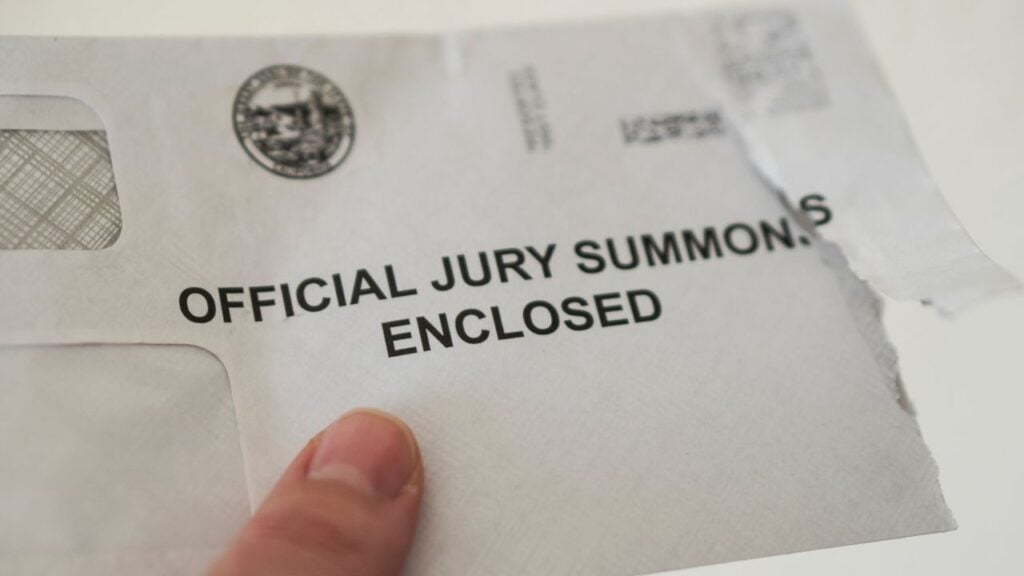
Michigan pays jurors close to nothing for showing up, and that's just the start of what residents get wrong.
A few of these mistakes can cost money, or a trip back to the courthouse.
8 Michigan Jury Duty Rules Residents Get Wrong
9 Michigan Lake Access Rules Property Owners Get Wrong

Michigan's Great Lakes shoreline runs over 3,000 miles, and owning a slice of it comes with more fine print than many buyers expect.
A few of these rules catch even longtime property owners off guard.
