
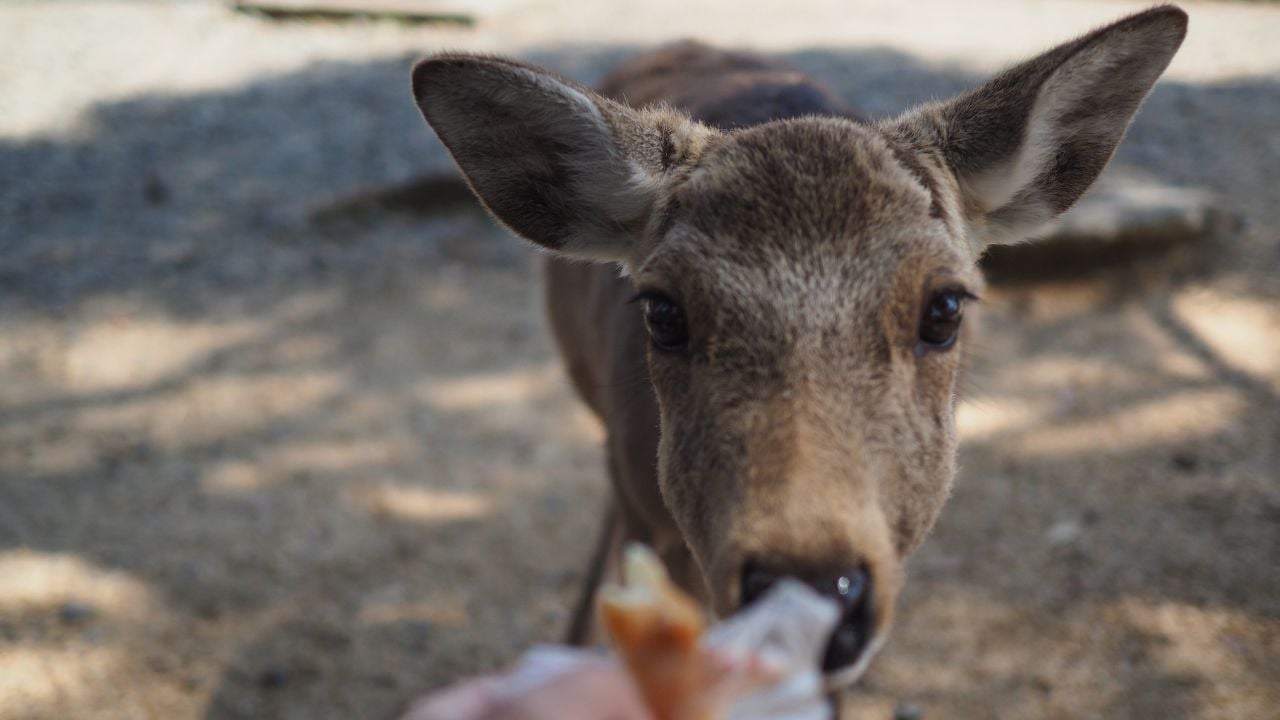
5 Wild Animals Pennsylvanians Can Be Fined for Feeding

Toss a slice of bread to the geese at a Pennsylvania state park, and you’ve broken a rule.
Here’s which animals you can’t feed, where the rules apply and why feeding backfires on the animals and on you.
Note: This is general information, not legal advice. Wildlife feeding rules, boundaries and fines are subject to change, so confirm the current details with the Pennsylvania Game Commission.
1. Black Bears
Black bears are covered by one of the plainest feeding rules on this list.
Feeding one is always illegal, the Game Commission says.
That means intentionally laying out food, fruit, hay, grain, salt or other minerals that may draw bears in or get them used to an area.
That’s a wide net.
Bears will also raid bird feeders, so it’s worth considering bringing yours in for the summer, or at least at night.
If you’re camping, Tobyhanna State Park’s wildlife page says to keep your food in the trunk of a car or in a camper.
Breaking a feeding rule for bears, deer or elk is a summary offense, which sits below a misdemeanor.
It can bring a fine of $100 to $200 plus costs.
2. White-Tailed Deer
Whether feeding a deer is illegal depends on where you live.
The ban applies inside the chronic wasting disease areas the Commission’s executive director designates, and it covers feeding wild deer directly or indirectly.
At its April meeting, the board gave the director discretionary authority to set targeted restrictions on feeding deer and other wild cervids.
Those limits can be set at the county and township levels.
Your township counts.
Before you put out corn, check your county and township on the chronic wasting disease page, which links its order on prohibited feeding areas.
A violation can be prosecuted under the state’s Game and Wildlife Code, where breaking a regulation is a summary offense with the same $100 to $200 fine.
Hunting close to areas where feeding occurs is also illegal.
3. Elk
Elk fall under the same feeding rule as bears.
You can’t intentionally lay out food for them, with exceptions for normal farming, habitat management and similar practices.
The herd lives in parts of Elk, Cameron, Clinton, Clearfield and Potter counties.
Hunting is another matter.
The Commission’s 2026-27 seasons announcement lists 26 antlered and 25 antlerless elk licenses for the Oct. 31 through Nov. 8 firearms season.
An elk license covers taking an elk, not feeding one.
A Second Offense Costs More
If you’re convicted of a second Game Commission feeding violation within seven years, a court can add a fine of one and one-half times the original.
On a $200 fine, that extra amount comes to $300.
4. Canada Geese
Feeding wildlife is prohibited anywhere in a state park, not only where you swim.
That includes bread.
If you toss bread to geese at a park beach, you’re breaking the rule.
Breaking a state park conduct rule is a summary offense that can bring a fine of up to $300.
At Tobyhanna, feeding Canada geese at the swimming areas leaves large quantities of droppings that are offensive to visitors.
5. Raccoons
A raccoon at your picnic table is covered by the same ban on feeding wildlife in state parks.
Tobyhanna warns that feeding raccoons may expose you to the threat of rabies.
It isn’t worth it.
The fine is the same as for geese, up to $300.
Feeding on State Game Lands
On State Game Lands, it’s unlawful to feed wildlife or lay out food, fruit, hay, grain, chemical, salt or other minerals without the written permission of the Commission’s director.
That covers every animal.
If you hike a game land, it applies to you too, not only to hunters.
A violation of the game lands regulations is a summary offense of the fifth degree, which carries the same $100 to $200 fine.
Why Feeding Backfires
Fed animals can lose their fear of people, a change called habituation.
That’s when trouble starts.
Coyotes, black bears, deer and raccoons can all become habituated, and that puts you and your pets at risk too.
Feeding sites also crowd animals together, which helps diseases such as chronic wasting disease and mange spread.
Even cracked corn can’t replace what wildlife find on their own, and it can lead to potentially fatal conditions such as lactic acidosis and foundering.
If you want to help, plant native trees and plants that produce nuts, seeds and nectar, or put up nest boxes around your property.
Psst! How much do you know about Pennsylvania’s wildlife and outdoors? Take our quiz and see if you can ace it.
Quiz
Pennsylvania Wildlife Quiz
Answer these questions on Pennsylvania’s wildlife and outdoors. We bet you can’t get them all right. Prove us wrong?
Which of these is a nickname for the eastern hellbender, Pennsylvania’s state amphibian?
Feeding Carp at Pymatuning
If you visit Pymatuning State Park's spillway near Linesville, you're at a unique exception to the state park policy against feeding wildlife.
Carp began gathering there to catch natural food washing over the spillway, and over time tourists started feeding them bread.
The habit stuck.
If you feed the fish, the park asks for bread or pellets, which target fish instead of ducks and geese, not chips, popcorn or pastries.
Everywhere else in the park, feeding wildlife is still off-limits.
12 Things in Pennsylvania's Woods That Are Worse Than Pennsylvanians Think
Pennsylvania's woods look peaceful from the trailhead.
You might think you already know what's risky out there, but the obvious answers aren't it.
12 Things in Pennsylvania's Woods That Are Worse Than Pennsylvanians Think
7 Costs a Pennsylvania Executor Pays Before Anyone Inherits
Settling a Pennsylvania estate comes with a long bill list.
This one walks through where that money goes.
