
6 Cider Mill Traditions Michigan Families Never Skip in October

A cold cup in one hand, a warm donut in the other.
In Michigan, a trip to the mill often comes with the same few stops.
Here’s what many families line up for before they head home.
1. Cold Cider Straight From the Press
At a cider mill, the cup you’re handed starts as the same fruit as a grocery store’s jug, but nothing about the trip between orchard and cup matches.
Michigan orchards produced more than a billion pounds of apples in 2025, worth $322 million at the farm gate.
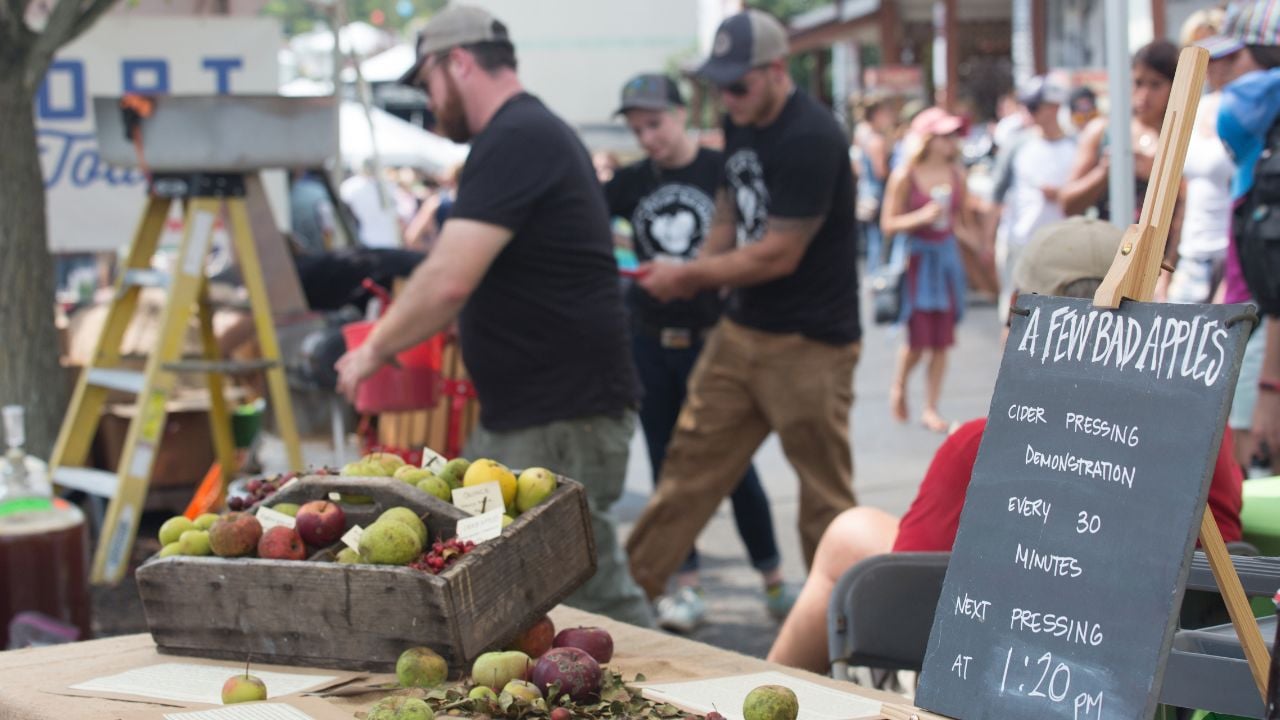
You watch the apples go in whole.
You drink the cider cold, a few hours later, and the batch tastes a little different depending on which apples went into that day’s press.
Nothing store-bought compares.
No trip to a cider mill counts without a cup of it in your hand before you do anything else.
What Fresh-Pressed Cider Means
Fresh-pressed cider is unpasteurized unless a mill treats it another way.
Federal rules have required a warning label on it since 1998.
The label reads that the product hasn’t been pasteurized and may carry bacteria that’s dangerous for kids, older adults, and anyone with a weakened immune system.
A jug you carry home has to wear that warning.
A cup you drink standing at the counter doesn’t need one.
The warning only applies to cider you take home in a jug, not cider sold by the glass.
2. Cider Donut Line
Skip a cider mill’s donut line, and you’ve skipped half of what draws people back every fall.
Franklin Cider Mill has stood since 1837.
Its cinnamon-sugar donuts fry fresh throughout the day, and a window behind the building lets you watch them come out of the fryer.
Dexter Cider Mill runs the same routine on its own schedule, baking cinnamon donuts fresh every day it’s open.
They’re still warm.
You buy them by the half dozen because a single donut never survives the walk back to your car, and the cinnamon sugar coats your fingers the whole ride home.
Psst! How much do you know about Michigan’s apple orchards and cider mill traditions? Take our quiz and see how many you can get right.
Quiz
Michigan Cider Mill IQ
Answer these questions on Michigan’s apple orchards and cider mill traditions. We bet you can’t get them all right. Prove us wrong?
One Michigan orchard turns actual fruit into a backyard sport every fall. What’s the activity called?
3. Watching the Old Press Run
Franklin Cider Mill still runs the original 90-ton press it opened with, wrapping chopped apples in cloth and stacking the layers before the weight comes down.
Dexter Cider Mill uses an oak rack press and calls its cider wood-pressed on the banks of the Huron River, the same method it's used for well over a century.
Yates Cider Mill has pressed apples since 1876, and the water-powered building it presses in today has stood since 1894.
You can stand a few feet from the press and watch the whole process happen.
It's slow, deliberate work.
4. Hayride to the Orchard
After the press room, many cider mill visits keep moving toward the orchard.
A wagon ride out to the orchard usually comes next.
It's an easy ride.
You climb onto a hay bale, and the driver pulls out.
You lose sight of the mill behind a line of trees within a minute or two.
Pure Michigan's rundown of a typical fall visit lists the hayride right alongside the cider and the donuts, not as an extra but as part of the same trip.
5. Filling Your Bushel Bag
A u-pick orchard sits next to the press at many cider mills, one of the standard stops of an autumn visit.
You grab a bag at the trailhead and start working down a row, checking each apple for a bruise before it goes in.
It's faster than you'd guess.
You pay for what's in the bag by the pound on the way out.
What you picked ends up costing about the same as what's already bagged at the stand.
You carry the difference home anyway because a bag you filled tastes better than a bag you didn't.
6. Caramel Apples by the Register
Donuts aren't the only thing coming out of a cider mill's bakery counter.
Caramel apples sit right next to the register at many stops, one more thing Pure Michigan's fall guide lists alongside the cider and the donuts.
Toppings change by the day.
Peanuts, toffee bits, sprinkles, or nothing at all if you like the caramel plain.
You buy a caramel apple on the way to the car and regret not buying two before you've even unwrapped the first.
The Apples Behind the Cider
Behind every cider mill's press sits an apple industry far bigger than one building, and the apples you pick or drink probably came from more than one farm.
Michigan's growers' association, the Michigan Apple Committee, has more than 17.6 million apple trees planted across the state, spread over about 850 family-run farms.
Less than half stays whole.
Federal agriculture data puts Michigan's 2025 harvest at 500.6 million pounds sold as fresh, whole apples and 563.4 million pounds sent to processing, cider mills included, before the count is finished.
9 Signs Someone Was Raised in Michigan No Matter Where They Live Now
Michigan's transportation department says the Michigan Left cuts crashes at those intersections by 30% to 60%, and almost no other state builds them.
A Michigander who grew up making that loop can spot the same confused U-turn in a stranger's driving anywhere else in the country.
9 Signs Someone Was Raised in Michigan No Matter Where They Live Now
10 Things Michiganders Should Do Before Leaving Home for a Month

Many homeowners policies start cutting back coverage for theft, vandalism, and water damage once a house sits empty for 30 to 60 days straight, according to the Insurance Information Institute.
A month away is exactly the kind of trip that crosses that line, and a short checklist before you lock the door keeps the policy intact.
10 Things Michiganders Should Do Before Leaving Home for a Month
