

6 Fees a Nevada Landlord Can Charge That Surprise Renters

Rent is already one of the biggest bills you pay each month.
Nevada law lets landlords add some charges that renters don’t always see coming.
Here are the fees worth spotting before you sign a lease.
Note: This is general information, not legal advice. Rental rules and fee limits are subject to change.
1. Mandatory Fees on Top of Base Rent
Your landlord can require mandatory fees on top of your base rent, but the lease has to fold them into a single rent figure.
That figure has to be the maximum total periodic rent you owe under a written lease.
Outside the utility exceptions below, a mandatory fee can’t show up later as an extra line above the number you were quoted.
Assembly Bill 121 added the rule, which took effect October 1, 2025, according to Nevada Current.
The rule targets hidden fees normally buried deep inside rental agreements.
2. Separate Utility Charges
A landlord can bill utilities outside the rent figure, but only in two situations.
The monthly fee has to equal what electric, natural gas or water service costs for your unit.
The first situation is a public utility that can’t contract with you directly.
In that case, the rent figure carries an asterisk, and a statement on the same page names each utility and its telephone number.
If your bill shows a utility charge, look for that statement in your lease.
The second situation is water in a master-metered building, and it calls for a similar asterisk and notice.
3. Online Payment Fees
Paying your landlord through an online portal can cost you a fee.
That fee can’t exceed what the portal’s operator charges for its use.
The rule applies to rent and to any other fee or charge you pay through the portal.
Your lease has to list the portal fee separately.
The same section requires at least one way to pay that costs nothing and doesn’t ask for your bank account information.
4. Application and Screening Fees
Application, credit report and background check fees are all separate charges a landlord can collect.
That section was added to Chapter 118A in 2025.
If a minor is part of your household, the same section bars a landlord from collecting any of those fees for that minor.
When a Landlord Must Refund Your Application Fee
A landlord’s duty to refund your application fee depends on two things happening together.
First, the landlord rents the unit to a different applicant.
Second, the landlord never does the work your fee paid for, such as running the credit report or the background check.
The rule covers application fees, credit report fees and background check fees alike.
If the landlord already ran the check, that section doesn’t require a refund.
5. Nonrefundable Cleaning Charges
Landlords may collect a nonrefundable cleaning charge, as long as the amount is reasonable.
That’s an exception to the rule that a lease can’t call your security deposit nonrefundable.
The charge has to appear in your rental agreement.
Your security deposit can also pay for cleaning the unit.
6. Late Fees
If you pay rent late, a landlord’s fee can’t exceed 5 percent of your periodic rent.
On $1,800 rent, that works out to $90.
A past late fee can’t be used to raise that maximum on the next one.
The fee also has to be reasonable and written into your lease.
The 3-day wait before a late fee applies to any tenancy longer than week to week.
Banned Repair Charges
A landlord can’t require you to pay a fee for repairs the landlord has a duty to make.
That ban includes a deductible or copayment under a home protection policy or service contract.
A landlord’s duty to keep your unit habitable runs at all times during your tenancy.
A unit isn’t habitable if it violates housing or health codes concerning health, safety, sanitation or fitness for habitation.
It also isn’t habitable if it substantially lacks basics such as plumbing, heating or a water supply.
The statute lists exceptions in a later subsection, so read it before you assume a charge is banned.
Security Deposit Limits
A landlord can’t demand more than 3 months’ periodic rent in deposits.
That total counts your last month’s rent.
On $1,800 rent, that cap is $5,400.
Once your tenancy ends, a landlord has 30 days to send an itemized, written accounting and return what’s left of your deposit.
Psst! How much do you know about renting in Nevada? Take our quiz and see if you can ace it.
Quiz
Nevada Renter IQ
Answer these questions on renting in Nevada. We bet you can’t get them all right. Prove us wrong?
If a Nevada landlord doesn’t return the leftover security deposit on time, the landlord is liable for damages in an amount equal to what?
Suing Over the Rent Figure
If a landlord's violation of the rent-listing rules hurts you, you can file a civil action under Assembly Bill 121.
That right covers the single-figure rule and the cap on the rent a landlord can charge.
If you win, you can recover damages, court costs and reasonable attorney's fees.
The court must also award $250 for each violation that involved deception.
It's also unlawful for a landlord to use a written lease that doesn't conform to the section that governs rental agreements.
A lease clause that waives the rights Chapter 118A gives you is void as contrary to public policy.
9 Things Nevadans Miss Most After They Move Away

Leaving Nevada means trading some everyday comforts for new ones.
This list covers the things that leave Nevadans homesick.
9 Things Nevadans Miss Most After They Move Away
6 Nevada Towns Nevadans Are Surprised Anyone Still Lives In
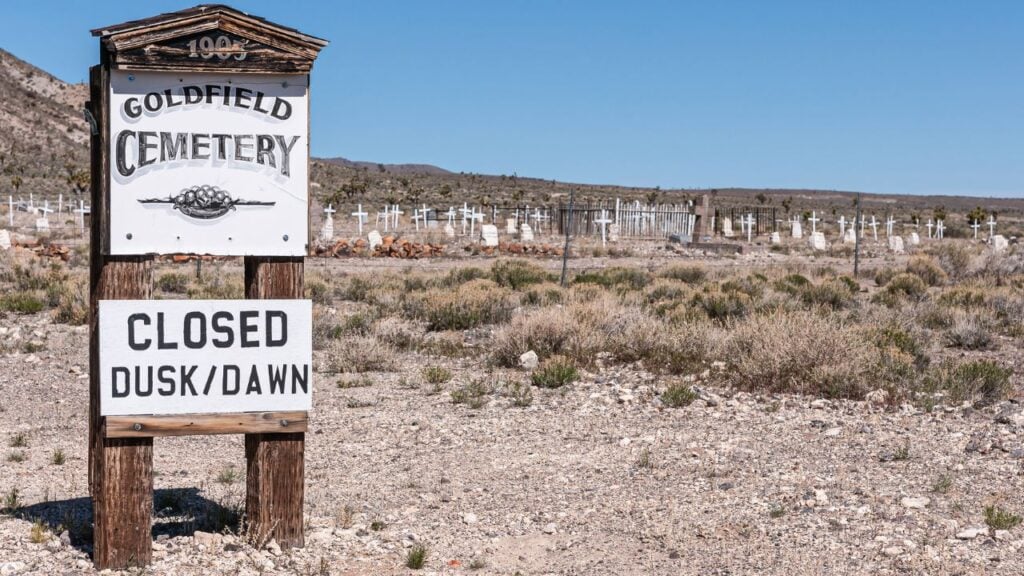
Nevada's smallest towns raise a fair question for people who live elsewhere in the state.
This piece looks at why residents stay put anyway.
