
6 Michigan Rules That Decide Who Owns the Beach in Front of a Lake House

Buying a lake house can feel like buying your own stretch of beach.
In Michigan, that sand may not be as private as your deed suggests, especially on the Great Lakes.
Here are the rules that decide who owns the beach out front.
Note: This is general information, not legal advice. Property laws and court rulings are subject to change.
1. The Ordinary High Water Mark
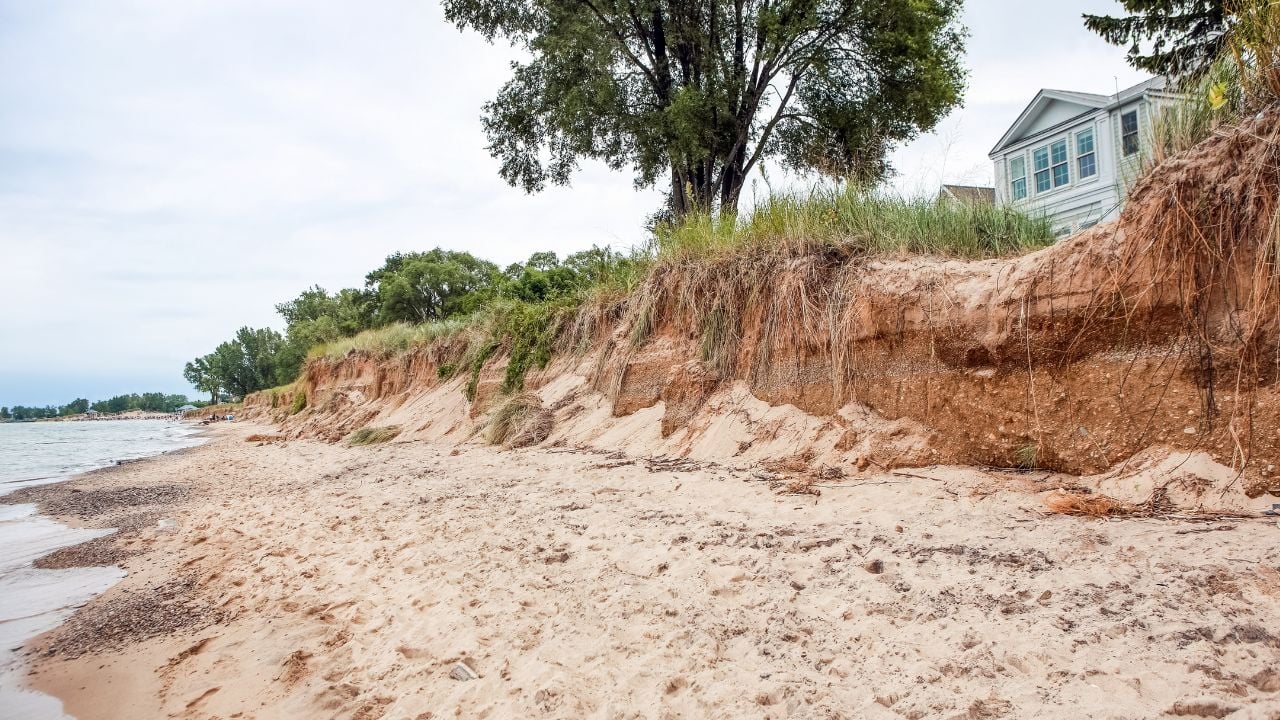
The ordinary high water mark decides where the beach in front of your lake house stops being fully yours.
Michigan’s Supreme Court defines it as the point on the shore where water has acted so continuously that it leaves a distinct mark.
Erosion, vegetation the water has destroyed, or another easily recognized sign can all qualify.
The court set that definition in 2005, in a ruling called Glass v. Goeckel.
The justices borrowed that wording from a Wisconsin case, Diana Shooting Club v. Husting.
Dry sand counts.
The ruling says the line marks land inside the public trust even when the water isn’t touching it that day.
That makes the mark something you can look for on the ground, not just a line on a survey.
2. The Public Trust
A public trust covers the water and bottomlands beside your lake house on the Great Lakes.
Michigan’s Department of Environment, Great Lakes, and Energy (EGLE) says the state is the trustee of the bottomlands and waters of the Great Lakes.
The Michigan Supreme Court says shoreline the state sold to private buyers stayed subject to the public trust.
The court cites the U.S. Supreme Court’s Illinois Central Railroad v. Illinois for the doctrine.
The doctrine isn’t new.
The state’s courts have traditionally described the protected rights as fishing, hunting, and navigation for commerce or pleasure.
You buy the lot, and the public trust comes with it.
What Riparian Means for a Lake House
If your lake house has frontage on the Great Lakes, Part 326 of Michigan’s Natural Resources and Environmental Protection Act calls you a riparian owner.
The statute’s definition of a riparian owner is a person who owns frontage bordering bottomlands.
It defines riparian rights as the rights that come with owning that frontage, subject to the public trust.
It defines Great Lakes bottomlands as land lying below and lakeward of the ordinary high water mark.
3. Glass v. Goeckel’s Walking Rule
The Michigan walking rule comes from Glass v. Goeckel, which lets strangers walk the shore in front of your lake house.
The Michigan Supreme Court decided it on July 29, 2005, in a case over a stretch of Lake Huron.
The plaintiff’s deed gave her a 15-foot easement across her neighbors’ land to reach the lake.
She says her family had used that path since 1967, and she claimed a right to walk the shore.
The court ruled that a member of the public may walk the shores of the Great Lakes below the ordinary high water mark.
Its reasoning was practical because reaching the water to hunt, fish, or boat took walking.
Foot travel counts.
So if a stranger walks the shore below the mark in front of your lake house, the ruling protects that walk.
4. The Part 325 Permit Rule
Owning a lake house doesn’t let you fill, dredge, or place a structure on the bottomlands in front of it without a state permit.
Part 325 of the state’s Natural Resources and Environmental Protection Act is the law behind that permit.
EGLE’s Submerged Lands Program regulates construction along 3,288 miles of shoreline and over 38,000 square miles of bottomlands and coastal marshes.
Docks need a permit too.
EGLE recommends contacting the staff person who covers your county before you do any work on the beach or in the water.
Psst! How much do you know about the Great Lakes? Take our quiz and see if you can ace it.
Quiz
Great Lakes IQ
Think you know the lakes behind every Michigan beach? We bet you can’t get them all right. Prove us wrong?
On average, how long does a drop of water stay in Lake Michigan before it flows out?
5. Two High Water Marks
Your lake house can have two high water marks, and they don't always sit in the same place.
Part 325 fixes one by elevation, measured from a reference point called International Great Lakes Datum 1985 (IGLD 85).
For Lake Michigan and Lake Huron, that statutory line is 580.5 feet.
The other is the natural mark, the spot where you'll see a distinct change in soil type or plants left by the water.
Water can rise above both.
If you're shopping for a lake house, ask which of the two lines a survey used.
EGLE says those elevations moved to IGLD 85 in 1985 and will change again when the datum is updated.
6. Inland Lakes
A lake house on an inland lake follows different rules than a lake house on the Great Lakes.
The walking right in Glass v. Goeckel is written for the shores of the Great Lakes.
In a 1953 case over White Lake in Muskegon County, the Michigan Supreme Court repeated that owners along an inland lake own to the middle of it.
If your lake house is on an inland lake, your lot can reach out under the water to the middle.
The same ruling says the public keeps an easement of navigation on navigable inland lakes.
The lakebed is another matter.
Under Part 301, EGLE identifies the high water mark on inland lakes by a distinct change in the land's character from changing water levels.
What Glass Left Open
The public's right to walk the shore in front of your Great Lakes lake house has limits.
The court said the public trust doesn't permit every use of the trust lands and waters.
If you read the full ruling, you'll see two justices wrote separately, agreeing in part and dissenting in part.
One argued that the limit should be the water's edge, the point where wet sand gives way to dry sand.
The majority disagreed.
It kept the line at the ordinary high water mark, which it said still has meaning on the Great Lakes.
10 Ways One Side of Michigan Feels Like a Different State From the Other
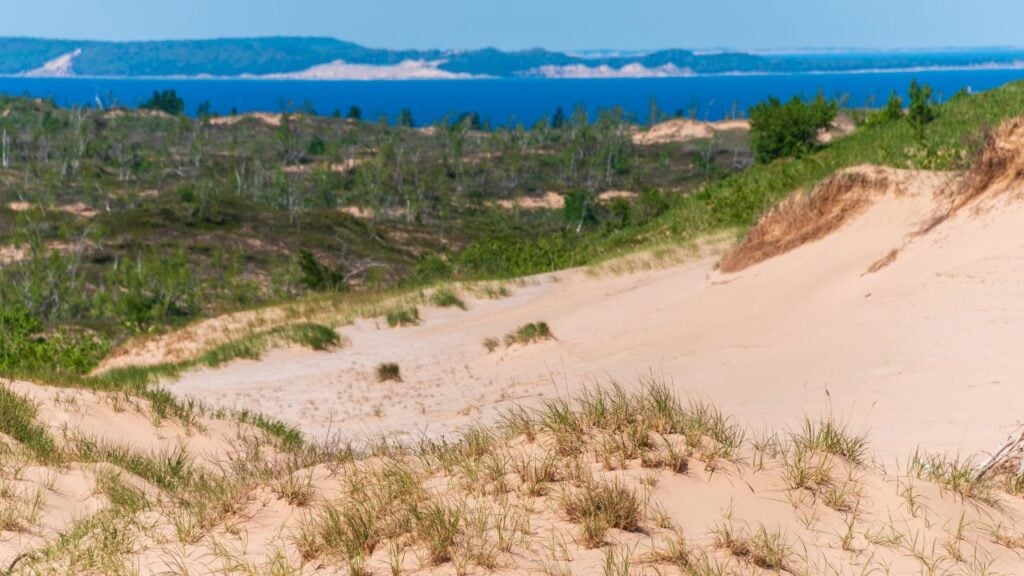
The Keweenaw Peninsula gets buried in snow every winter, and Detroit gets a fraction of it.
That gap shows up in almost everything else about the two halves of the state.
10 Ways One Side of Michigan Feels Like a Different State From the Other
9 Signs Someone Was Raised in Michigan No Matter Where They Live Now
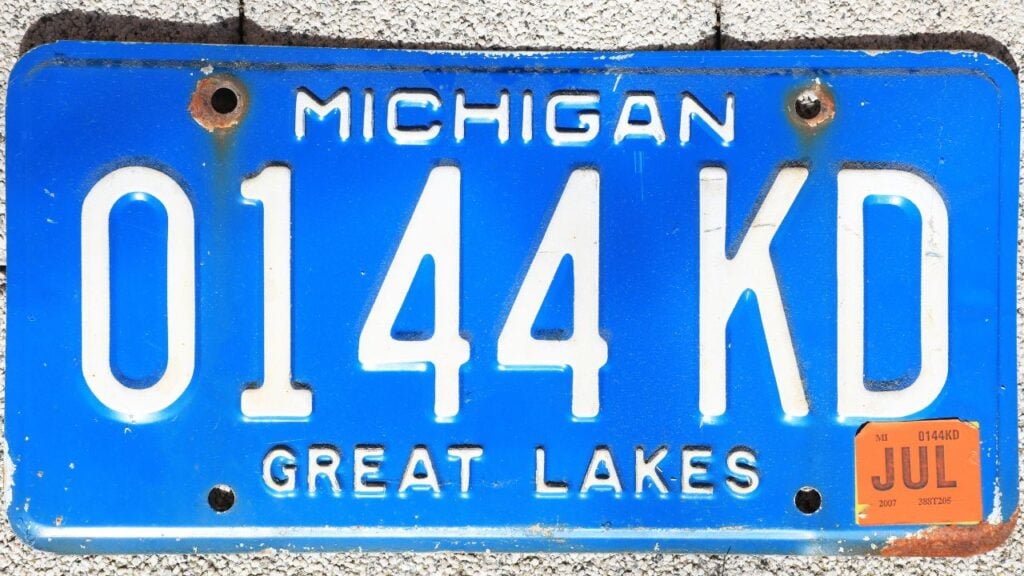
The Michigan Left is a turn few other states build.
Drivers raised in Michigan keep looking for one everywhere else, mostly without luck.
9 Signs Someone Was Raised in Michigan No Matter Where They Live Now
