
6 Things North Carolina Drivers Should Do Immediately After a Minor Car Accident

Think a fender bender on a North Carolina back road is nobody’s business but yours and the other driver’s?
It isn’t.
One careless word at the scene, in a state where being found even slightly at fault can cost a driver their entire claim, can weigh more than the damage.
These are the things North Carolina drivers should do before they say another word.
Note: This is general information, not legal advice. Reporting rules, fees, and negligence laws are subject to change.
1. Moving Your Car Out of the Travel Lane
North Carolina recorded 284,546 traffic crashes in 2024, and its drivers are legally on the hook for what happens in the first few minutes after every one of them.
State law says a crash counts as minor once it causes no injury and both vehicles can still move out under their own power.
When that’s true, each car has to clear the travel lane and pull onto the shoulder or a marked accident investigation site as soon as possible.
That’s the law.
Leaving two cars parked in a lane while drivers argue over fault only invites a second crash behind the first one.
If a car can’t be driven safely without more damage, it stays exactly where it is, and the driver gets out and off the roadway instead.
2. The $1,000 Reporting Threshold
Not every scrape requires a call to the police in North Carolina.
State law only calls a crash reportable once it causes an injury or death, or once total property damage reaches $1,000.
Once a crash clears that line, North Carolina requires the driver to notify law enforcement right away, by the fastest method available, whether that’s a call from the shoulder or a report once everyone’s safe.
Do the math first.
What Counts Toward North Carolina’s $1,000
North Carolina’s $1,000 threshold covers more than the dent in your own bumper.
The total adds up every vehicle in the crash plus anything else it struck, such as a guardrail, a utility pole, or a fence.
Two cars that each look driveable can still cross the line once a driver adds it all up.
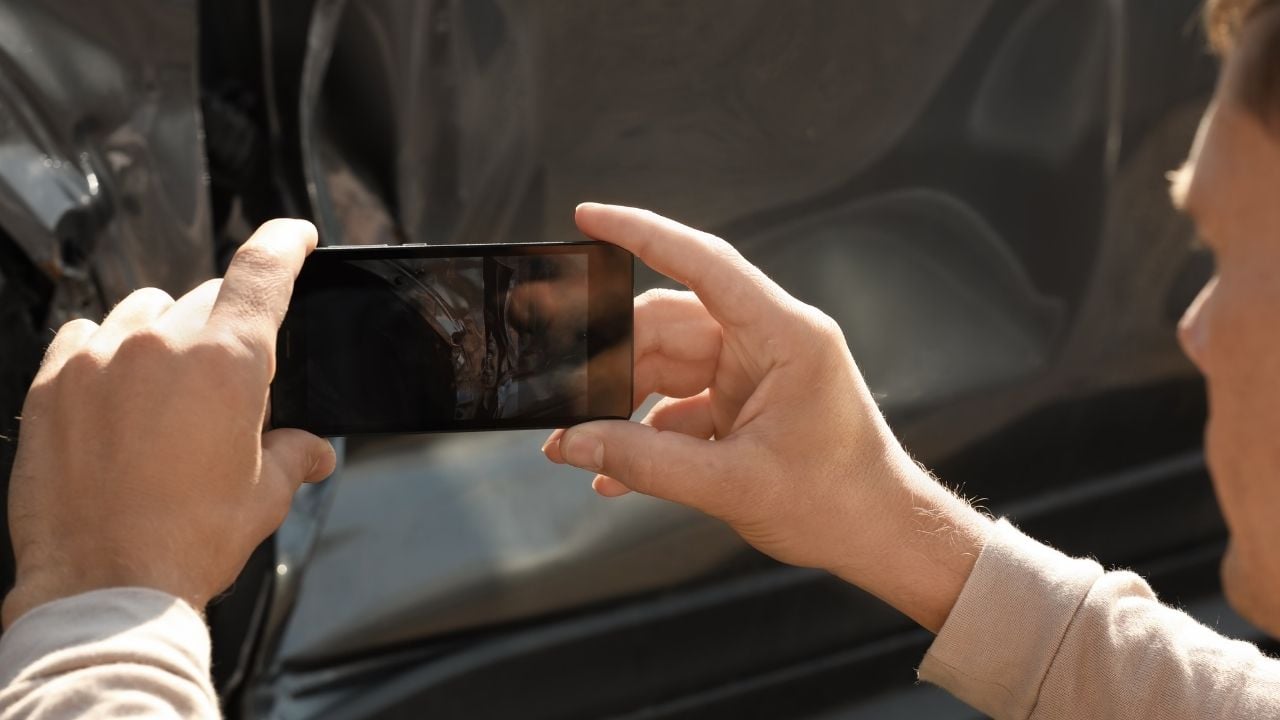
3. Photographing Everything Before You Leave
Waiting to document a North Carolina crash scene costs a driver the one piece of proof that would have protected them.
Skid marks fade, drivers move their cars, and memories drift within hours, and none of it holds up once someone starts arguing over what happened.
Photograph both vehicles from several angles, close up on the damage and pulled back far enough to show where each car ended up on the road.
Get the license plates, the street signs, and anything else that pins down exactly where and how this happened.
A short video walking around the whole scene, both cars, any skid marks, and any debris, catches details a handful of still photos might miss.
4. Exchanging Only the Legal Minimum
The law spells out exactly what a North Carolina driver has to hand over after a crash, and it’s shorter than a lot of people expect.
Give the other driver your name, your address, your driver’s license number, and your license plate number.
That’s the whole list.
Skip it, and the same law that requires the exchange lets North Carolina charge the driver with a misdemeanor, even when the crash was somebody else’s fault.
If the crash hits a parked, empty car, the driver has 48 hours to track down the owner or leave a written note on the vehicle instead.
Insurance details help too, but the law doesn’t require handing over a policy number on the spot, only that basic four.
5. Watching Your Words After a Crash
North Carolina doesn’t forgive fault, no matter how small.
North Carolina is one of only a handful of states that still follow pure contributory negligence, a rule the state’s supreme court continued to apply as recently as 2024.
A court that finds a driver even slightly at fault under that rule can block them from collecting anything from the other side, no matter how careless the other driver was.
Most other states compare fault and split the payout between drivers; this one splits nothing.
An offhand “I’m sorry” or “I didn’t see you” at the scene can read as an admission later, even when the other driver caused the whole thing.
Stick to facts: Names, insurance information, and what each driver plans to do next.
Save any theory about who caused what for the police report or the adjuster.
6. Getting the Officer’s Name and Badge Number
Get the responding officer’s name, badge number, and department before they drive away from a North Carolina crash scene.
That officer, not the drivers involved, is the one who fills out the state’s official crash report for the North Carolina Division of Motor Vehicles (DMV), a form called the DMV-349.
The driver doesn’t write it.
Psst! How prepared is your car, and your head, for a North Carolina fender bender? Run through this checklist and see where you stand.
Requesting a Copy of Your Crash Report
Once that DMV-349 reaches the Division, a North Carolina driver can request a certified copy by filing the DMV’s crash-report request form (TR-67A).
Two versions exist: A redacted copy that leaves out personal details like a driver’s license number, and an unredacted copy that goes only to an insurance company or an attorney with a permissible reason under federal privacy law.
The request costs $6.50, payable by mail or in person.
Insurers, adjusters, and attorneys all lean on that report to sort out what happened, so a driver who never requests a copy ends up negotiating from memory instead of from the record.
9 Mistakes First-Time Visitors Make on North Carolina’s Blue Ridge Parkway
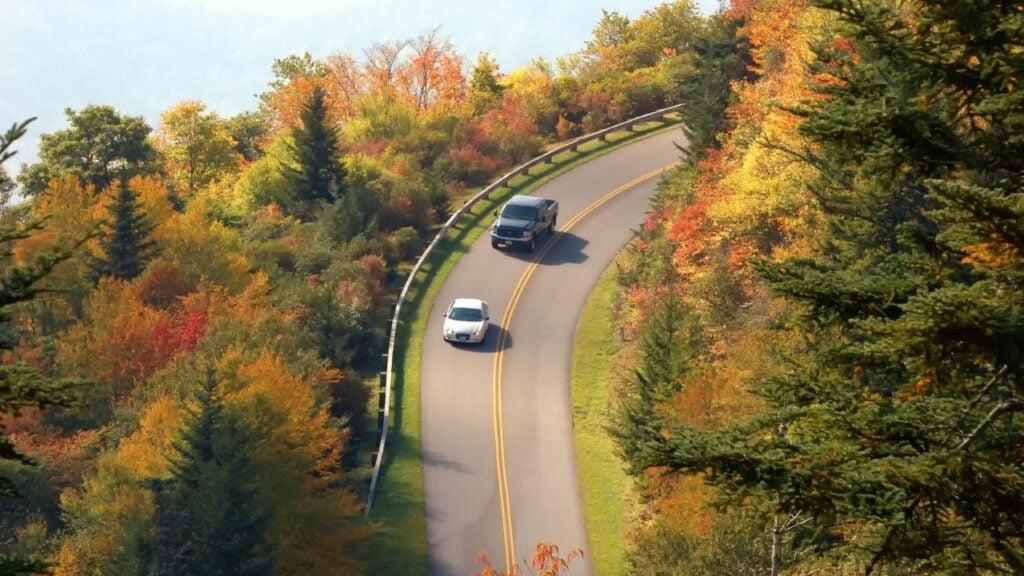
One seven-mile stretch of North Carolina’s Blue Ridge Parkway logged 144 crashes in six years, and many first-time drivers never see a number like that coming.
The speed limit looks flat and friendly right up until the curves start proving it wrong.
9 Mistakes First-Time Visitors Make on North Carolina’s Blue Ridge Parkway
9 North Carolina Legends Residents Have Been Getting Wrong for Years

Blackbeard died off North Carolina’s coast in 1718, and treasure hunters still haven’t found the gold everybody assumes he buried somewhere along the Outer Banks.
North Carolina keeps handing down stories like that one, and a few have drifted a long way from the truth.
9 North Carolina Legends Residents Have Been Getting Wrong for Years
