
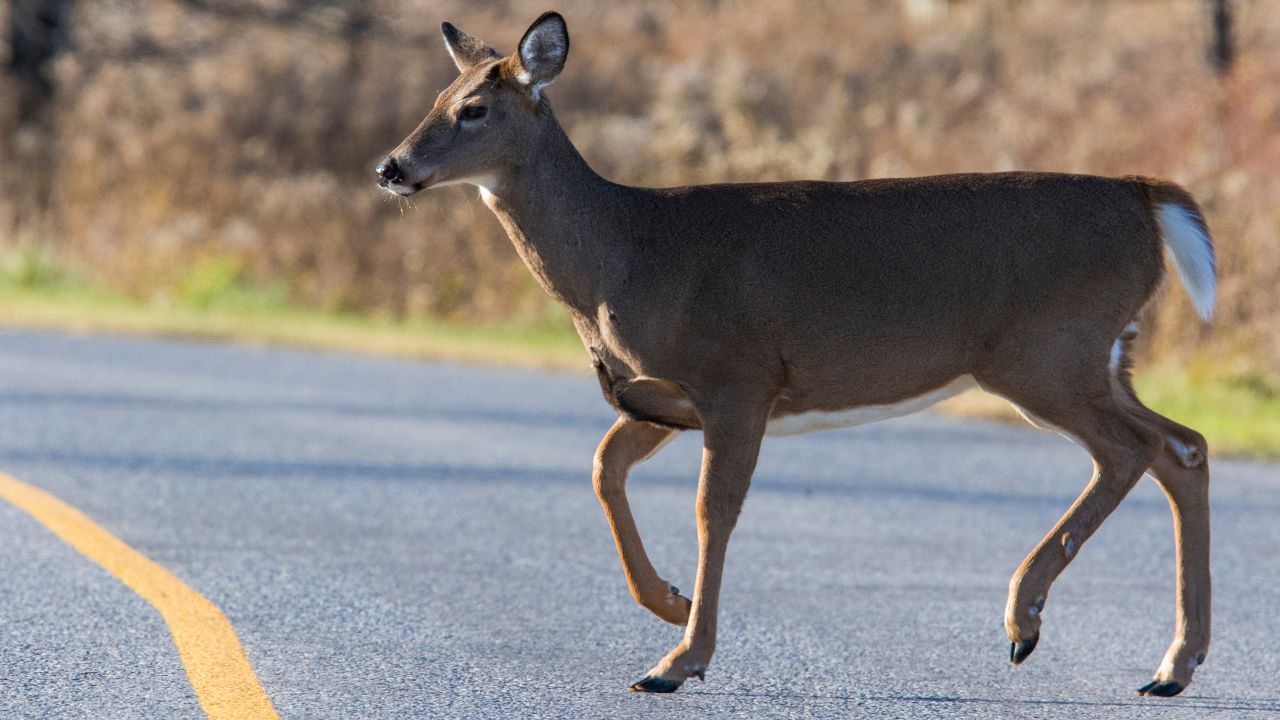
6 Things North Carolina Law Says About Hitting a Deer That North Carolinians Get Wrong

Hitting a deer is scary enough without wondering what you’re supposed to do next.
Some North Carolinians end up guessing. But the rules don’t always match what people assume.
Here’s what the law says about a deer crash aftermath.
Note: This is general information, not legal or insurance advice. Wildlife rules, reporting thresholds and policy terms are subject to change.
1. Taking the Carcass Home
Some drivers assume a deer they hit is theirs to keep.
A North Carolina Wildlife Resources Commission rule lets you take home a deer killed in a road collision, if the investigating officer authorizes it.
Ask the officer, who may authorize possession upon request.
After that, it’s your call.
You can keep the deer for personal use, hand it to another person for their private use, or give it to a charity.
Who Approves Keeping a Deer, Bear or Elk
Commission employees can also authorize you to possess and transport a deer killed accidentally or found dead.
A black bear or an elk needs written authorization from the Commission before anyone possesses or transports it.
2. Selling Any Part
Can you sell a deer you’ve been cleared to take home?
No.
North Carolina’s rule bans selling wildlife resources or wildlife parts from an animal killed accidentally or found dead.
Licensed trappers and hunters can sell the carcasses, parts or pelts of certain furbearers, including beaver, otter and bobcat, to a licensed fur dealer, if the dead animal was found during that species’ open season.
Deer aren’t on that list.
3. Your Reporting Line
A deer crash in North Carolina becomes reportable once total property damage reaches $1,000, or when anyone is hurt or killed.
The deadline?
The state’s accident-reporting law says you must immediately notify the appropriate law enforcement agency, using the quickest means of communication.
The North Carolina Department of Transportation (NCDOT) tells you to get your vehicle off the road, if possible, and call 911.
Don’t touch the deer, since a frightened and wounded deer can be dangerous.
4. Rescuing an Injured Deer
A deer you hit may survive the crash.
The Wildlife Resources Commission says licensed wildlife rehabilitators are the only people legally allowed to possess and care for live wildlife.
Even if you called a rehabilitator, adult white-tailed deer are among the species the Commission says can’t legally be rehabilitated in North Carolina.
Home care is out.
Psst! How much do you know about deer crashes? Flip each card and see how many you get right.
5. Safe Driver Points
A property-damage-only deer crash alone shouldn’t put points on your policy under the Safe Driver Incentive Plan (SDIP).
State law created the plan, which charges points for convictions and at-fault accidents.
Points raise your rate.
Under G.S. 58-36-65, the North Carolina Rate Bureau files the plan for the state insurance commissioner to review.
Rule 5 of the Rate Bureau’s personal auto manual then exempts property-damage-only accidents involving damage by contact with animals from points.
The exemption doesn’t apply when a deer crash injures someone.
The current version of the rule took effect October 1, 2025.
6. Your 75 Percent Salvage Line
Hitting a deer can make your car a salvage motor vehicle under North Carolina law.
The statute doesn’t mention deer.
But a deer collision counts as a “collision or other occurrence,” the wording the statute’s definition uses for the damage.
The line is when repairs, including making the car safe for the road, would cost more than 75% of its fair retail market value.
On an $8,000 car, that’s $6,000.
Under North Carolina’s title law, a salvage motor vehicle’s title carries a brand, a designation that discloses the vehicle’s classification.
If your insurer declares the car a total loss, the title and registration card must also carry the words “TOTAL LOSS CLAIM.”
Which Coverage Pays
Comprehensive coverage is the part of your auto policy that pays when a deer damages your car, according to the North Carolina Department of Insurance (NCDOI).
Contact with a bird or animal counts among comprehensive losses.
Expect a deductible.
If you have a loan on your car, your lender will likely require full coverage.
The Fall Crash Surge
NCDOT puts crashes involving deer and other animals at about 8% of all vehicle crashes in the state.
From 2022 through 2024, its report counted 63,487 animal-related crashes, a tally that includes all reportable crashes.
Approximately 90% of those involved deer.
Extra deer movement from October through December is tied to mating and hunting seasons.
November typically records the highest number of animal-related crashes.
The clocks change, too.
Daylight saving time ends at 2 a.m. on Sunday, November 1.
Darkness arrives earlier after that, which makes deer harder for you to see and raises the risk of a crash.
NCDOT recommends using your high beams when it’s safe and watching for the glow of eyes along the road.
Deer travel in groups, so be alert for more than one deer.
Don’t swerve, which risks losing control of your vehicle.
Counties With the Most Animal Crashes
NCDOT’s county totals rank the counties by animal crashes, many of them involving deer.
Know your county.
Wake County had the most animal crashes in North Carolina from 2022 through 2024, at 2,676.
If you drive in Guilford County, you’re in second place at 2,080, ahead of Randolph County’s 1,909.
The 10 counties with the most animal crashes had 17,369 of them across those three years.
Those crashes caused nearly $58 million in damage, 686 injuries and three deaths.
7 Right-of-Way Rules That Cost North Carolinians Their Front Yard
Much of what looks like your front yard may sit inside the road’s right-of-way.
Several rules decide how much of it stays yours.
7 Right-of-Way Rules That Cost North Carolinians Their Front Yard
8 North Carolina Barbecue Rules Nobody Writes Down
Vinegar or ketchup isn’t the fight that separates a North Carolina barbecue regular from a first-timer at the counter.
Something else gives a first-timer away.
