
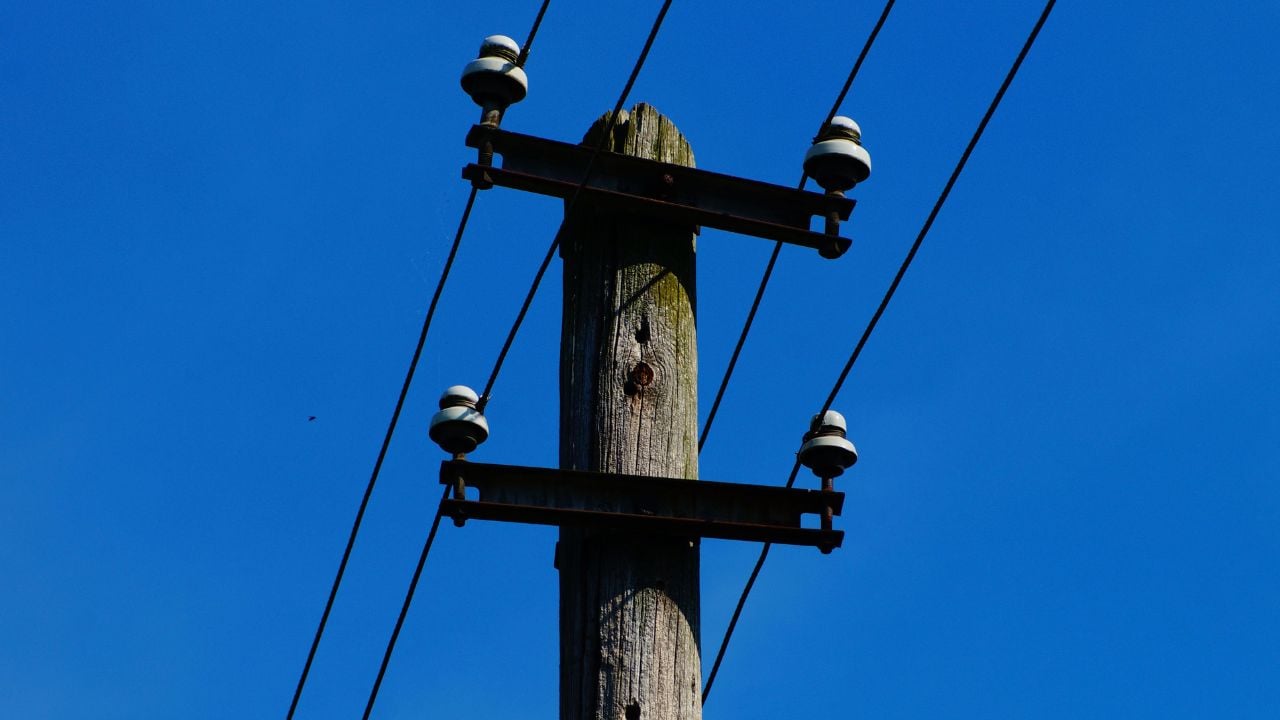
7 Right-of-Way Rules That Cost North Carolinians Their Front Yard

A road’s right-of-way in North Carolina can run 45 to 50 feet across the front of an ordinary residential lot, county planners say.
That strip reaches well past the mailbox, the ditch, and the edge of the grass.
Much of it looks like your front yard.
These are the right-of-way rules that cost North Carolinians their front yard.
Note: This is general information, not legal advice. Right-of-way and easement rules vary by city, county, and utility provider, and are subject to change.
1. Power-Line Easements
Homeowners who live along an overhead power line don’t fully control the yard underneath it.
A recorded easement gives the utility, Duke Energy across much of the state or a local electric cooperative elsewhere, the right to use that strip of yard.
Add a fence, a shed, or even a garden bed inside it, and the utility’s sign-off comes first, not the homeowner’s plans.
Land-condemnation attorneys who handle these disputes say a power company can remove a tree leaning toward the line without asking the owner first.
It isn’t required to put back a fence or shed that blocks access to a transformer, either.
It’s already on paper.
Who Owns North Carolina’s Easement Land?
North Carolina homeowners typically keep legal title to the ground inside a utility easement.
The utility only holds the right to use that strip for its lines, not the dirt.
A homeowner can sometimes still landscape it lightly, depending on the easement’s exact wording, as long as nothing blocks access or grows into the wires.
2. Neighbor’s Prescriptive Claim
A North Carolina neighbor can gain a permanent legal right to part of your front yard just by using it long enough.
State courts recognize what’s called a prescriptive easement, built on the same 20-year clock as ordinary adverse possession.
The leading case, Perry v. Williams, involved a farm road one family used openly for more than 43 years.
Judges didn’t need anywhere near that long to rule the road theirs.
Twenty years is all it takes.
A shared driveway, a footpath to a dock, a shortcut across a lot’s corner: Any of them can become a stranger’s legal right if an owner never objects.
North Carolina courts require the use to be open, continuous, and treated like a right, not a favor.
Not a cent.
3. NCDOT’s Roadside Strip
North Carolina’s transportation rules can claim more of a homeowner’s frontage than many people realize.
County planning offices that apply the state’s standards put an ordinary subdivision street’s right-of-way at 45 feet wide.
A busier collector road gets 50 feet.
That strip commonly reaches past the pavement, the ditch, and the mailbox, deep enough to swallow the first stretch of a front lawn.
Put a fence, a mailbox post, or a row of shrubs inside it without a permit, and the North Carolina Department of Transportation (NCDOT) can order it moved.
The owner pays.
Ignore the order, and the violation is a Class 1 misdemeanor under North Carolina General Statutes Section 136-18.
4. Corner-Lot Sight Triangles
Cities carve out a no-build zone in front yards at many street corners.
That zone usually eats into a corner lot’s front yard.
Charlotte’s transportation department requires a clear 50-by-50-foot triangle at a public street intersection, and a smaller 10-by-10-foot triangle at every driveway.
Nothing that blocks a driver’s view, a fence, a wall, a thick hedge, can stand between 30 and 72 inches tall inside that space.
Six feet, the standard height for a privacy fence, sits right in the middle of that range.
Smaller towns run the same idea under a different name.
Zebulon’s ordinance bans anything between two and a half feet and ten feet tall inside its sight-distance triangle, measured out from the edge of the street right-of-way.
The triangle runs 70 feet along the main road and just 10 feet along the cross street.
That triangle is drawn from the right-of-way line, not the property line, so it reaches onto a corner lot the road itself never touches.
A corner lot loses that whole wedge of privacy fencing before the survey stakes even go in.
Corner lots pay extra.
5. Drainage Easements and Fences
A recorded drainage easement can cut straight across a North Carolina lot, often through the exact stretch a homeowner had already pictured fenced in.
Raleigh’s stormwater rules ban fences and walls inside a recorded drainage easement, with only a narrow design-exception path around it.
A pool, a dog run, a fully enclosed yard: None of it works without a fence line, so the easement rules those out too.
The city doesn’t maintain them.
A homeowner or a subdivision’s homeowners association does, on ground the homeowner still can’t fully fence in.
6. Thoroughfare Fence Setbacks
A homeowner near a busy street can’t always build a fence right up to the right-of-way line.
Raleigh’s ordinance keeps a fence or wall taller than 42 inches at least 15 feet back from the edge of a Thoroughfare right-of-way, unless a homeowner adds evergreen screening instead.
That buffer sits on the homeowner’s side of the right-of-way, not the road’s.
A standard six-foot privacy fence has to stay behind that line the whole way.
Fifteen extra feet, gone.
7. Road-Widening Takings
Nothing costs a North Carolina front yard faster than a state road-widening project.
When NCDOT needs more pavement, it can condemn a strip of the abutting land through eminent domain, a partial taking that shrinks a lot even with payment attached.
How much of that strip NCDOT takes varies by project, land-condemnation attorneys who track these cases say.
The strip can run anywhere from a narrow shoulder cut to a much deeper one, depending on how many lanes a widening adds.
A deep enough cut can reach past the sidewalk and toward the porch.
The state pays for the land it takes, and appraisers factor in what the taking does to the rest of the lot.
The owner loses the yard.
Deed Blind Spots
A property owner can check what’s already encumbering a front yard before any surprise shows up.
The county Register of Deeds keeps every recorded easement, right-of-way dedication, and plat map tied to a property, searchable by owner name or parcel number in many counties.
North Carolina’s 811 line is the other call worth making before any digging, fencing, or landscaping project starts.
A utility locator marks buried lines with flags within three business days, at no cost to the homeowner.
The original subdivision plat often shows the dedicated right-of-way and any drainage or utility easements at a glance.
That’s long before a survey crew ever has to be called out.
The paperwork already exists.
Psst! How much do you know about North Carolina’s roads and property lines? Take our quiz and see how many you can get right.
Quiz
North Carolina Land Law IQ
Answer these questions on North Carolina’s roads, boundaries, and land law. We bet you can’t get them all right. Prove us wrong?
NCDOT maintains almost 80,000 miles of road, making North Carolina home to the nation’s second-largest what?
The Easement Expiration Window
Not every right-of-way rule works against a North Carolina homeowner.
North Carolina's Marketable Title Act can wipe out an old, forgotten easement after 30 years if nobody re-records it.
A driveway easement a previous owner granted two generations back, never used and never renewed, can simply stop existing under the law.
The burden sits on whoever holds the old claim, not on the current owner, to keep it alive on paper.
Old claims run out too.
A homeowner who pulls their deed might find a decades-old easement nobody has touched in 30 years.
That easement may already be legally dead, whether or not anyone ever filed paperwork to say so.
8 Things That Lower a North Carolina Home Appraisal More Than Owners Expect
A house can lose value on paper without a single wall coming down, and a new appraisal rule is behind more of that shrinkage than many North Carolina owners realize.
The number matters well past a sale, since it can also decide how much someone can refinance or borrow against the place.
8 Things That Lower a North Carolina Home Appraisal More Than Owners Expect
8 North Carolina Car Repair Bills Drivers Can Refuse to Pay

North Carolina keeps a toll-free hotline just for drivers who think a repair shop overcharged them, printed right on the state's auto-repair guidance page.
State law already spells out what a shop can and can't bill for once the car's up on the lift, and many drivers pay bills they never legally owed.
