

7 Rules That Change the Moment a Florida Community Turns 55+

A homeowner in Arbor Mill, the 55-and-over section of Oakleaf Plantation in Jacksonville, has spent years defending her right to stay in the house she inherited from her father.
Inheriting the house didn’t end the fight.
The dispute, which News4Jax has covered since July, comes down to a distinction buried in Florida’s age-restricted housing law.
These are the rules that change the moment a Florida community turns 55 and over.
Note: This is general information, not legal advice. Age-restriction and occupancy rules vary by community and are subject to change.
1. The 80% Occupancy Threshold
A Florida community has to keep at least 80% of its occupied homes filled with someone 55 or older to call itself 55 and over.
That floor comes from Florida Statute 760.29(4)(b) and the federal Housing for Older Persons Act it leans on.
It’s the law.
Not a marketing label.
The percentage only counts homes that are lived in, so a few empty units waiting on a sale don’t sink the ratio.
Once those homes fill up, the math turns real.
Four out of every five occupied homes need at least one resident in that 55-and-up range.
Drop below that line, and the community’s legal status comes into question, not just its next move-in.
2. The Two-Year Verification Survey
Every Florida community claiming that 55-and-over label has to prove it on a schedule.
Federal rules require an age-verification survey or affidavit at least once every two years.
No exceptions.
The accepted proof includes a driver’s license, a birth certificate, a passport, or a signed statement from an adult in the household.
Skip the survey, and the community can’t lean on the exemption if a fair housing complaint ever puts it to the test.
What Counts as an Occupied Unit in a Florida 55+ Community
A Florida community’s 80% count only tracks homes that are occupied, and federal rules define that more loosely than it sounds.
A snowbird’s condo that sits empty for months each year still counts as occupied by its usual 55-plus resident, as long as that resident plans to come back.
A home that’s simply for sale, with nobody living there yet, doesn’t count against the ratio at all.
That’s why a community can show a few dark windows in July and still be fully compliant.
3. The 16-to-18 Fix
Older Florida communities sometimes carry governing documents written decades before today’s federal rules were finalized.
Some of that paperwork sets its cutoff at 16 and under.
Florida law doesn’t let that stand as written.
It automatically reads any cutoff written that low as 18 and under instead, so the community lines up with federal fair housing law.
No board vote required.
The correction happens by operation of law the moment a community claims 55-and-over status, whether the community updates the paperwork or not.
4. The Ownership-Occupancy Split
A Florida community’s 55-and-over status governs who can live in a home, not who can own it.
A homeowner in Arbor Mill, the 55-and-over section of Oakleaf Plantation in Jacksonville, found out how far apart those two rights can sit.
She moved into her father’s house in 2020 to care for him as his health declined, and she inherited the home when he died in 2023.
Her homeowners association (HOA) sued to remove her from the community.
The HOA argued she doesn’t meet Arbor Mill’s rule that at least one resident of a home be 55 or older, News4Jax reported in July.
An attorney representing the community told News4Jax that inheriting the deed lets someone hold title.
A resident under 55 still has to satisfy the community’s occupancy rules to live there, the attorney said.
The HOA also voted to bill homeowners roughly $1,000 each under a $155,000 special assessment to cover its legal fees.
Owning the house was never the same as having the right to live in it.
Psst! The 80% rule has exceptions almost nobody hears about until they need one. See how many of these you already knew.
5. The Real-Intent Test
A Florida community can’t just slap “55 and Over” on the entrance sign and call the exemption earned.
Federal rules require the community to publish written policies and follow them, in its marketing, its lease language, and the rules it enforces.
Vague branding doesn’t cut it.
A community that advertises itself only as an “adult living” complex, without more, can fail this test even if older residents fill many of the homes.
The label has to match the paperwork, and the paperwork has to match how the place runs.
6. The Retrofit Exemption
A qualifying 55+ condo community gets a break other buildings don’t get.
It can skip mandatory handrail and guardrail retrofits under Florida Statute 718.1085, as long as it meets the housing-for-older-persons definition.
Owners have to vote their way out of it, in person or by written consent, never by proxy.
Two-thirds have to agree.
High-rises over 75 feet don’t get the full pass.
Their stairwells and outdoor walkways still need the retrofit, no matter how the vote goes.
Private balconies aren’t considered common areas, though, so those can still ride on the exemption.
7. The New-Community Runway
A brand-new Florida 55-and-over community doesn’t have to hit the 80% occupancy threshold on day one.
Federal rules give it a runway instead.
A newly built community only has to comply with the occupancy requirement once at least 25% of its units are occupied.
Half-built phases and unsold, unoccupied units don’t sink a fresh community’s exemption before it’s even filled up.
The clock starts ticking once homes are lived in, not once they’re built.
The Old Clubhouse Standard
Florida communities didn’t always qualify for 55-and-over status this easily.
The bar was higher.
Until 1995, federal law required a community to prove it offered substantial facilities and services built for older residents.
That meant planned activities, medical access, or amenities built for older adults, before a community could claim the exemption.
Regulators themselves couldn’t agree on what that standard required.
The U.S. Department of Housing and Urban Development (HUD) tried to define what counted as significant facilities and services for older residents through a formal rule in 1994.
HUD withdrew the proposal after overwhelming pushback, according to the Senate report that led to the 1995 rewrite.
By 1992, the agency had already logged 20,000 age-restriction complaints in a single year, closing 17,000 of them with more than $7 million in penalties.
6 Things That Change for a Florida Homeowner Once Your Roof Hits 15 Years
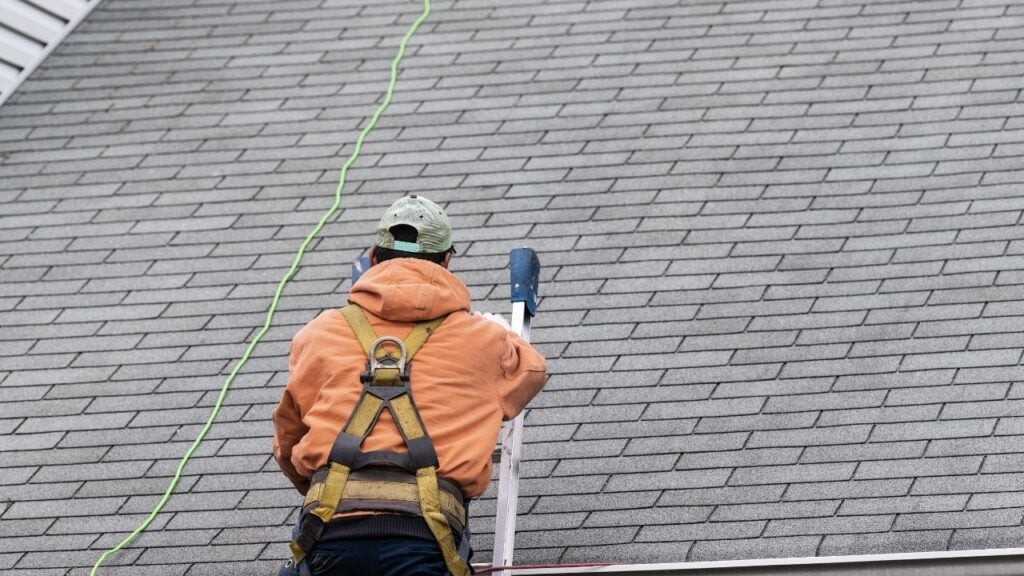
A Vero Beach homeowner watched her insurance premium rise toward $9,000 the year her roof turned 15.
A cheaper quote never showed up.
Florida insurers built an entire underwriting playbook around that one birthday, and it changes more than just a premium.
6 Things That Change for a Florida Homeowner Once Your Roof Hits 15 Years
8 Situations When a Storm-Downed Tree in Florida Becomes Your Neighbor’s Problem, Not Yours
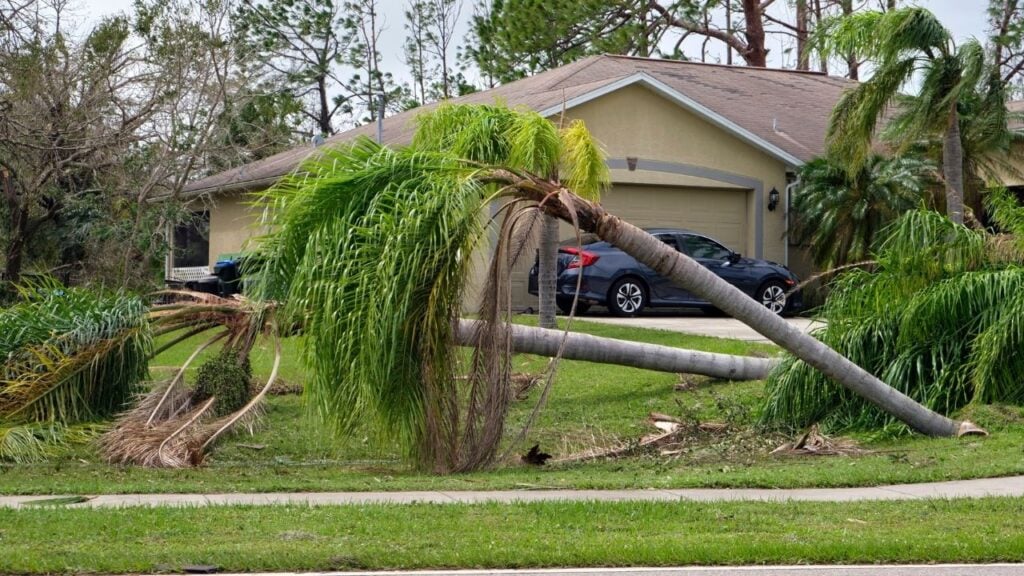
Hurricane season peaks in Florida every year.
That’s exactly when a storm-downed tree starts testing who owes for the damage.
The answer depends less on whose yard the tree fell from and more on a handful of situations state law spells out.
8 Situations When a Storm-Downed Tree in Florida Becomes Your Neighbor’s Problem, Not Yours
