

7 Things Minnesota’s Cold Weather Rule Stops a Utility From Doing Starting October 1

A Minnesota utility can’t just flip the switch on an unpaid heating bill this fall.
State law ties its hands.
Minnesota’s Cold Weather Rule took effect on October 1, spelling out what a regulated electric or natural-gas utility can and can’t do to keep a customer’s heat on.
These are the things Minnesota’s Cold Weather Rule stops a utility from doing, starting October 1.
Note: This is general information, not legal advice, so confirm current Cold Weather Rule protections and payment terms with the Minnesota Public Utilities Commission.
1. Charging Over 10% of Your Income
Minnesota’s Cold Weather Rule caps what a low-income household can owe each month to keep the heat on.
A household at or below 50% of the state median income can’t be required to pay more than 10% of income toward current and past-due heating bills combined.
That protection holds as long as the customer signs a payment plan and keeps it.
A household earning $30,000 a year, for example, can’t be told to send more than $3,000 total toward the current bill and whatever’s already past due.
That’s the whole cap.
That October-to-April window covers both electric heat and natural-gas heat alike.
What “Keeping” a Payment Plan Means
The protection Minnesota’s Cold Weather Rule gives a customer lasts only as long as the payment plan stays active, not just signed once and forgotten.
Falling behind on the new, lower payment can put a customer back on a normal disconnection track.
The rule also lets a customer ask the utility to change the plan if their finances shift mid-winter.
The utility has to consider that request rather than hold the customer to the original number.
2. Charging a Deposit or Late Fee
Under Minnesota’s Cold Weather Rule, a utility can’t pile new charges onto a customer who’s already doing the right thing.
A payment agreement, once entered or appealed to the state, blocks the utility from charging a deposit or a delinquency charge.
Negotiating carries no penalty.
That protection holds for the whole cold-weather season, not just the month a customer signs the plan.
The no-deposit rule applies to lower-income households only, since a utility can still ask an above-median customer for a deposit under ordinary billing rules.
A household over that income line still qualifies for a payment agreement under the rule, sized to its finances instead of the flat 10% formula.
3. Skipping Your Written Notice
Minnesota’s Cold Weather Rule notice comes with teeth, since a utility owes more than a phone call before it can cut anyone’s heat off.
The utility has to send a commission-approved written notice listing the exact disconnection date, the amount owed, and a summary of the customer’s rights and options.
The utility can’t disconnect until at least 10 working days after it mails that notice, or seven working days after it hands the notice over in person.
There’s no surprise shutoff.
The utility also owes every customer a plain-language summary of their rights sometime between August 15 and October 1 each year, before the cold-weather season even opens.
That notice goes out again whenever a customer starts new service.
4. Disconnecting on the Wrong Day
The calendar matters as much as the paperwork under Minnesota’s Cold Weather Rule.
A utility can’t disconnect heat on a Friday unless it makes personal contact with the customer and offers a payment plan that same day.
Weekends, holidays, the day before a holiday, and any day the utility’s or the state’s offices are closed are off-limits.
The calendar doesn’t bend.
5. Disconnecting You Mid-Appeal
A dispute doesn’t switch off a customer’s protection under Minnesota’s Cold Weather Rule.
A customer who disagrees with a proposed payment plan can appeal to the Minnesota Public Utilities Commission, and the utility can’t disconnect service during that appeal period.
The commission has to resolve that kind of appeal within 20 working days, using an informal process instead of a courtroom fight.
Asking for that appeal form doesn’t cost a customer their heat.
The clock runs on the commission, not the customer.
Heat stays on.
The commission weighs the same income documentation behind the payment plan itself when it decides the appeal, so a customer isn’t starting the case from scratch.
6. Demanding Extra Proof of Need
One group of customers gets a smaller paperwork load under Minnesota’s Cold Weather Rule.
Anyone already receiving energy assistance benefits counts as automatically eligible for protection, and the utility can’t demand extra income verification on top of that.
A customer who isn’t already enrolled can still qualify with a signed statement, a tax return, paycheck stubs, or similar documentation.
It’s one less form.
That same energy assistance program falls under Minnesota’s Department of Commerce, and enrollment in it satisfies the Cold Weather Rule on its own.
Psst! How much do you know about Minnesota’s other energy consumer protections? Take our quiz and see how many you can get right.
Quiz
Minnesota Energy IQ
Answer these questions on Minnesota energy assistance and utility rules many residents never hear about. We bet you can’t get them all right. Prove us wrong?
At its current funding pace, how long would it take Minnesota’s Weatherization Assistance Program to reach every income-eligible household in the state?
7. Delaying Your Reconnection
Reconnecting a disconnected customer runs on a clock too, under Minnesota's Cold Weather Rule.
Once a customer accepts a payment agreement and the home is confirmed occupied, state law calls for the utility to restore heating service within 24 hours.
The clock starts the moment a customer accepts the agreement, not whenever the utility finally handles the work order.
That 24-hour target isn't a flat guarantee, since the law only requires the utility's reasonable effort and lets it weigh crew and construction schedules already underway.
A crew showing up a day later, or a week later, is the kind of delay the rule exists to prevent.
For a household waiting on the furnace, the 24-hour window still counts, even though state law asks for the utility's reasonable effort rather than an unconditional promise.
9 Popular Home Trends That Make No Sense in Minnesota's Climate

Minnesota's weather records include a high of 115 degrees and a low of 60 below zero, and the Twin Cities average 54 inches of snow a year.
Builders keep selling the same national trends anyway, and many homeowners want them just as much as someone shopping in Arizona.
9 Popular Home Trends That Make No Sense in Minnesota's Climate
7 Boat Ramp Rules That Confuse First-Time Minnesota Visitors
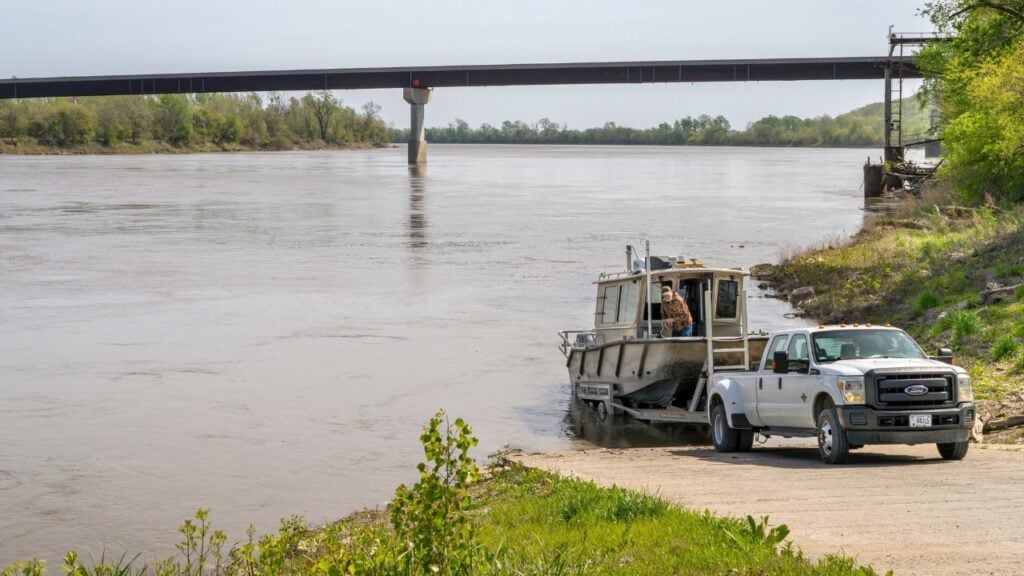
Minnesota's Department of Natural Resources (DNR) runs more than 450,000 watercraft inspections a year at public boat launches across the state.
A first-timer backing an Iowa or Wisconsin trailer down a Minnesota ramp runs into rules that never came up back home, starting before the boat even touches the water.
7 Boat Ramp Rules That Confuse First-Time Minnesota Visitors
