
7 Things PennDOT Can Do to Your Yard Without Asking First

That maple tree by the road has shaded your Pennsylvania front yard for years.
But if one of its limbs reaches out over the road, who gets to decide whether it’s cut might surprise you.
These are the things PennDOT can do to your yard without asking first.
Note: This is general information, not legal advice. Highway and property rules are subject to change, so confirm the current details with PennDOT.
1. Snow Fences on Your Property
PennDOT can enter private land beside a state road and put up snow fences, under Section 414 of the State Highway Law.
A fence can sit as far as 100 feet from the right-of-way line.
The land stays yours.
The statute sets the limits, though.
PennDOT can’t put a fence up before Oct. 1, and it needs your written consent to leave a fence standing past April 1.
If your field still has unharvested crops, the fence has to wait until Nov. 1 unless you agree in writing.
So if you farm the land, you gain an extra month.
2. Ditches Cut Across Your Lot
Section 417 of the State Highway Law covers roads built or improved with state money or under state supervision.
On those roads, PennDOT can enter private land to cut, open and repair the ditches and drains that carry water off the road.
That can put a ditch across a corner of your lot.
If you stop, fill in or divert a ditch like that without PennDOT’s authority, the fine runs $4 to $20 plus prosecution costs.
3. Branches Trimmed From Your Trees
Trees, shrubs, grasses and vines growing on your property are fair game for PennDOT when they overhang or encroach on the right-of-way.
The law ties the cut to the part that overhangs or encroaches.
A limb from your tree that hangs into the right-of-way falls under that authority, even though the trunk stands on your side of the line.
4. Trees Between Lawn and Road
Depending on the road, the grass and trees between your lawn and the pavement sit inside PennDOT’s right-of-way, even though they can look like part of your front yard.
Section 410 of the State Highway Law gives the department the “absolute right to trim, cut and remove any trees” growing there.
That includes a shade tree you planted yourself.
You, on the other hand, need PennDOT’s written consent to cut, trim or remove vegetation in the right-of-way that someone other than you planted.
Skipping that consent carries a fine of $100 to $300 for each act.
What PennDOT’s Vegetation Permit Requires
PennDOT’s right-of-way vegetation permit covers cutting, trimming, spraying, removing and mowing inside a state highway’s legal right-of-way.
You send the application to the PennDOT engineering district office that covers your road, and an approved permit expires after one, two or three years.
Stumps can’t stand higher than four inches.
Wood four inches or more across goes to the abutting owner first, and all brush has to leave the right-of-way.
Burning is prohibited inside the right-of-way and within 40 feet of desirable vegetation.
Mowing has to leave at least four inches of grass.
5. Anything Blocking a Clear View
Section 413 of the State Highway Law lets PennDOT buy land, or take it through eminent domain, to secure an unobstructed view at an intersection, railroad crossing or curve.
After PennDOT condemns a view and records the plan, its secretary may “abate or remove” any obstruction to the view across that land.
The statute says “any obstruction,” so a hedge, fence or tree on corner land PennDOT has condemned for a view could count.
6. Signs Taken Down Without Notice
Section 425 of the State Highway Law bars any sign, banner or advertising matter of any kind from going up on or across a state highway without the department’s written consent.
That wording covers a yard sale sign, a campaign sign or a banner, and your sign counts too.
The department may take an unauthorized one down “with or without notice” to the people responsible, and placing one carries a fine of $4 to $20.
A sign staked at the edge of your front yard may already be standing inside the right-of-way, depending on where the line falls.
7. Snow Plowed at Your Mailbox
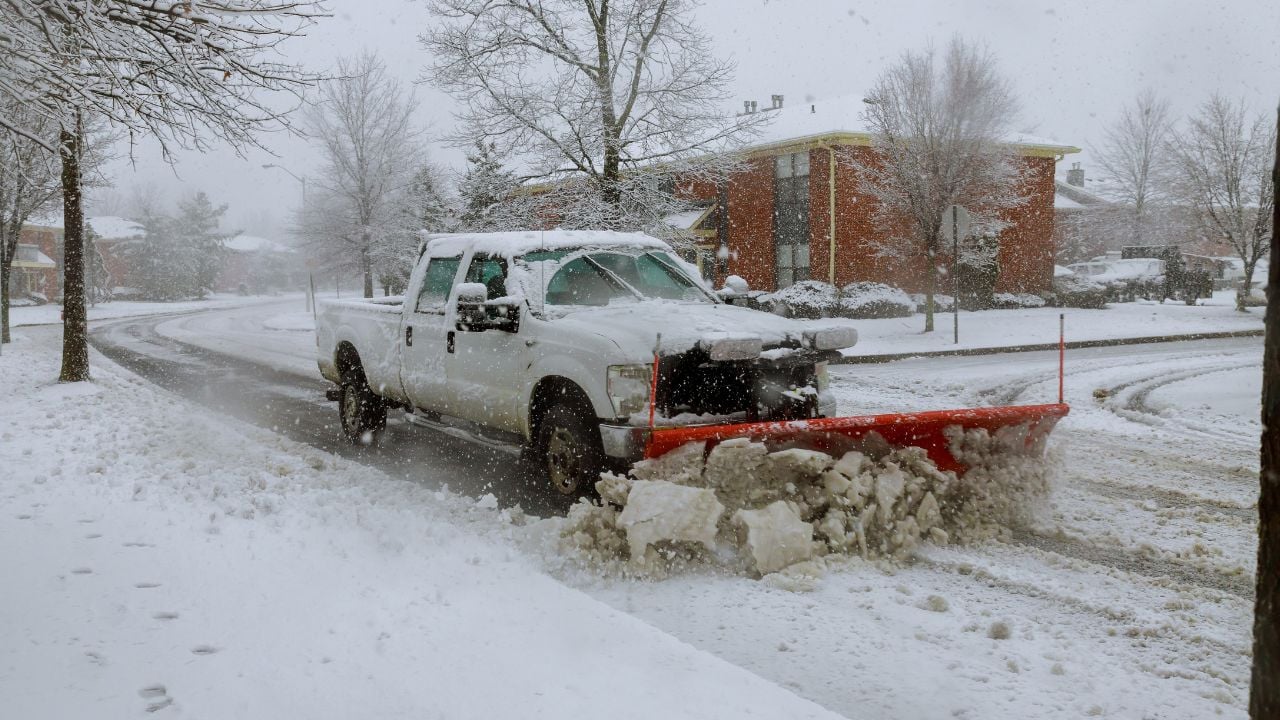
PennDOT allows you to place a mailbox inside the right-of-way, and its District 6 winter guide for 2025-26 says plowing can push snow against or in front of mailboxes.
The same guide says mailbox damage is the responsibility of the property owner.
A mailbox struck directly by a plow blade or a truck may be eligible for compensation, but one toppled by plowed snow isn’t, Lehigh Daily reported in January 2026.
Claims go to the state’s Bureau of Finance and Risk Management, and the report says claimants have six months from the incident to file.
How Wide the Right-of-Way Runs
Lehigh Daily’s January 2026 report described the right-of-way along state roads as often 33 feet wide in total, measured from one side of the road to the other.
In places, it said, the right-of-way can run 120 feet or more, depending on terrain and utilities.
Trees, signs and mailbox snow, the powers in items 4, 6 and 7, work inside the right-of-way line.
Snow fences, ditches, overhanging branches and sight lines can reach onto land beside it.
The statute sections above are printed in the State Highway Law on the General Assembly’s website, and printed text alone doesn’t show how often PennDOT uses a power.
If you live in the Lehigh Valley, the report says you can request right-of-way data from PennDOT’s District 5 office.
Who Mows the Right-of-Way
PennDOT, or a county or contract crew working for it, mows the strip between your lawn and the pavement on a schedule from its Publication 23 maintenance manual, revised in 2019.
The manual sets one to two mowing cycles a year along rural state roads and two to four in urban areas.
On a two-lane or three-lane road, the first pass is at least five feet wide beside the travel lane.
Psst! How much do you know about Pennsylvania’s roads and the land beside them? Take our quiz and see if you can ace it.
Quiz
Keystone Road IQ
Answer nine questions on Pennsylvania roads and the land beside them. We bet you can’t get them all right. Prove us wrong?
In Pennsylvania, how many years must someone openly use land that isn’t theirs before they can claim it?
What You're Owed
Snow fences, ditches and sight lines each come with a payment process written into the State Highway Law.
If you and the department can't agree on what a fence cost you, Section 414 lets you petition the county court to appoint viewers.
Those viewers assess the damages, and PennDOT pays what they find.
For a ditch, Section 417 pays damages to owners of land PennDOT enters the same way the act pays for building state highways.
For a sight line, Section 413 sends the assessment of damages for property taken, injured or destroyed through the same condemnation proceedings the department uses for road land.
3 Cold-Weather Dog Rules That Can Get Pennsylvanians Cited

Cold weather changes what your dog needs outside.
Pennsylvanians might be surprised which habits can draw a citation.
3 Cold-Weather Dog Rules That Can Get Pennsylvanians Cited
6 ShopRite Price Plus Rules Pennsylvanians Miss at the Register

Your ShopRite coupons might not travel the way you expect.
Thanksgiving shopping is coming up, so it pays to know the rules first.
6 ShopRite Price Plus Rules Pennsylvanians Miss at the Register
