
7 Water Restrictions That Catch New Floridians Off Guard Every Fall

Southwest Florida has spent this dry season under one mandatory irrigation day, and the Southwest Florida Water Management District says the order behind it runs through October 1.
That’s the easy rule to spot.
Several other restrictions sit underneath it, and none of them show up in closing paperwork.
These are the water restrictions that catch new Floridians off guard every fall.
Note: This is general information, not legal advice. Watering schedules and enforcement vary by county and water management district and are subject to change, so confirm the current restrictions with your local water management district.
1. Watering Days at the Clock Change
Florida’s landscape watering allowance can shrink automatically every fall, and Orange County spells out exactly when.
Under the county’s ordinance, outdoor irrigation runs on one day a week during Eastern Standard Time and two days a week during Daylight Saving Time.
That’s the same split the St. Johns River Water Management District sets as its baseline.
There’s no opting out.
It’s tied to the clock itself, from the first Sunday in November to the second Sunday in March.
This year that switch lands November 1.
A newcomer who set an irrigation app to run twice a week over the summer has no reason to expect a cutback.
Orange County cuts that allowance in half once the clocks change, and the county sends no advance notice to any one address.
Hour Limits Behind Florida’s Watering Days
Florida’s watering rules don’t stop at picking a day.
Orange County’s ordinance also caps each irrigation zone at one hour of run time.
It blocks watering between 10 a.m. and 4 p.m., no matter which day is yours.
A sprinkler running on the right day at 1 p.m. still breaks the rule.
2. Different Clocks by County
Florida’s water restrictions don’t move in unison across county lines, even next door to each other.
That’s by design, not an oversight.
Each water management district writes a watering ordinance for the counties inside it, and Florida law never forces those districts onto the same calendar.
Seminole County keeps a flat twice-a-week schedule all year, odd addresses on Wednesday and Saturday, even addresses on Thursday and Sunday, with no seasonal change at all.
The county renews that schedule periodically, but the two-day structure itself has held for years.
Cross into neighboring Orange County and the same calendar date means something different.
Head south into South Florida Water Management District territory and the picture shifts again.
That district’s year-round rule holds addresses to two or three fixed days depending on local adoption, and it doesn’t move with Daylight Saving Time either.
Neither rule is wrong.
A newcomer who assumes Florida runs on one watering law finds out otherwise the first time a neighbor two counties over gives confidently wrong advice.
So which schedule applies: The one from a mile up the road, or the one printed on this address’s utility bill?
3. No Exemption for Private Wells
Florida’s watering restrictions reach past the water bill.
The St. Johns River Water Management District’s guidance is direct: The schedule covers ground and surface water alike.
That includes a private well or pump, the same as water from a public or private utility.
There’s no loophole.
The rule hasn’t changed since Florida wrote it, and it isn’t waiting for the season to change either.
A private well saves money on the water bill.
It doesn’t save anyone from the fall cutback that applies to every address on the ordinance, metered or not.
4. New Sod’s Limited Pass
Water restrictions still count down on brand-new landscaping, just on a slower clock.
Under the St. Johns district’s current order, freshly installed grass and plants get daily watering for the first 15 days.
That’s followed by up to three days a week for the next 30, then two days a week for a final 15 before the standard schedule takes over.
That’s two full months.
Picture a moving truck pulling away from a freshly sodded yard in late August.
The grace period for that sod can run out the same week the fall watering cutback begins, stacking two restrictions on one lawn at once.
Psst! How much do you know about Florida’s aquifers, springs, and droughts? Take our quiz and see how many you can get right.
Quiz
Florida Water IQ
Test yourself on Florida’s aquifers, springs, and record droughts. We bet you can’t get them all right. Prove us wrong?
Lake Okeechobee’s name comes from a Native American word. What does it mean?
5. Timers Without Auto-Reset
Florida has required a rain sensor on every automatic sprinkler system sold since 1991.
State statute requires anyone who installs an automatic landscape irrigation system to keep a working device that shuts it off during rain.
It's been the law since 1991.
That rule hasn't changed since then, but a timer nobody has reprogrammed turns into a live problem the moment the fall schedule tightens.
A home that changes hands rarely comes with paperwork proving the sensor still works.
That's only half of it.
The Southwest Florida Water Management District runs this reminder every fall: Check the irrigation timer the same weekend the clocks fall back.
It's a message the district has repeated in some form every year for years running, not a one-time notice.
A controller still programmed for summer's watering days keeps firing on the old schedule until someone resets it by hand.
Who's checked the timer bolted to the garage wall since the last owner set it?
6. Modified Phase III's One-Day Overnight Rule
Florida's water restrictions get considerably stricter than the baseline schedule in Hillsborough, Pinellas, Pasco, Polk, Manatee, Sarasota, and several neighboring counties.
The Southwest Florida Water Management District's Modified Phase III order cuts irrigation there to one day a week, assigned by the last digit of the address.
The hours are tighter too.
Watering has to happen between 12:01 a.m. and 4 a.m., or between 8 p.m. and midnight, with no daytime option at all.
The district has extended the order through October 1.
That's a tougher rule than the Daylight Saving cutback covering the rest of the state, not a variation on it.
7. Reclaimed Water's Watering Limits
Water restrictions reach reclaimed, or reused, water too, not just wells and utility service.
Seminole County's ordinance puts reclaimed-water customers on a fixed two-day-a-week schedule, year-round, regardless of what the potable-water rule at the same address does each fall.
That schedule doesn't move with Daylight Saving Time, unlike the potable-water rule sitting right next to it on the same bill.
Not exactly unlimited.
A reclaimed hookup still comes with a schedule, not an exemption from having one.
Rainfall-Based Shortage Orders
Florida's water restrictions add another layer north of the Modified Phase III counties.
That layer moves separately.
The St. Johns River Water Management District's Phase III order remained active across northeast and central Florida as of early August.
The district cited a rainfall deficit of nearly three feet.
Many South Florida counties haven't needed a broad shortage order this year.
A narrower order still covers part of Lee County's well users.
Not every county gets the same treatment, and rainfall and groundwater levels decide that, not the date on the calendar.
Both districts review their orders as new numbers come in.
The order can tighten just as fast as it lifts, and rainfall decides that direction too.
Neither district promises advance notice before the next change, either.
A lease signed in August under a Phase III order can still be a Phase III lease in November, or under whatever heavier restriction replaces it.
Citations for Missed Watering
Water restrictions carry actual citations, not a warning letter that goes nowhere.
Hillsborough County's code enforcement fine schedule starts at $100 for a first violation and rises to $200, $300, $400, and $500 for each one after that.
That adds up fast.
The violation doesn't require malice, just a sprinkler running on the wrong day where a neighbor or a code officer can see it.
Three years without a repeat resets the count back to $100.
9 Early Sinkhole Signs Florida Homeowners Mistake for Something Harmless
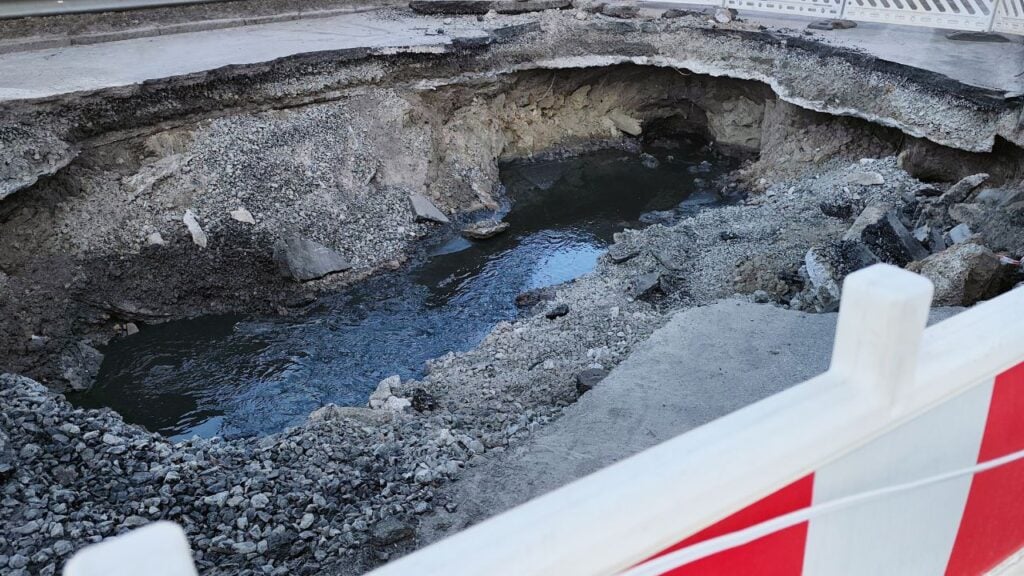
Florida property insurers paid out $1.4 billion in sinkhole claims in a single five-year stretch, and almost none of those claims started with a hole anyone could see.
These are the early sinkhole signs Floridians mistake for something harmless.
9 Early Sinkhole Signs Florida Homeowners Mistake for Something Harmless
9 Strange Florida Laws About What Residents Can Throw in the Trash

Florida doesn't care how you fold your bedsheets, but it has plenty to say about how you wrap your mattress once you want to get rid of it.
Skip the plastic bag and the tape on trash day, and Miami-Dade County can fine a resident $100 for setting a bare mattress at the curb.
9 Strange Florida Laws About What Residents Can Throw in the Trash
