
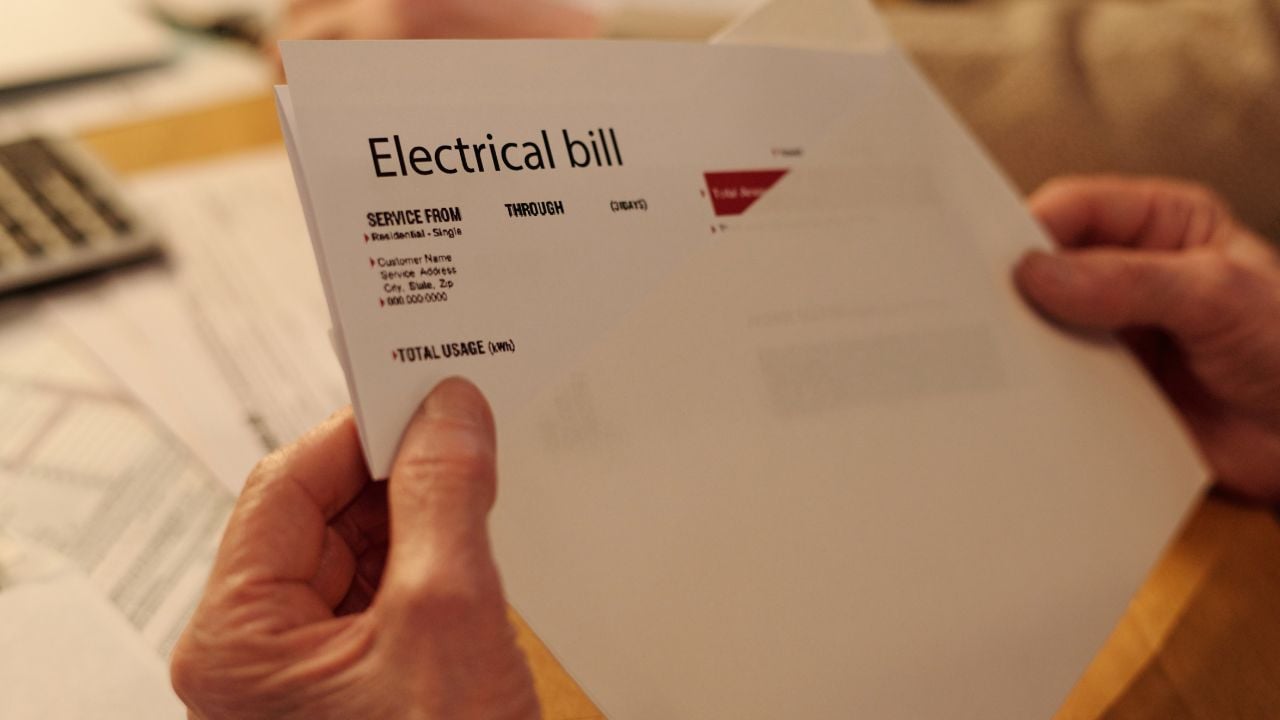
8 Charges Hiding in Florida Electricity Bills That Aren’t for the Power You Used

Florida Power & Light overcharged its customers for 2024’s hurricane damage, and the Florida Public Service Commission ordered an $80 million refund in July because of it.
That storm charge is only one line on a Florida electric bill that has nothing to do with the power delivered to you.
FPL, Duke Energy Florida, and Tampa Electric each answer to the same state commission on these charges every year.
The numbers hold up fine more often than not.
Even so, these are the Florida electricity bill charges worth knowing by name since they’re charges that aren’t about the power you use.
Note: This is general information, not financial advice. Utility rates, surcharges and cost-recovery clauses are subject to change, so confirm the current charges on your bill with the Florida Public Service Commission.
1. Storm Protection Plan Charge
Florida Power & Light (FPL) adds a Storm Protection Plan Cost Recovery Clause to every residential bill, $9.95 of a typical $136.64 bill for 1,000 kilowatt-hours in January 2026.
That money doesn’t buy electricity.
It pays for pole replacement, buried power lines and automated switches that reroute electricity around trouble spots, the hardware behind a state-approved, decade-long Storm Protection Plan.
No hurricane has to make landfall for the charge to show up.
Duke Energy Florida and Tampa Electric run nearly identical clauses under their own rate plans, all approved by the same Florida Public Service Commission that oversees every investor-owned utility in the state.
2. Storm Restoration Surcharge
Florida electricity bills can also carry a temporary storm restoration surcharge, and it works nothing like the Storm Protection Plan Charge.
This one only shows up after a hurricane season leaves damage behind.
It disappears once the utility collects what it’s owed.
Duke Energy Florida billed a $1.1 billion storm cost recovery charge for hurricanes Debby, Helene and Milton, and pulled it from bills a month early, in February 2026.
Tampa Electric ran a similar charge for the same three storms, then dropped it from the August 2026 statement, also ahead of schedule.
Florida Power & Light overcollected on its own 2024 hurricane storm charge, and regulators ordered an $80 million refund in July.
Customers got it back.
Florida’s Two “Storm” Charges Aren’t the Same
Florida Power & Light, Duke Energy Florida and Tampa Electric each run two separate storm-related charges that sound like one.
The Storm Protection Plan Charge is permanent.
It funds ongoing grid-hardening work, buried lines and stronger poles, whether or not a storm ever forms that year.
A storm restoration surcharge is temporary.
It only appears after a hurricane season.
It disappears the moment the utility finishes collecting what that season cost.
3. Franchise Fee
FPL’s franchise fee goes straight to the city or county where a customer lives.
That money never touches the cost of electricity at all.
It’s what a city charges for the right to have poles and wires running down its public streets.
State law lets a city or county sign a franchise agreement handing a utility the exclusive right to serve that area and use its rights-of-way.
The utility passes that cost straight to customers on the city’s bills.
Cities that impose it charge an average of about 6% of the bill, and one Miami-Dade customer’s franchise line ran between $10 and $18 a month depending on usage.
Two customers on the same FPL rate plan, one inside a franchise city and one outside it, pay different totals for identical electricity.
Same power.
Different bill.
4. Gross Receipts Tax
Florida taxes electricity, and that tax shows up as its own line on an FPL bill labeled gross receipts tax.
Florida Statute 203.01 sets the rate on electrical power at 2.6% of a utility’s revenue, and FPL bundles a small Public Service Commission regulatory assessment fee onto that same line.
Together, they’re worth $3.54 on a typical 1,000-kilowatt-hour bill in January 2026.
One dollar funds the state, and the other funds the commission that reviews FPL’s own rate requests.
5. Capacity Cost Recovery Charge
FPL’s Capacity Cost Recovery Charge runs $0.52 on a typical 1,000-kilowatt-hour bill in January 2026.
It’s a standby charge.
The clause recovers what FPL pays other companies to keep extra generating plants standing by in reserve, ready but idle, plus certain nuclear-related costs, so the grid has backup on hand for when demand spikes.
A hot August afternoon can push many Floridians to run air conditioning at once.
This line covers that backup, whether FPL uses it or not.
Psst! How much do you know about Florida’s power companies? Take our quiz and see how many you get right.
Quiz
Florida Power Grid IQ
Answer these questions on Florida’s power companies and their history. We bet you can’t get them all right. Prove us wrong?
FPL was created in December 1925 to replace which struggling Miami Beach utility?
6. Environmental Cost Recovery Charge
Florida Power & Light also separates out an Environmental Cost Recovery Charge, $3.45 on a typical 1,000-kilowatt-hour bill, for equipment that has nothing to do with generating the power sold.
That covers scrubbers and filters.
The charge recovers what it costs FPL to meet state and federal environmental laws and regulations, the pollution-control side of running a power plant rather than the fuel-and-turbine side.
Every Florida investor-owned utility files its own version of this clause with the Florida Public Service Commission annually.
7. Energy Conservation Charge
FPL charges customers to help convince other customers to use less electricity, and it calls that line the Energy Conservation Cost Recovery Charge.
That's $1.48 on a typical 1,000-kilowatt-hour bill in January 2026.
The money funds rebates and programs meant to reduce demand and consumption, the opposite of paying for power a customer already used.
Ironic, but true.
8. Base Charge
FPL bills every account a Base Charge before anyone counts a single kilowatt-hour, $10.52 a month as of January 2026.
It doesn't matter how much power a customer used.
The fee covers the meter, the billing system and the customer-service line, a flat cost of simply having an account, whether that account used zero kilowatt-hours or ten thousand.
A vacant vacation condo in Naples racks up the same $10.52 every month the lights stay off.
Nobody's home.
The bill still comes.
A customer who uses zero kilowatt-hours in a slow month still owes the Base Charge in full, the one line on a Florida electric bill that never drops to zero.
Cancel the account and that flat fee is the one line that follows the customer to the final bill, prorated down to the day service stops.
9 Things Florida Homeowners Get Wrong About Amendment 3 as We Head Towards November

A property tax amendment borrows its name from a law Florida homeowners already have, and that's only the start of the confusion.
Many homeowners are reading a $250,000 headline number and doing math the fine print doesn't support.
9 Things Florida Homeowners Get Wrong About Amendment 3 as We Head Towards November
7 Reasons People Are Leaving Florida in 2026
Florida gained thousands fewer new residents last year than it did two years earlier, and the households already there are running the numbers on property taxes, condo bills and monthly utility charges.
A rising electric bill is only one line in a much bigger spreadsheet some Florida households are now doing by hand.
