
8 Expiration Date Myths That Cost Ohio Families Money Every Month

The expiration date on your carton of eggs isn’t as much of a ticking clock as you might think.
The U.S. Department of Agriculture (USDA) says eggs stay safe in the refrigerator for three to five weeks after you bring them home, carton date or not.
Weeks, not days.
These are the expiration date myths that cost Ohioans and Americans across the country money every month.
1. A Federal Expiration Date Every Package Needs
One product, and only one, carries a date the federal government requires.
That product is infant formula.
The Food Safety and Inspection Service (FSIS), the food-safety arm of the U.S. Department of Agriculture (USDA), confirms infant formula is the only item carrying a federally mandated date.
Every other date stamped on an Ohio shelf, from a soup can to a cereal box, exists because the company that made it chose to print one.
No law forced it.
Why pay to replace something over a rule Ohio never wrote?
2. The Law on Pulling Expired Food
Ohio’s own food code doesn’t force a store to pull everything the moment a date hits.
The Ohio Department of Agriculture sets a true can’t-sell-it-past deadline for exactly three products: Over-the-counter drugs, baby food, and infant formula.
Just those three.
A bag of chips or a box of crackers falls under a far looser rule instead.
Treat the shelf itself as proof of freshness, and a shopper can grab something already sliding past its peak.
The replacement bought a few days later is money nobody needed to spend.
The Rule Behind Every Other Ohio Date
Ohio still requires a date on packaged perishable food, just a less strict one.
State rules call it a sale date, and it only has to mark when a product is expected to peak in quality within 30 days.
That’s a quality guess, not a safety cutoff.
Fresh produce, unpackaged meat, and any business bringing in under $100,000 a year skip the requirement completely.
3. Assuming the Sell-By Date Is a Deadline
The Sell-By stamp exists for the store, not the shopper.
FSIS built that phrase for the stockroom, a cue that tells employees how long to keep an item on the shelf before they rotate it or mark it down.
It’s inventory math.
Nobody wrote a Sell-By date to warn an Ohio kitchen that a product had turned unsafe.
Confuse the two, and you end up throwing away food a store would have kept selling for days.
4. Eggs Gone Bad by Carton Date
Eggs carry one of the more generous windows in the whole grocery aisle.
FSIS says eggs stay safe in the refrigerator for three to five weeks after purchase, regardless of the date stamped on the carton.
That carton date is capped too, and federal rules split it into two different kinds.
An expiration or sell-by date can’t run past 30 days from the day the eggs were packed.
A use-by or best-before quality date can stretch to 45 days.
Both numbers land inside the three-to-five-week safety window FSIS already gives eggs, so the carton date is a conservative guess, not a deadline.
Still perfectly good.
Crack an egg open a week past the stamp, and it’s likely completely normal.
Toss that carton anyway.
The new dozen bought to replace it sits beside eggs that were never bad to begin with.
Psst! How much do you know about expiration dates? Flip these cards and see how many you get right.
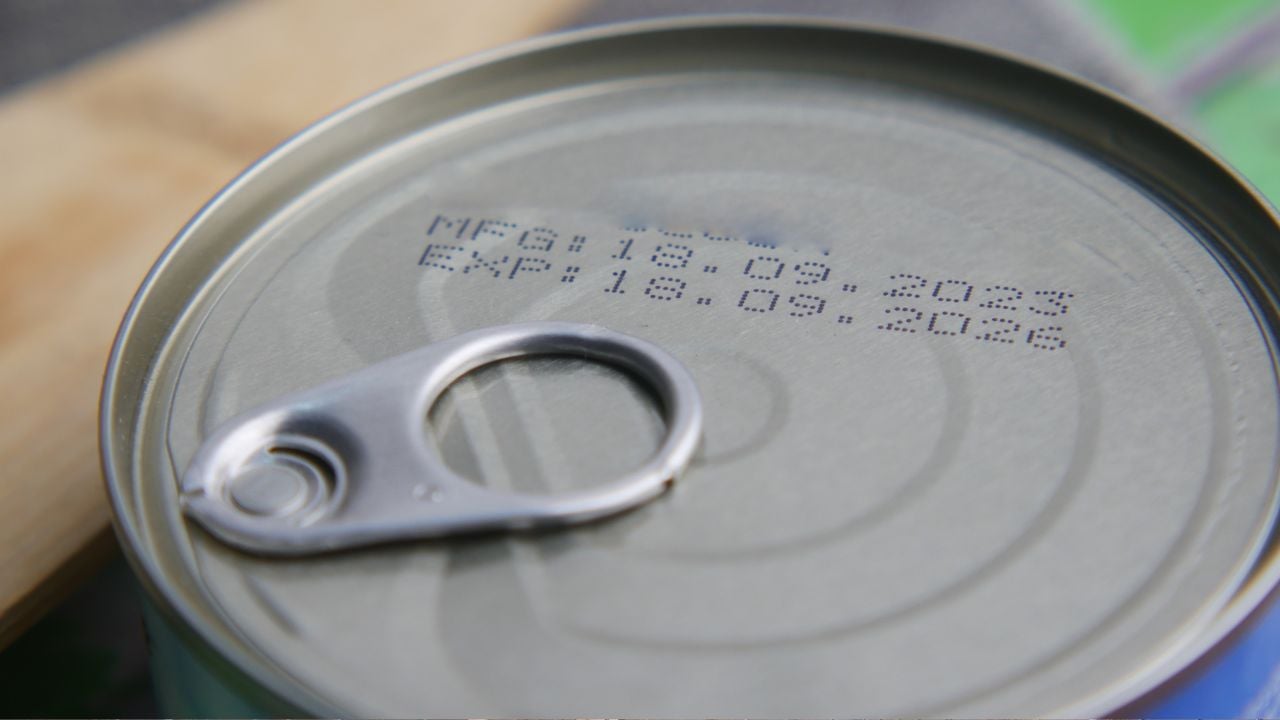
5. Canned Goods’ Unsafe Date
Canned goods are built to outlast their own labels by a wide margin.
A University of Georgia food safety specialist says high-acid canned foods like tomatoes hold their quality for 12 to 18 months, while low-acid canned foods like beans and corn can last up to five years.
Safety comes down to the can itself, not the calendar.
Rust, dents, and swelling decide it, not the date.
Nothing else counts.
A can with none of those three problems is almost always still good, printed date or not.
Pitching a solid can over a stamp means paying full price to replace food that was never bad.
6. Milk Down the Drain on the Dot
Shoppers pour out milk faster than almost anything else in the fridge, and the date is usually to blame.
An Ohio State University study found half of shoppers said they’d throw milk out based on the date alone, some within days of the printed number, no matter what word appeared above it.
The same University of Georgia food safety specialist puts numbers on that instinct.
Pasteurized milk lasts three to seven days beyond its Sell-By date when it’s kept at or below 40 degrees.
Trust your nose first.
A household that buys milk every week and repeats that mistake ends up paying for milk it never had to replace.
7. Frozen Food’s Unsafe Date
Frozen food doesn’t run on a safety clock at all.
The USDA says food kept frozen stays safe to eat indefinitely, and a printed date only tracks when its taste and texture start to slide.
Freezer burn looks alarming.
It’s dried-out spots from air reaching the food, a quality problem you can trim away, not a safety one.
Clear out a freezer over a date like that, and you’re paying for the same groceries twice.
8. Pantry Staples Done at Their Date
Pantry staples are some of the most durable items an Ohio kitchen owns.
The USDA says packaged foods like cereal, pasta, and cookies stay safe well past their Best-By date, even though they can eventually turn stale or pick up an off flavor.
Stale isn’t unsafe.
The same USDA guidance adds that most shelf-stable food is safe indefinitely.
Why pad a grocery bill replacing rice or pasta that only turned a little stale?
A half-empty bag of rice sitting three months past its Best-By date is still exactly what it was the day it came home.
Passing that printed date changes nothing about what’s inside the bag.
9 Perks That Make Aldi Pleasant for Ohioans Over 60

A cashier in Canton scans a cereal box from the wrong side without slowing down, and that quick scan is only part of what makes the store work for a fixed budget.
Behind that fast checkout sit a handful of perks that add up for anyone watching every dollar.
9 Perks That Make Aldi Pleasant for Ohioans Over 60
8 Ohio Property Tax Appeals That Homeowners Win Every Year

Think the number on your Ohio property value notice is final?
It doesn’t always have to be, and homeowners who show up to their county Board of Revision with the right paperwork walk out with a lower bill more often than people assume.
