
8 Ferry Mistakes That Add Hours to a Coastal Drive in North Carolina

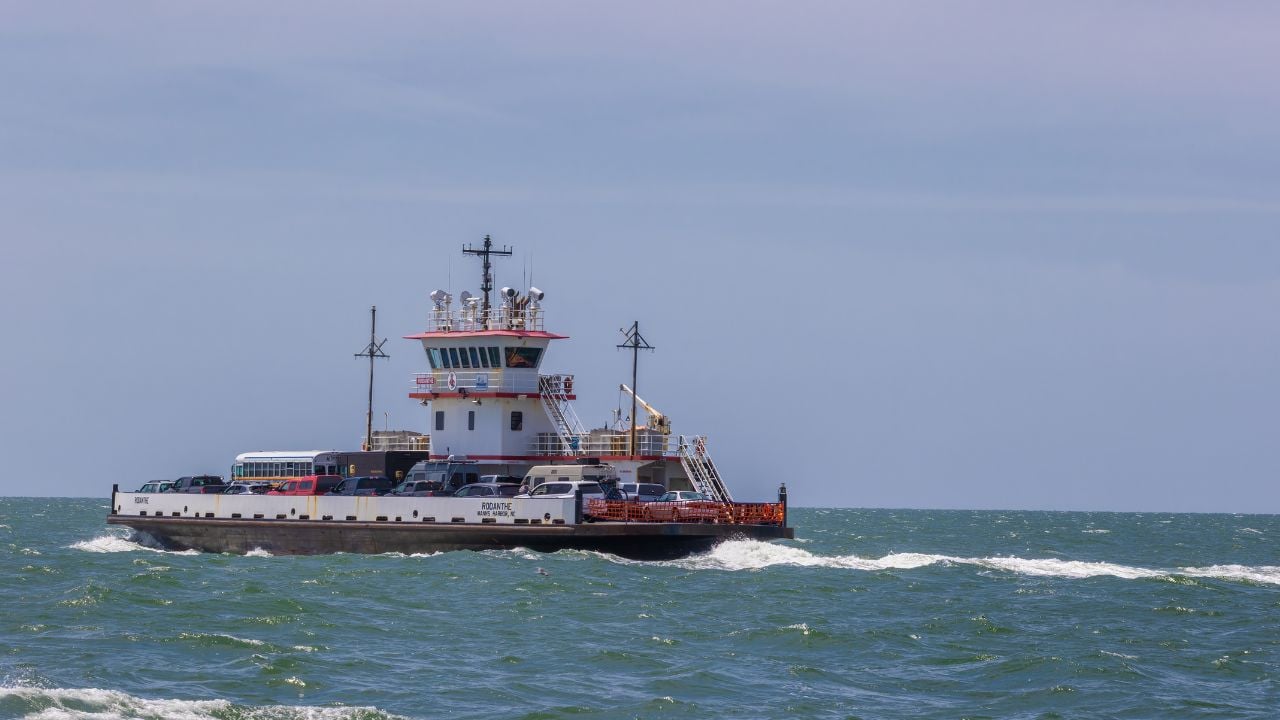
North Carolina runs the second-largest state-run ferry system in the country, carrying about 1.8 million passengers a year.
Four of its seven routes don’t cost a dime.
NCDOT moves cars across coastal sounds and rivers many road-trippers have never heard of, and the system’s paperwork is stricter than many expect.
These are the North Carolina ferry mistakes that add hours to a coastal drive without warning.
Note: This is general travel information, not legal or financial advice. North Carolina ferry tolls, reservation rules, and schedules are subject to change, so confirm current details with the NCDOT Ferry Division.
1. Skipping the Reservation
North Carolina’s longest ferry crossings both cross Pamlico Sound, but Cedar Island-Ocracoke and Swan Quarter-Ocracoke don’t run the same length.
Cedar Island-Ocracoke takes about 2 hours and 15 minutes each way, and Swan Quarter-Ocracoke runs closer to 2 hours and 40 minutes, per NCDOT’s own schedule.
The North Carolina Department of Transportation (NCDOT) recommends a reservation on both routes, especially in summer.
Skip it, and you’re betting on standby space that isn’t guaranteed.
That’s the gamble.
Spots do open up on many sailings.
Weekends are the exception, when the standby line grows past what a single boat can hold.
Miss the boat, and the next sailing is hours away, not minutes.
2. Missing the 30-Minute Window
North Carolina’s ferry reservation system releases a booked spot if the vehicle isn’t at the dock at least 30 minutes before departure.
There’s no warning call and no text.
No exceptions apply.
The spot simply opens back up for someone else in line.
Stop for lunch on the way to Cedar Island and cut it close, and you can watch NCDOT hand your reservation to another car.
You’re back in the standby line then, on a route that only sails three or four times a day.
The next realistic sailing can be three hours away, longer if you missed the day’s last boat.
3. Assuming Hatteras Takes Bookings
The Hatteras-Ocracoke ferry works nothing like its two Pamlico Sound neighbors.
It’s free, and NCDOT accepts no reservations on it at all.
No booking, no exceptions.
Assume you can book a slot the way you would on Cedar Island or Swan Quarter, and you’ll arrive with no backup plan.
That mistake stings hardest on a summer weekend, when the line for the next open sailing can run well past an hour.
Five of North Carolina’s seven regular ferry routes skip reservations entirely and run first-come, first-served.
Hatteras-Ocracoke is one of the free routes that works this way, and Southport-Fort Fisher does too, even though it charges a toll.
4. Wandering From the Line
North Carolina’s Hatteras-Ocracoke ferry boards strictly in the order cars arrive, first-come, first-served, with no ticket to guarantee your place in line.
A state rule requires every vehicle to remain in the staging area once it’s in line and until boarding begins, so nobody holds a spot for a car that wanders off.
That’s the whole rule.
Step away for the restroom or a snack at the wrong moment, and you risk losing that spot to the next car.
That risk peaks on Hatteras-Ocracoke’s busiest days, when the standby line already runs well past an hour just to reach the ramp.
Lose your spot then, and you’re not just waiting on the next boat.
You’re back at the end of a line that’s already running long.
That can mean two or three more sailings before you’re aboard, a wait that adds up to hours, not minutes.
5. Booking Too Close to Departure
North Carolina opens Cedar Island-Ocracoke and Swan Quarter-Ocracoke ferry reservations up to 90 days ahead of departure.
Many travelers don’t book that early.
Plan a coastal weekend a week or two out, and you can find every Saturday sailing already claimed.
What’s left is standby.
On a summer Saturday, you could spend your whole day standing in that line.
Miss the morning sailing, and you’re hoping for a seat on the early afternoon boat, then the late-afternoon boat after that.
Neither a hotel checkout nor a wedding down the coast waits on a ferry line that long.
6. Trusting the Summer Schedule
North Carolina cuts back three of its ferry routes within about a week of Labor Day, every fall.
Cedar Island-Ocracoke, Swan Quarter-Ocracoke, and Southport-Fort Fisher all move to an off-season schedule, and the seasonal Ocracoke Express passenger ferry stops running for the year around the same week.
On Cedar Island-Ocracoke, that means four daily departures drop to three.
The last two sailings of the day end up six hours apart.
Six hours, not sixty minutes.
Miss the early boat after that, and you’re not looking at a short wait.
You’re looking at whatever’s left of the afternoon, or the next morning.
The date shifts by a few days each fall, never landing on the same weekend twice.
Go off a schedule printed back in July, and you can show up to find half the day’s sailings already gone.
Check NCDOT’s current schedule the same week you travel.
A printout from months earlier isn’t worth trusting.
7. Skipping the Alert Sign-Up
North Carolina’s ferry system runs a free notification program that sends text or email alerts whenever weather, tides, or a mechanical issue changes a sailing.
Skip the sign-up, and you won’t know a route changed until you’re standing at the dock.
Nobody warns you first.
Wind and shifting sand at the inlets can force a change with barely any notice.
On a route running just three or four sailings a day, a canceled boat doesn’t cost you a few minutes.
It costs you the wait for whatever sails next, sometimes hours later.
Signing up takes a minute on NCDOT’s website.
Skipping it means finding out at the ramp, with nowhere else to go.
8. Booking a Big Rig Wrong
North Carolina’s ferry reservation system works for a typical car, truck, or travel trailer, but not for everything on the road.
NCDOT requires tractor trailers and dump trucks to call a separate reservations line instead of booking online, and it won’t honor a website reservation for a high-tonnage vehicle.
A trucker who books a big rig through the normal website walks away thinking the spot is confirmed.
It isn’t.
Sorting that out at the dock, instead of by phone days earlier, can cost an entire sailing while the crew works out where the vehicle fits.
Psst! How much do you know about North Carolina’s ferries? Take our quiz and see how many you can get right.
Quiz
North Carolina Ferry IQ
Answer these questions on North Carolina’s ferry history and quirks. We bet you can’t get them all right. Prove us wrong?
In 1754, what left North Carolina’s colonial governor stuck in Edenton for a whole day?
Free Ferries, Not Much Longer
North Carolina's free ferries won't stay free on every route much longer.
A 2026 state budget law directs NCDOT to add new tolls to four routes that don't charge a toll today: Currituck-Knotts Island, Hatteras-Ocracoke, Bayview-Aurora, and Cherry Branch-Minnesott Beach.
NCDOT holds its final public listening session on the change today, Sept. 9, on Ocracoke.
NCDOT's $150 annual pass will cover coastal-county residents and active-duty military once tolls start.
Everyone else pays per trip.
North Carolina's Ferry Toll Map, Right Now
North Carolina charges a toll today on three of its seven regular vehicle ferry routes: Cedar Island-Ocracoke, Swan Quarter-Ocracoke, and Southport-Fort Fisher.
The seasonal Ocracoke Express passenger boat charges a toll too, whenever it's running.
Hatteras-Ocracoke, Currituck-Knotts Island, Bayview-Aurora, and Cherry Branch-Minnesott Beach stay free until the new tolls arrive.
That's Jan. 1, 2027, so nothing about this fall's trip changes yet.
Second-Biggest Ferry Fleet in the Country
North Carolina runs the second-largest state-run ferry system in the country.
That's rare for a state.
More than 20 boats cross seven regular routes over two sounds and three rivers, moving about 800,000 vehicles and 1.8 million passengers a year.
That's the Currituck and Pamlico sounds, plus the Cape Fear, Neuse, and Pamlico rivers.
Much of that traffic never touches a toll booth, and for now, a ferry crossing is still just another stretch of the coastal drive.
A 2020 economic-impact analysis for NCDOT put the ferry system's total output at $735.2 million a year, with more than 5,800 jobs tied to it in some way.
More than half of those jobs are direct, held by the deckhands, ticket agents, and mechanics who keep more than 20 boats running across the system's seven routes.
8 North Carolina Barbecue Rules Outsiders Break at Every Cookout

More than 100,000 people crowd Lexington every October for one plate of barbecue.
Many out-of-staters manage to order it wrong before they even sit down.
8 North Carolina Barbecue Rules Outsiders Break at Every Cookout
9 Things North Carolina Home Inspectors Notice That Buyers Never Do

A buyer in Cary spends an hour touring a four-bedroom colonial, flipping every light switch and running the garbage disposal.
Her home inspector spends three hours on the same house and never touches a light switch or the garbage disposal.
9 Things North Carolina Home Inspectors Notice That Buyers Never Do
