
8 Low-Maintenance Plants That Thrive in Florida’s Brutal Summer Heat

The plants that make it through a Florida July are the plants you stop fussing over.
Overwater them in this kind of heat, and you rot the roots faster than the sun ever could.
The tough survivors need a good start, then almost nothing.
These are the low-maintenance plants built to handle a Florida summer.
1. Bougainvillea
Bougainvillea puts on its best show in the hottest, driest stretch of the year.
The color you see isn’t petals at all, but bright modified leaves called bracts, in magenta, red, orange, white, and gold.
Here’s the part that trips up newcomers: The more you baby it, the fewer flowers you get.
Less water, more color.
It flowers best when the soil stays on the dry side, which makes it a natural along a sunny fence or draped over an A1A carport.
Most varieties carry sharp thorns, so keep heavy gloves handy at pruning time.
2. Firebush
Firebush thrives in the worst heat of a Florida summer.
This native shrub runs on heat, throwing out clusters of red-orange tubular flowers from late spring until the first frost.
They’re practically bulletproof.
Once the roots take hold, it handles heat, drought, and muggy afternoons without a bit of help from you.
Those red flowers attract hummingbirds and the zebra longwing (Florida’s state butterfly). Songbirds also enjoy picking at the small dark berries that follow.
Give it a sunny spot and room to reach five to eight feet, and it fills in fast.
In the Panhandle, it dies back after a hard freeze, then returns from the roots come spring.
3. Coontie
Coontie is the toughest plant on this list, and one of the oldest kinds of plant on earth.
It looks like a low, stiff fern, but it’s a cycad, the only kind native to the United States.
It grows in blazing sun or deep shade, holds up to drought and coastal salt, and needs almost nothing once it settles in.
Staying one to three feet tall, it works as evergreen filler where a fussier plant would fry.
Coontie also comes with a real piece of Florida history.
The atala butterfly lays its eggs only on coontie, and for decades the butterfly was believed extinct in the state after the plant was dug up and ground into starch.
As coontie went back into yards, the atala came back with it.
4. Blanket Flower
Blanket flower fills the hot, bare spots where nothing else will bloom.
It shrugs off heat, full sun, thin sandy soil, and even salt, which is why you find it thriving on beach dunes.
Sandy soil suits it fine.
The daisy-shaped flowers come in red, orange, and yellow, and they keep coming all summer and into fall.
Best of all, it reseeds itself, so a small patch you plant this year shows up on its own the next spring.
At one to two feet tall, blanket flower fills a hot roadside strip or a container that bakes on your patio all afternoon.
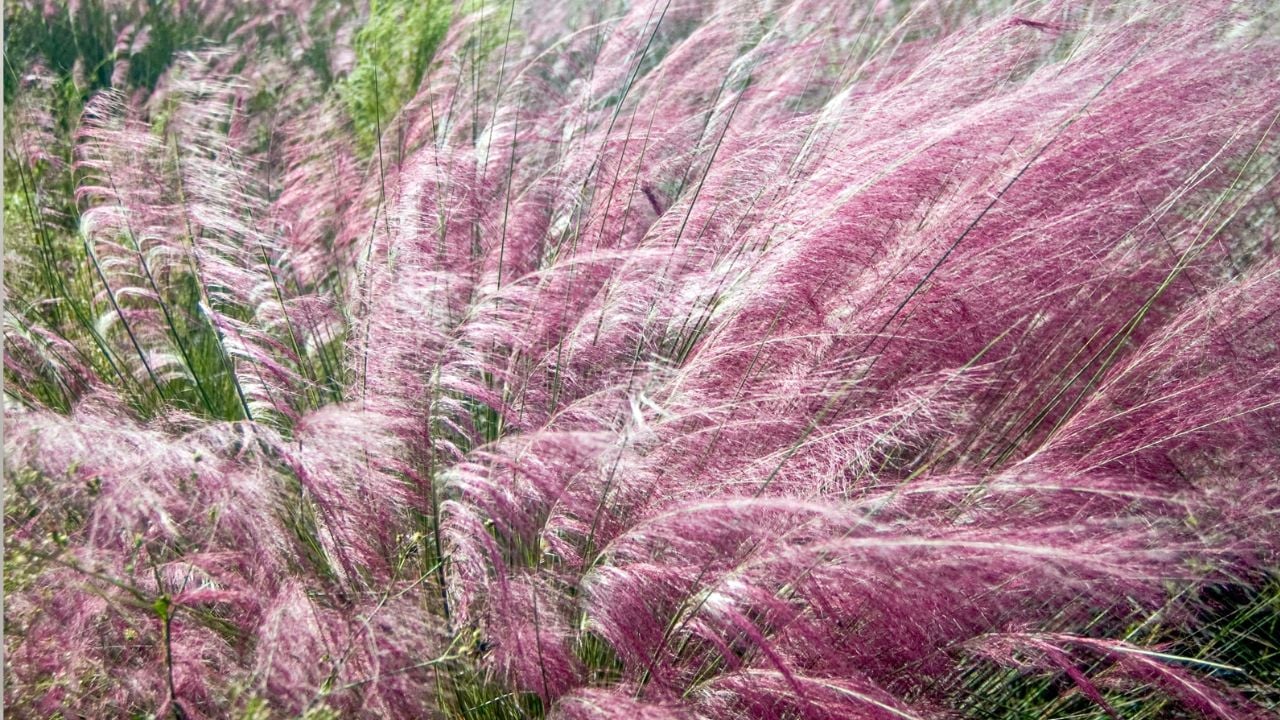
5. Muhly Grass
Muhly grass looks like a plain green clump most of the year, then puts on its show all at once.
Come fall, it sends up a haze of fluffy pink-to-purple plumes that catch the low light.
Then it turns pink.
You have driven past clouds of it turning color along the interstate every October, since this native grass grows wild in the pine flatwoods.
The clumps reach two to three feet, with the flower stalks pushing up toward five, and they take heat, drought, and sandy ground in stride.
Muhly grass needs just one thing each year, a hard cut near the ground in late winter to send up fresh growth.
6. Beautyberry
Beautyberry grows wild in Florida hammocks, a sign of how little it needs from a homeowner.
This native shrub arches out three to eight feet across and thrives right through the summer heat once it’s established.
The payoff arrives by September, when tight clusters of shiny purple berries wrap the length of every stem.
The cardinals find them first.
Mockingbirds and small mammals work the branches too, and any berries they miss dry to black and hang on after the leaves drop.
It fruits heaviest in full sun but still produces in filtered shade, so a spot under tall pines works fine.
Skip beautyberry right on the dunes, since it carries no real salt tolerance.
7. Plumbago
Plumbago brings the one color a Florida summer tends to wash out: Cool sky blue.
The phlox-shaped clusters open across a sprawling mound that runs six to ten feet wide when it stretches out.
It rarely stops blooming.
Through central and south Florida, it flowers nearly year-round unless a frost cuts it back, and the blooms bring in butterflies all season.
It came from South Africa, but the state’s gardening experts rate it a well-behaved, Florida-Friendly pick, not a plant that escapes into wild areas.
Plant it in full sun for the heaviest bloom, and shear off any wild growth that runs past the space you gave it.
8. Coreopsis
Coreopsis is the cheerful yellow daisy Florida liked enough to make official.
It has been the state’s state wildflower since 1991, picked partly because road crews had leaned on it so heavily for highway plantings.
Several kinds grow native across the state, most of them daisy-like, with yellow petals ringing a darker center.
They bloom spring into summer, standing one to three feet tall, and once established they take drought and heat without complaint.
It thrives on neglect.
Sow a patch from a seed packet one spring, and it drops its own seed for next year, so the color returns for years with no bill and no effort.
Those bright ribbons of yellow along the interstate every April are the same tough wildflower, doing it all with no help at all.
Psst! Not sure which of these eight plants is best for you? Sort the table by sun, size, or bloom, or type what you need to find your match.
9 Dangerous Plants Growing in Florida Yards Right Now
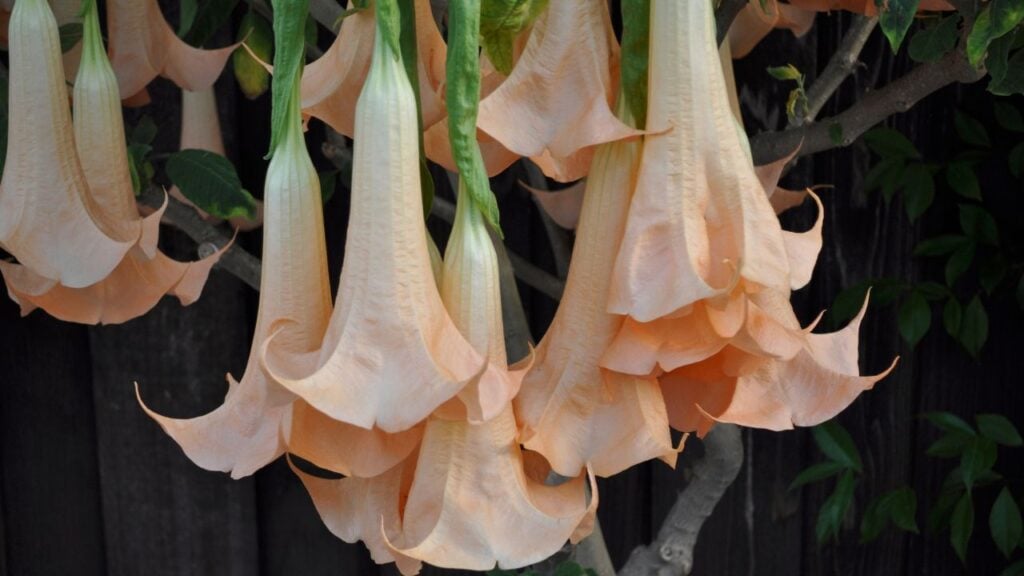
A puppy noses through the mulch and comes up with a mouthful of bright orange seeds.
The plant behind that scare sits in flower beds at half the houses on the block, and most people have no idea.
9 Dangerous Plants Growing in Florida Yards Right Now
9 Florida Creatures That Terrify Northerners but Locals Shrug Off
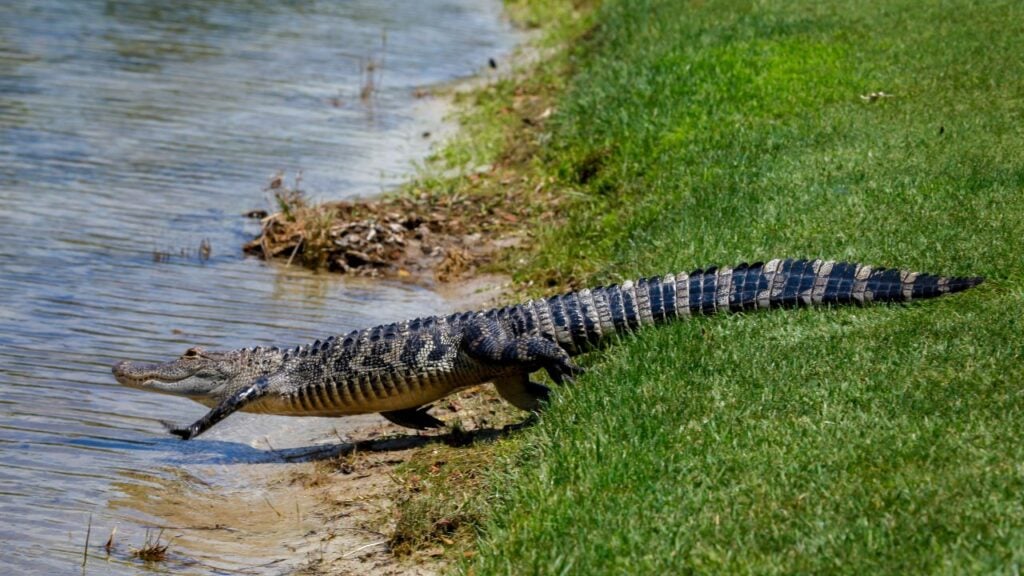
Every newcomer has a first-week story that involves a scream, a broom, and a laughing neighbor.
What reads as an emergency to somebody fresh off I-95 is just another Tuesday closer to the coast.
9 Florida Creatures That Terrify Northerners but Locals Shrug Off
