
9 Dangerous Plants Growing in Florida Yards Right Now

A puppy noses through the mulch and finds a cluster of bright orange seeds.
An hour later, the vet is saying the words “liver failure.”
That afternoon repeats across Florida every summer, and the culprit sits in flower beds at half the houses on the block.
These are the dangerous plants growing in Florida yards right now.
Note: This is general information, not medical advice. If a person or a pet swallows part of a plant or reacts to one, call a doctor, a vet, or Poison Control.
Sago Palm
The sago palm sits in flower beds from Naples to Jacksonville, and it looks about as threatening as a fern.
It isn’t a palm at all.
This is a cycad, one of the oldest plant groups on earth, and every part of it is poisonous.
The orange seeds are the worst of it.
A dog that chews even one or two can end up in liver failure.
Vomiting and weakness show up within hours, sometimes faster.
Florida vets see these cases all summer, usually after a puppy digs the seeds out of the mulch.
If you keep a sago and a curious pet, the seeds are the part to fence off.
Oleander
Oleander lines Florida highways and backyard fences with pink and white blooms all summer.
It’s also one of the most poisonous shrubs a homeowner can grow.
Every part can affect the heart, from the flowers down to the roots.
The milky sap alone can irritate your skin.
Burning the clippings makes it worse because the smoke carries the toxin too.
Never toss oleander branches on a bonfire, and never let anyone use a stem to roast a hot dog.
A few leaves are enough to sicken a small child or a dog.
Angel’s Trumpet
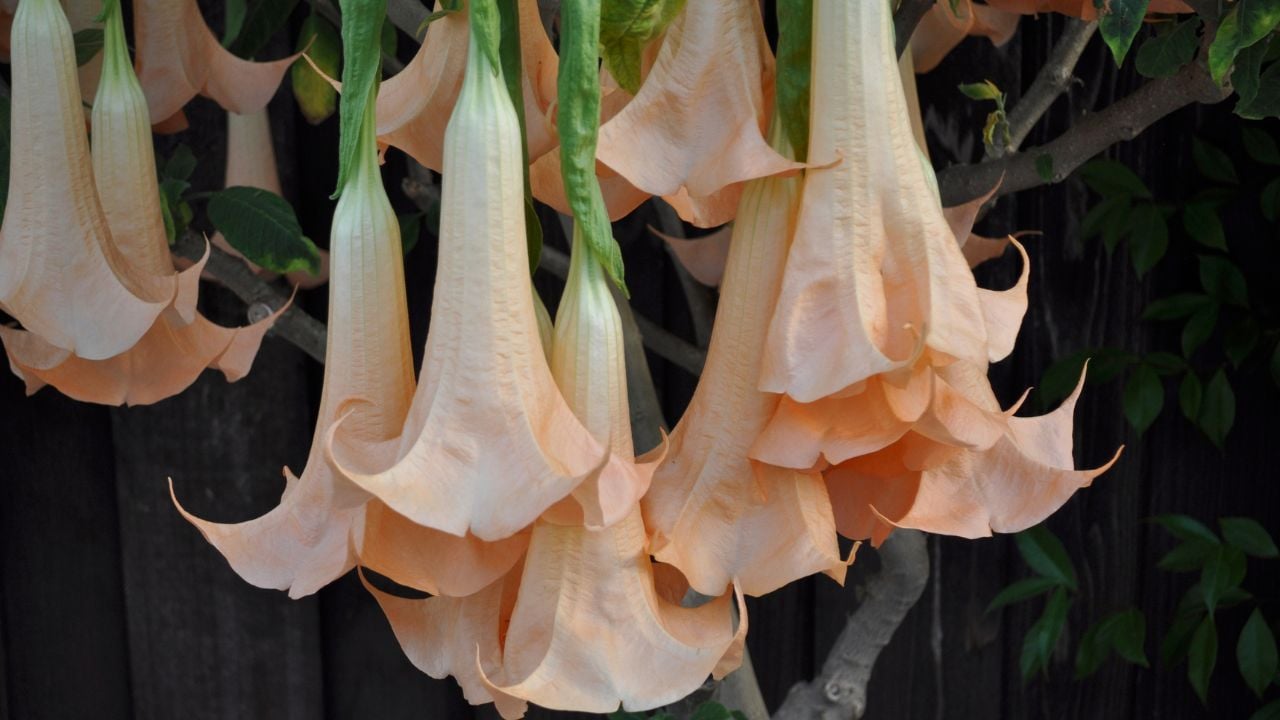
Angel’s trumpet hangs its foot-long flowers over fences in warm Florida gardens.
The blooms smell sweetest after dark.
Behind that perfume, every part of the plant is toxic.
It carries the same family of compounds as jimsonweed, and they scramble the nervous system.
Swallowing any part can bring on blurred vision, a pounding heart, confusion, and hallucinations.
Florida poison centers hear about it every year after teenagers try to brew the flowers into tea.
Keep it well out of reach, and wash your hands after you prune it.
Rosary Pea
Rosary pea climbs fences and citrus trees across central and south Florida.
You’ll spot it by the seeds: glossy red with a single black dot, pretty enough that people string them into jewelry.
Those seeds hold abrin, a poison even stronger than ricin.
One seed, chewed and swallowed, can kill an adult.
An intact seed usually passes through because the hard coat locks the toxin inside.
A cracked or chewed seed is where the danger starts.
Florida lists the vine as invasive, so pulling it while it’s small does double duty.
Castor Bean
Castor bean shoots up fast in Florida heat, sometimes to ten feet in a single season.
Gardeners plant it for the bold, reddish leaves and the tropical look.
The mottled seeds hold ricin.
That’s the same poison that has turned up in threat letters mailed to U.S. presidents.
Chewing just a few seeds can be fatal to a child.
The castor oil pressed from those same seeds is harmless because the processing strips the toxin out.
When castor bean sprouts on its own in your yard, snap the seed pods off before they open.
Psst! How much do you know about Florida’s plants and trees? Take our quiz and see if you can score 100%.
Quiz
Florida Plant IQ
Answer these questions on Florida’s wild and backyard plants. We bet you can’t get them all right. Prove us wrong?
Which tree, common along South Florida’s coast, is often called the most dangerous in the world?
Lantana
Lantana fills Florida butterfly gardens with tight clusters of orange, pink, and yellow.
Butterflies can't get enough of it.
The green, unripe berries are toxic to people and pets.
They darken to purple as they ripen, and even then they're risky for a child who grabs a handful.
Animals that graze the leaves can suffer liver damage and a painful sensitivity to sunlight.
The plant is nearly unkillable in Florida heat, so it spreads on its own into a sprawling shrub.
Enjoy the blooms, and watch toddlers around the berries.
Golden Dewdrop
Golden dewdrop drapes Florida yards with lavender flowers and long strings of golden berries.
The fruit looks like a cluster of tiny crabapples.
Both the leaves and the berries are poisonous.
Children have landed in the hospital after eating the berries, and dogs get sick from them too.
The shrub grows fast into a hedge, and the berries drop right where pets can reach.
Florida's toxic-plant lists include it for the fruit alone.
Coontie
Coontie is Florida's own native cycad, planted for a tidy, drought-proof green mound.
It's the only host plant for the rare atala butterfly, which nearly disappeared from the state last century.
That's the good news.
The seeds and roots hold cycasin, a toxin that damages the liver.
Seminole and early settler cooks once ground the roots into a starch, but only after long soaking and drying pulled the poison out.
Raw, the plant can sicken a child or a dog in a hurry.
Grow it for the butterflies, and skip the taste test.
Daylily
Daylilies edge Florida walkways and mailboxes with cheerful orange and yellow blooms.
For people and dogs, they're barely a worry.
But for a cat, a daylily is one of the most dangerous plants in the whole yard.
A cat that nibbles a leaf or licks the pollen off its fur can slide into kidney failure within days.
Even the water in a vase of cut daylilies can poison a cat.
There's no kitchen remedy for it, so a vet visit can't wait.
If you keep cats, moving the daylilies to a bed they can't reach beats hoping they'll ignore the blooms.
A single chewed leaf can land a cat at the emergency vet, and Florida gardens stay full of daylilies all summer long.
8 Signs a Florida Storm Is About to Wreck Your Afternoon Plans
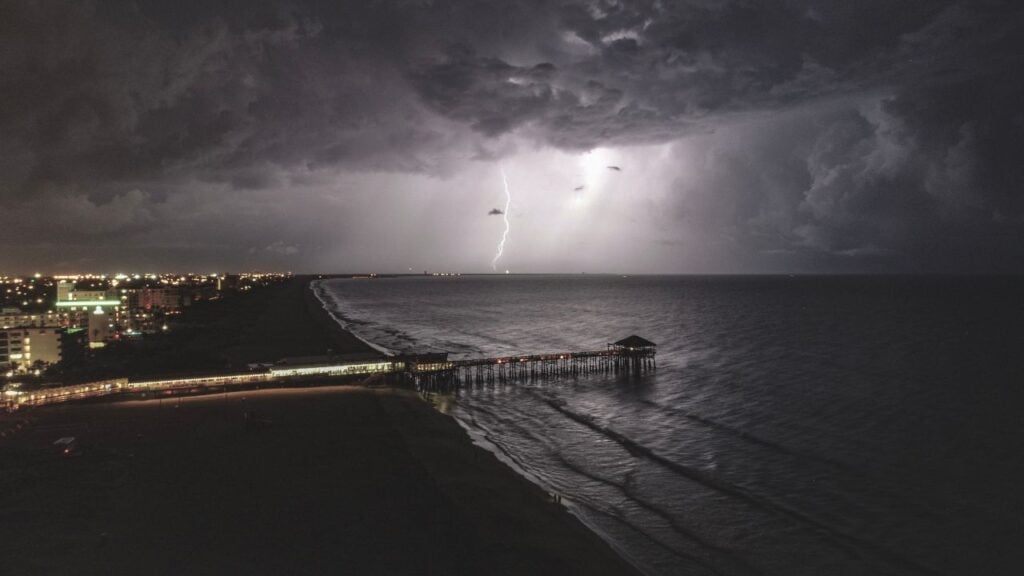
Floridians read the afternoon sky the way other folks read a menu.
One glance over the pool fence tells them whether the cookout survives the next hour.
8 Signs a Florida Storm Is About to Wreck Your Afternoon Plans
11 Unwritten Florida Rules Tourists Learn the Hard Way
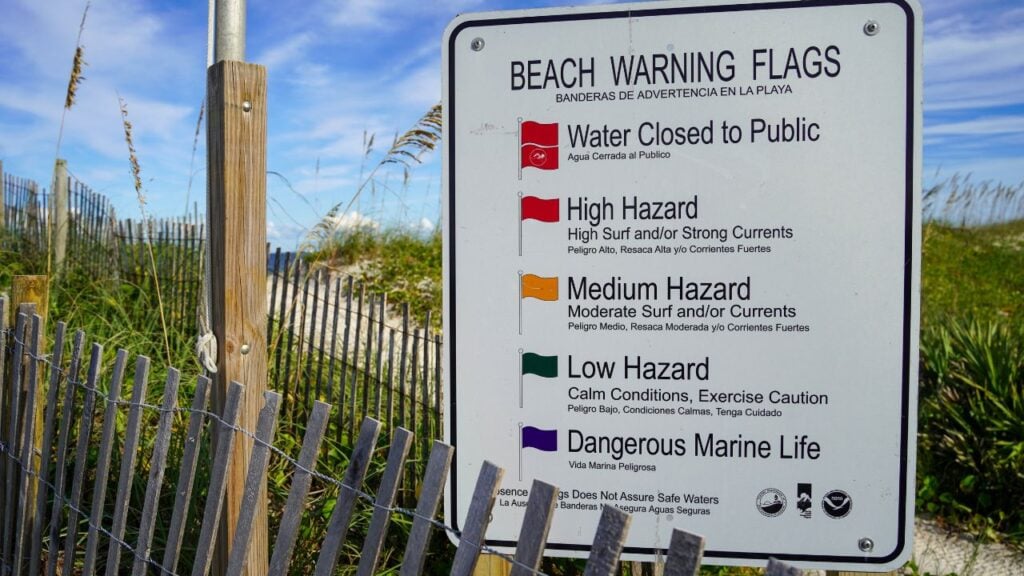
A Florida vacation comes with a rulebook nobody hands out at the airport.
Some of the rules cost you a fine, and a couple cost you a whole lot more.
