
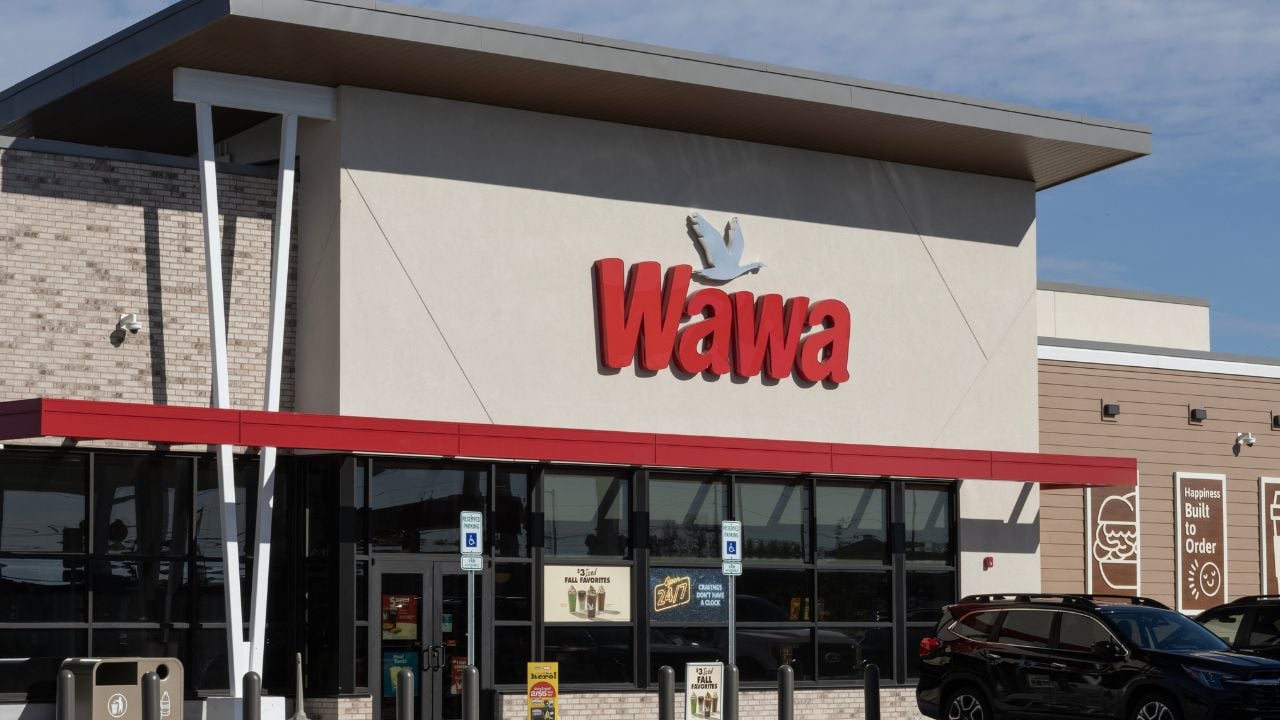
8 Precautions Marylanders Should Take When Stopping at Wawa

Wawa has a way of turning “I just need gas” into gas, a coffee and a hoagie.
That’s part of its charm.
But when you’re juggling all three, it’s easy to miss a detail or two that costs you money.
Here are the precautions Marylanders should take when stopping at Wawa.
Note: This is general information, not legal or financial advice. Maryland rules and Wawa’s policies are subject to change.
1. Checking the Card Reader
Before you slide your card into a Wawa pump, take a few seconds to look over the reader.
In a two-day operation in October 2025, the U.S. Secret Service and its partners removed 22 skimming devices from Baltimore businesses.
The operation covered 493 businesses and more than 3,000 point-of-sale terminals, gas pumps and ATMs.
A skimmer can feel loose or detachable, so wiggle the reader.
Crooked or scratched parts are warning signs, and so are sticky keys and a faint keypad backlight.
If anything looks off, don’t use that reader.
2. Skipping the PIN Pad
Wherever you fuel up, Wawa included, officials in the Secret Service’s Baltimore operation say to run a debit card as credit.
That way, you never enter your personal identification number (PIN) at the keypad.
They recommend tap-to-pay or chip technology, too, if your pump offers it.
3. Matching the Price Sign
As you pull into Wawa, glance at the roadside sign.
The Maryland Department of Agriculture (MDA) says to compare the price on the pump with the roadside advertisement.
A question on the department’s consumer page describes a driver who saw premium listed at $4.39 a gallon on a road sign and was charged $4.45.
That’s six cents a gallon.
On a 10-gallon fill-up, that gap adds up to 60 cents.
Multiply the gap by the gallons you’re buying, and you’ll see what a mismatch costs you.
9 Maryland Foods That Horrify the Rest of the Country
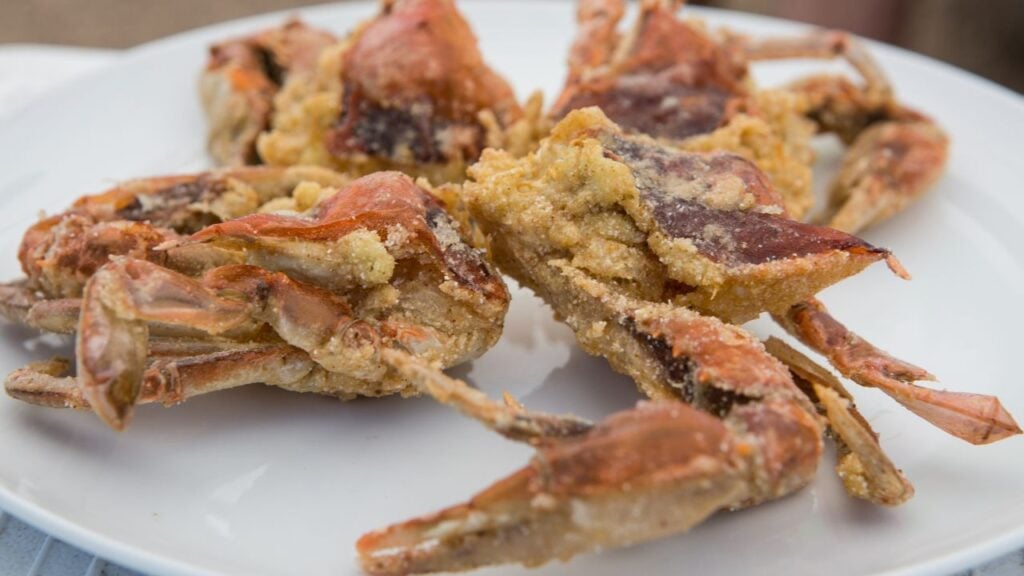
When you order scrapple on Maryland’s Eastern Shore, the cook fries a slice and slides it next to your eggs.
It’s one of several dishes that can leave out-of-staters raising their eyebrows.
9 Maryland Foods That Horrify the Rest of the Country
4. Starting at Zero
When you lift the nozzle at Wawa, check the dial before you squeeze the handle.
MDA says to make sure the pump’s dial resets to all zeros before you start to pump gas.
Once the gas is flowing, the price per gallon should stay the same throughout the fill.
If it changes, or the numbers appear to skip or black out, that could be an indication of fraud.
The meter should stop running when you stop the pump.
If a pump fails any of those checks, switch to another pump.
If the amount of gas looks wrong, the Weights and Measures Section takes complaints at 410-841-5790.
5. Keeping the Receipt
Get a receipt every time you pay for gas at Wawa, even when you pay cash.
MDA calls the receipt your proof of purchase if a problem comes up.
Look at the total on it and match it to the gallons you pumped.
Pump prices round up to the nearest whole cent, so allow for rounding when you do that math.
Compare your fuel gauge before and after the fill-up with the gallons you bought.
Gauges and tank sizes are approximate, so treat the comparison as a rough check.
If the numbers don’t add up, you’ll want that receipt in hand when you report it.
Psst! How much do you know about Maryland’s gas stations and convenience stores? Take our quiz and see how many you can get right.
Quiz
Maryland Fuel Stop Quiz
Answer these questions on Wawa, gas stations, gift cards and fuel taxes. We bet you can’t get them all right. Prove us wrong?
Wawa’s 2019 payment-card breach was thought to involve about how many payment cards?
6. Turning the Engine Off
A Wawa coffee run means leaving your car unattended.
Maryland's unattended-vehicle law says you can't walk away until you've stopped the engine, locked the ignition and removed the key.
You have to set the brake, too, and on a slope you turn your front wheels toward the curb.
If you start your car with a remote keyless ignition system, the box below covers an exception.
What Maryland's Unattended-Car Law Allows
A car started with a remote keyless ignition system can run unattended for up to 5 consecutive minutes while it isn't in motion.
A locked car on private property that isn't open to the public gets the same 5-minute allowance.
7. Inspecting Gift Cards
A gift card deserves a close look before you pay for it, at Wawa or anywhere else.
The Federal Trade Commission (FTC) says to tell a cashier or manager if the back of a card looks scratched or a sticker is missing.
Scammers can scratch off the back of a card or peel off its stickers to capture the number and PIN.
Then they can wait for you to load money onto the card and drain it.
Scammers might tamper with cards in batches, so consider looking at a different store if a card looks off.
When you buy the card, take a picture of it and the receipt.
If the card turns up empty, give the card company the number on the card and your receipt right away.
ReportFraud.ftc.gov takes reports of gift card scams.
Only scammers will tell you to buy a gift card and give them the numbers off the back of it.
Gift cards are for gifts.
8. Redeeming Points Wisely
Spending your Wawa Rewards points on gas can be a poor trade.
You earn 10 points on every dollar you spend in a store and 5 points on every gallon you pump.
With 43 redeemable items to choose from, gas is only one place to spend them.
A March 2026 analysis in The Philadelphia Inquirer told readers to skip gas rewards unless they never buy Wawa food or pump at least 30 gallons a fill-up.
Compare that number with your tank size before you spend points on gas.
Among food rewards, the kid's meal ranked best, at 500 points for something that normally costs $6.69.
Splitting 1,000 points across two 500-point items can beat spending them on a single 1,000-point item.
Wawa's pretzel ranked worst, so you'd spend 350 points on something that normally costs $1.29.
Those prices came from Wawa stores in Delaware in December 2025, so what you pay in Maryland, and what the points cost, may differ.
6 Things Food Lion Employees Wish Marylanders Knew
Think of the last time you carried a bruised avocado back to the register.
You may learn something before your next trip.
